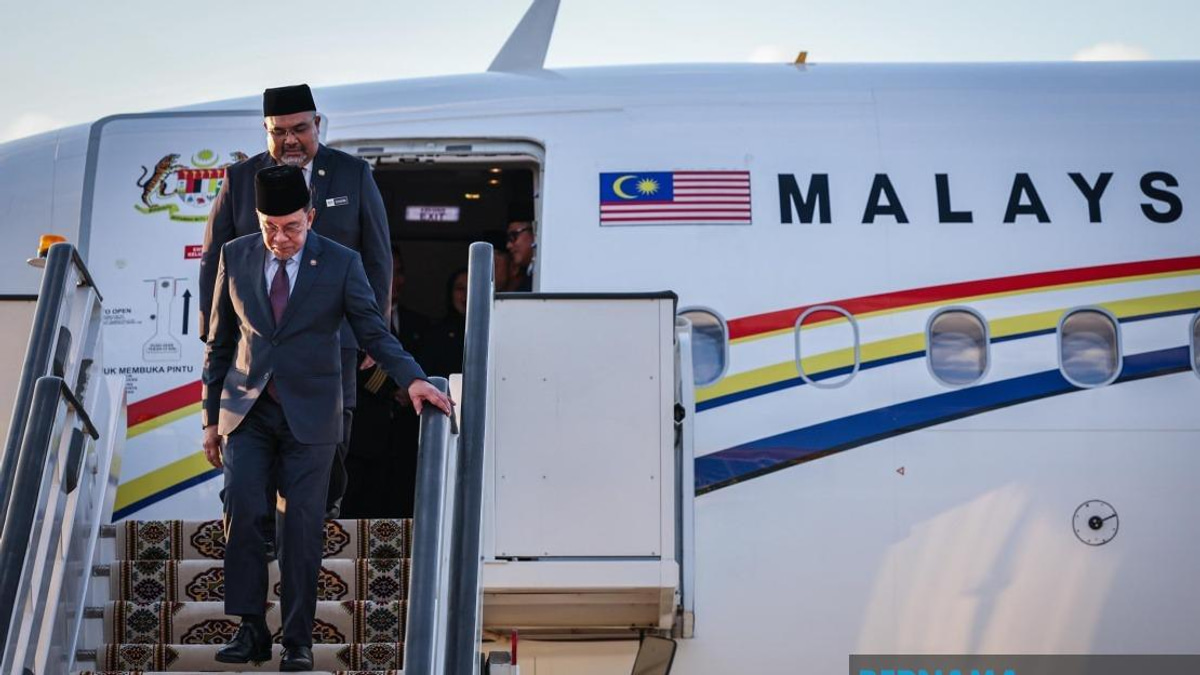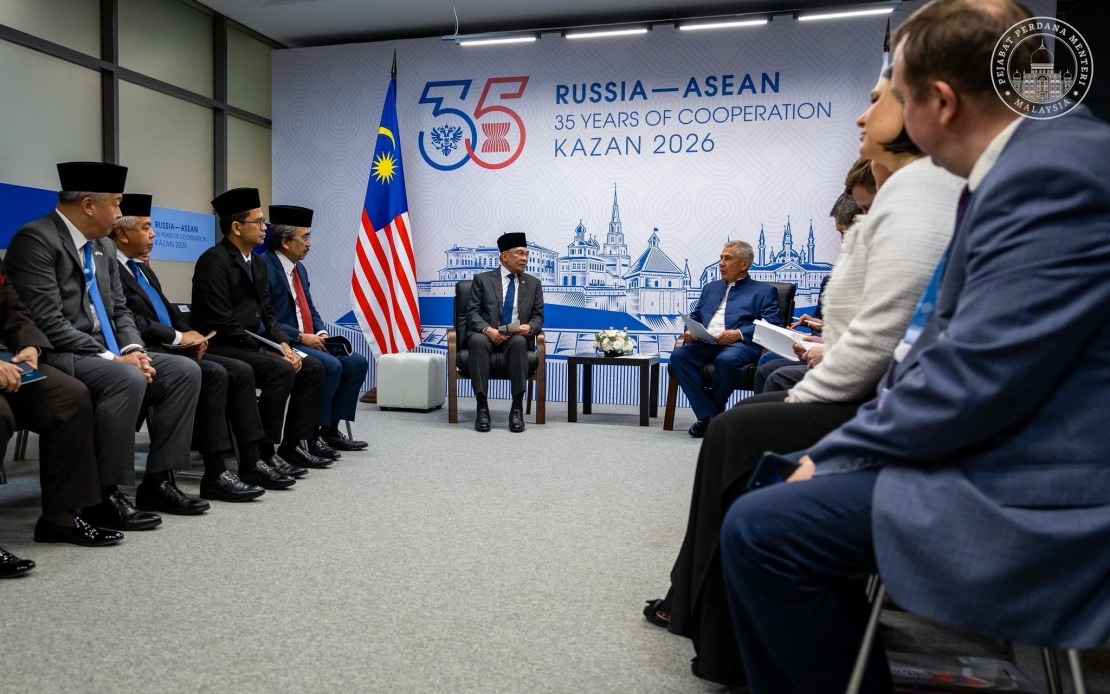
Prime Minister Datuk Seri Anwar Ibrahim has identified considerable scope for Malaysia to broaden its engagement with the Republic of Tatarstan across multiple sectors, signalling a strategic pivot to strengthen bilateral relations with one of Russia's most economically significant regions. During discussions with Tatarstan's leader Rustam Minnikhanov following his Tuesday arrival in Kazan, Anwar emphasised potential avenues for cooperation spanning trade, investment, education, tourism, the halal industry, technology and workforce development—reflecting Malaysia's multifaceted approach to regional partnerships beyond traditional diplomacy.
The energy sector emerged as a focal point in the leaders' conversation, a logical priority given Tatarstan's standing as one of Russia's premier oil and gas producing zones. Malaysia, itself energy-conscious as a major hydrocarbon exporter, sees particular merit in exploring downstream opportunities, refining capabilities and petrochemical ventures alongside its Russian counterpart. This alignment of interests in energy infrastructure and processing capacity could yield tangible commercial benefits for Malaysian companies seeking to diversify their operational footprint in Eurasia, while simultaneously opening Russian markets to Malaysian expertise and investment capital.
Beyond hydrocarbon cooperation, Anwar and Minnikhanov explored the catalytic role the Kazan Forum might play in facilitating broader business linkages and fostering innovation ecosystems. The discussion encompassed emerging domains including the digital economy and strategic investments, territories where Malaysian tech firms and financial institutions increasingly seek international expansion. By leveraging the Forum's convening power, both nations can architect frameworks that attract cross-border ventures and knowledge transfer, positioning their respective enterprises for competitive advantage in knowledge-intensive industries.
Kazan's designation as the Islamic World Cultural Capital 2026 by the Islamic World Educational, Scientific and Cultural Organisation carries particular resonance for Malaysia, a Muslim-majority nation with substantial soft power in Islamic institutions and scholarship networks. Anwar's acknowledgment of this honour underscores Malaysia's recognition of Kazan as an emerging hub for Islamic learning, cultural expression and innovation—qualities that align closely with Malaysia's own positioning as a bridge between the Islamic world and international commerce. This cultural alignment creates additional pathways for cooperation in education, religious scholarship exchanges and tourism, sectors where Malaysia possesses competitive advantages.
The Prime Minister also acknowledged President Vladimir Putin's establishment of the Strategic Vision Group, framing it as a vital conduit between Russia and the Islamic world. This recognition reflects Malaysia's appreciation for Russia's institutional commitment to dialogue with Muslim-majority nations, a development that contextualises bilateral Malaysia-Tatarstan cooperation within the broader Russia-Islamic world relationship. For Malaysian policymakers, such mechanisms offer opportunities to influence regional geopolitics and secure Malaysian interests within Russian strategic calculations regarding the Islamic sphere.
Anwar's visit to Kazan forms part of a two-day working engagement centred on the ASEAN-Russia Commemorative Summit, an event representing the apex of multilateral engagement between Southeast Asia's premier grouping and the Russian Federation. The delegation accompanying the Prime Minister—including Investment, Trade and Industry Minister Datuk Seri Johari Abdul Ghani and Economy Minister Akmal Nasrullah Mohd Nasir—signals the Malaysian government's serious commitment to extracting concrete economic outcomes from the bilateral relationship and the broader summit engagement.
The ASEAN-Russia relationship itself has matured considerably since formal dialogue commenced in 1991, with Russia achieving full Dialogue Partner status within ASEAN five years later. The elevation to Strategic Partnership in 2018 marked a watershed moment, institutionalising cooperation across political, security, economic and socio-cultural dimensions. Malaysia's participation in these frameworks, combined with its individual bilateral initiatives with Tatarstan, reflects a nuanced foreign policy strategy that simultaneously pursues multilateral engagement and targeted bilateral partnerships to maximise returns for Malaysian stakeholders.
Geographically, Tatarstan's location approximately 800 kilometres east of Moscow, cradled between the Volga and Kazanka rivers in European Russia, positions it as a gateway linking European and Asian markets—a consideration of strategic importance for Malaysian companies eyeing Russian and broader Eurasian expansion. With a population of 1.3 million, Kazan functions as Russia's principal commercial and cultural nexus beyond Moscow and Saint Petersburg, rendering it a natural focal point for Malaysian business engagement in Russia. The city's millennium-old history and established status as a centre of Islamic culture and heritage further enhance its attractiveness as a partnership anchor.
The halal industry represents an underexploited avenue within Malaysia-Tatarstan cooperation, given Tatarstan's substantial Muslim Tatar population and historical significance in Islamic civilisation. Malaysian halal certification bodies, food manufacturers and logistics providers could find receptive markets within Tatarstan and adjacent regions, whilst simultaneously supporting the republic's own expansion of halal-compliant production and commerce. This sector-specific initiative could generate employment, facilitate technology transfer and establish Malaysia as the authentic arbiter of halal standards within Russian markets.
Technology and talent development initiatives featured prominently in bilateral discussions, reflecting both nations' recognition that human capital and digital infrastructure constitute competitive differentiators in the contemporary global economy. Malaysian educational institutions and technology enterprises possess credentials that could attract Tatarstan's sophisticated workforce, whilst simultaneously enabling Malaysian professionals to acquire skills and experiences in Russian contexts. Such exchanges strengthen people-to-people bonds and create alumni networks that persist beyond formal governmental arrangements.
Anwar's framing of the bilateral potential emphasises mutual benefit and prosperity generation for both populations, a rhetorical choice that acknowledges legitimate Malaysian interests whilst avoiding nationalist triumphalism that might alienate Russian interlocutors. This diplomatic calibration reflects mature statecraft, recognising that sustainable partnerships require reciprocal value creation rather than zero-sum extraction. For Malaysian observers, the emphasis on tangible economic benefits and employment creation provides measurable metrics against which to evaluate the partnership's ultimate success.
Looking forward, the momentum generated through this bilateral engagement and the broader ASEAN-Russia Summit will likely catalyse working groups and technical dialogues addressing specific sectors. Government-to-government frameworks should now transition into facilitation mechanisms enabling Malaysian private sector access to Tatarstan's markets and investment opportunities. The combination of political endorsement at the highest levels and subsequent institutional support through investment councils and trade commissions will determine whether rhetorical potential translates into substantive economic outcomes benefiting Malaysian enterprises and workers.
The timing of Anwar's visit carries additional significance given contemporary geopolitical complexities and Malaysia's balancing act between competing great powers. By reinforcing engagement with Russia through official channels and high-profile bilateral meetings, Malaysia reinforces its non-aligned positioning and demonstrates capacity to maintain productive relationships across the international spectrum. This strategic autonomy, combined with concrete cooperation opportunities in energy, trade and technology, positions Malaysia to navigate uncertain global circumstances whilst securing national development interests through pragmatic partnership building.