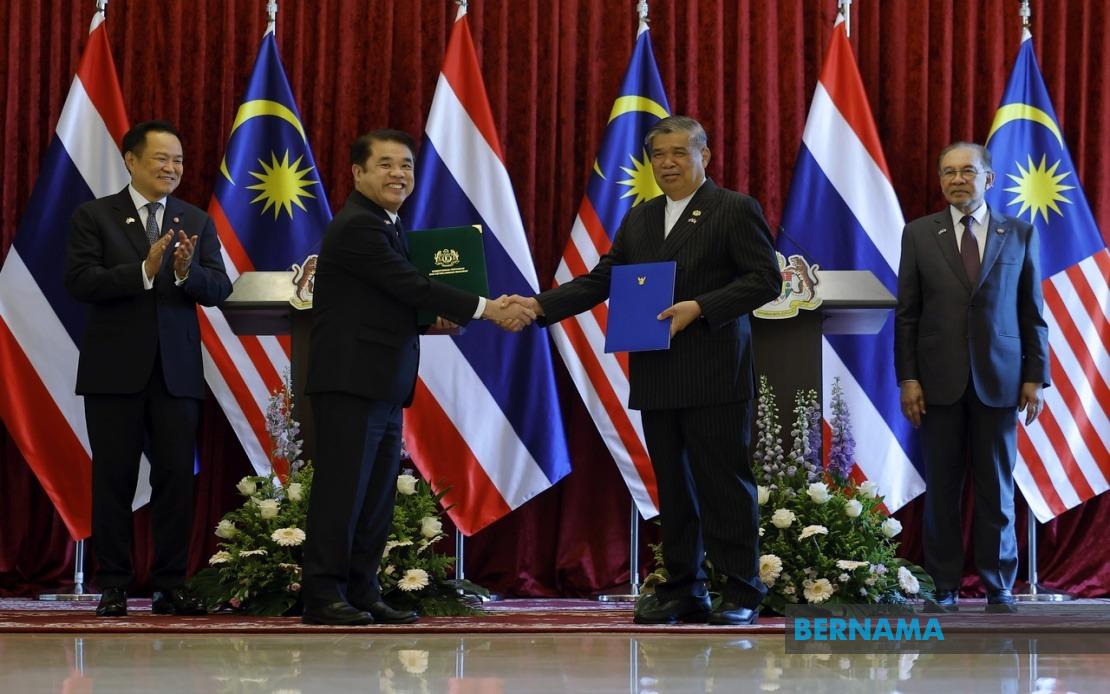
The bilateral relationship between Malaysia and Thailand is entering a fresh phase of agricultural collaboration following high-level talks in Putrajaya on Thursday, where Prime Ministers Datuk Seri Anwar Ibrahim and Anutin Charnvirakul committed to deepening cooperation across farming, fisheries and food production systems. The momentum represents a significant step toward addressing vulnerabilities in both nations' food supply chains while capitalizing on complementary agricultural strengths that span tropical crop cultivation, aquaculture and livestock farming across the region.
At the core of the new partnership is a memorandum of understanding that establishes a formal framework for joint initiatives encompassing crop production, livestock management, fisheries operations, agricultural research and technology exchange between the two countries. The accord signals a recognition by both governments that advancing regional food security requires coordinated investment in innovation and shared expertise, particularly as population growth and climate pressures intensify competition for agricultural resources across Southeast Asia. Thai Government spokesperson Ratchada Thanadirek outlined that human resource development and capacity building form integral components of the agreement, reflecting an understanding that technical knowledge transfer and workforce training underpin sustainable agricultural advancement.
A critical breakthrough within the talks involved resolving contentious market access questions that have constrained bilateral trade in shrimp and barramundi, products where both nations maintain significant production capabilities and export interests. The removal of these barriers carries substantial implications for seafood producers and exporters on both sides, potentially unlocking hundreds of millions of dollars in additional trade value as farmers and fishing operators gain clearer market pathways. The agriculture ministers have been tasked with accelerating implementation of agreed measures designed to address the commercial grievances of farming communities, suggesting the two governments view agricultural development not merely as an economic lever but as a social imperative touching rural livelihoods across both countries.
The partnership extends beyond agriculture into a comprehensive regional economic agenda that both leaders view as essential for shared prosperity. Malaysia and Thailand are jointly pursuing an ambitious target of achieving US$30 billion in bilateral trade, a threshold that would substantially elevate their economic interdependence and create multiplier effects throughout both national economies. This targets reflects confidence that removing sectoral barriers and deepening cooperation in supply chains can generate sufficient growth momentum to justify substantial policy coordination and institutional reform.
Infrastructure improvements underpin much of this ambition, with Friday's joint visit to Bukit Kayu Hitam illustrating practical commitment to facilitating cross-border movement of people and goods. The opening of the road connection linking the Immigration, Customs, Quarantine and Security Complex in Bukit Kayu Hitam with its Thai counterpart in Sadao represents tangible infrastructure addressing a logistics bottleneck that has historically constrained bilateral commerce. Such investments in border infrastructure reduce transaction costs and friction in trade flows, enabling agricultural products and other goods to move more efficiently between the two economies while maintaining necessary regulatory oversight.
The broader cooperation framework encompasses trade, investment, tourism, infrastructure and security arrangements, indicating that both governments view agricultural partnership as embedded within a wider strategic relationship. This holistic approach acknowledges that competitive agricultural trade functions optimally when underpinned by stable political relations, secure investment environments and efficient cross-border movement protocols. The expansion of cooperation across multiple domains suggests both countries recognize mutual interests in regional stability and economic integration that transcend sectoral boundaries.
Technological advancement emerges as a central theme within the partnership, with explicit emphasis on technology transfer mechanisms that can elevate agricultural productivity and sustainability in both nations. This acknowledges that contemporary farming increasingly relies on precision agriculture techniques, advanced irrigation systems, improved seed varieties and data-driven crop management approaches that developing agricultural sectors must actively acquire and adapt. Joint research initiatives and knowledge-sharing arrangements can accelerate the diffusion of such technologies throughout both economies, potentially narrowing productivity gaps and enhancing competitiveness in regional and global markets.
Thailand's Prime Minister Anutin has directed relevant government agencies to accelerate implementation of the agreements, signaling executive-level commitment to translating diplomatic accords into concrete institutional action. The timing of his first bilateral visit to Malaysia since his reappointment in March 2026 indicates he views the relationship as a priority within Thailand's broader foreign policy framework. This urgency suggests both governments perceive momentum for deepening ties and wish to capitalize on aligned political will before domestic or regional circumstances shift.
Looking ahead to 2027, when Malaysia and Thailand commemorate seventy years of diplomatic relations, both governments are positioning themselves to conclude additional bilateral memoranda across multiple sectors. This forward-looking agenda signals ambitions to institutionalize cooperation frameworks that extend beyond agriculture into other areas where complementary strengths and shared challenges create opportunities for coordinated action. For Malaysian readers, such partnerships carry importance as Thailand remains a significant agricultural competitor and market opportunity, while offering valuable models for food security cooperation as the region confronts climate vulnerabilities and resource pressures that transcend national borders.

