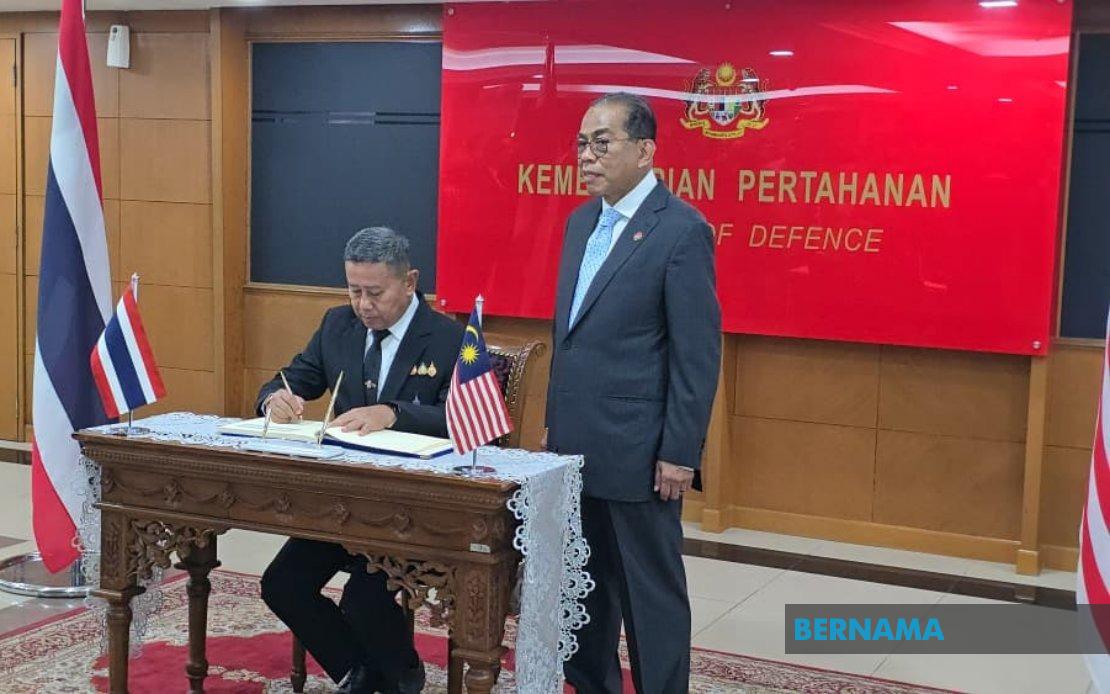
Malaysia and Thailand have recommitted themselves to deepening defence partnerships and tackling the evolving security landscape across Southeast Asia following talks between their respective defence ministers. During an official visit to Kuala Lumpur on July 14, Lieutenant General Adul Boonthumjaroen, Thailand's newly appointed Defence Minister, held substantive discussions with Malaysia's Defence Minister Datuk Seri Mohamed Khaled Nordin at Wisma Pertahanan, underscoring the two nations' determination to maintain strong bilateral military ties in an increasingly complex regional environment.
The meeting represented an important moment for both countries to chart their defence cooperation agenda forward. Mohamed Khaled took the opportunity to extend formal congratulations to Adul on his recent appointment, while simultaneously expressing confidence that Thailand would continue to advance its defence modernisation and strategic objectives under the current government led by Prime Minister Anutin Charnvirakul. Such gestures of goodwill between defence leadership are particularly significant in Southeast Asia, where personal relationships between senior military and civilian defence officials often shape the trajectory and effectiveness of bilateral security arrangements.
Beyond ceremonial pleasantries, the ministers tackled substantive matters affecting regional stability. Malaysia and Thailand both underscored their shared commitment to preserving peace and stability throughout Southeast Asia, a priority that reflects the broader concerns of ASEAN nations grappling with tensions over maritime boundaries, transnational terrorism, and great power competition. This alignment on fundamental security principles demonstrates that despite the two countries' distinct geopolitical positions, they recognise the mutual benefits of coordinated regional approaches to defence and security.
One particularly notable dimension of the bilateral engagement involved Thailand's explicit acknowledgment of Malaysia's mediatory efforts in the longstanding border disputes between Thailand and Cambodia. By recognising Malaysia's constructive role in facilitating dialogue and promoting regional stability, Thailand essentially validated Malaysia's position as a credible honest broker in Southeast Asian conflicts. This validation carries significance because it enhances Malaysia's standing as a responsible middle power willing to invest diplomatic capital in resolving regional tensions, a reputation that strengthens its broader influence across ASEAN forums and mechanisms.
The historical context of Malaysia-Thailand relations reveals why such high-level defence engagement matters. The two nations share a maritime border in the Andaman Sea and have worked collaboratively on transnational security threats including human trafficking, drug smuggling, and maritime piracy. Defence cooperation extends into intelligence sharing, joint naval patrols, and counter-terrorism operations. Strengthening these channels ensures that both militaries can respond effectively to emerging threats that respect no national boundaries.
The ministerial visit extended beyond diplomatic protocols to include practical industrial engagement. Adul visited the National Aerospace and Defence Industries (NADI) Group of Companies, a significant Malaysian defence contractor involved in aircraft maintenance, aerospace engineering, and defence systems integration. This facility visit was not merely ceremonial; it provided both delegations with a platform to identify concrete areas for bilateral defence procurement and technological cooperation. For NADI, such high-level foreign visits can open doors to equipment sales, joint ventures, and technology transfer agreements that strengthen Malaysia's defence industrial base.
The exploration of future cooperation opportunities between Malaysia and Thailand in the defence sector carries economic as well as strategic dimensions. Southeast Asia's defence spending has grown steadily as regional nations modernise their military capabilities, and bilateral partnerships can facilitate more cost-effective procurement arrangements and technology sharing. Malaysian defence contractors like NADI benefit from such partnerships through expanded market access, while both nations gain by developing indigenous defence capabilities rather than remaining entirely dependent on external suppliers.
For Malaysian policymakers, the strengthened ties with Thailand also serve to ensure stability along the Thai-Malaysian border and in the shared waters of the Andaman Sea. The southern Thailand insurgency, which has periodically affected border security, remains a concern that both militaries monitor closely. Enhanced defence cooperation enables better coordination on cross-border security operations and intelligence exchange, ultimately protecting civilians and military personnel on both sides of the frontier.
Thailand's emphasis on Malaysia's role in the Thailand-Cambodia border dispute resolution reflects broader ASEAN commitment to addressing regional conflicts through dialogue rather than confrontation. Cambodia and Thailand have experienced periodic tensions over maritime and land boundaries, and Malaysia's willingness to facilitate constructive conversations demonstrates how middle powers can leverage their diplomatic neutrality to contribute to regional peace. This model of conflict resolution is increasingly important as great power competition intensifies in the region and ASEAN nations seek to maintain solidarity and independence.
The timing of Adul's visit, coming shortly after his appointment as Defence Minister, signals Thailand's priority in nurturing strong relationships with key ASEAN partners like Malaysia. Thailand's defence policy orientation toward regional stability and cooperation aligns with Malaysia's own strategic outlook, creating fertile ground for expanded bilateral initiatives. Both nations recognise that their defence capabilities and foreign policies are interconnected with broader Southeast Asian security arrangements, and that bilateral cooperation strengthens the entire regional architecture.
Looking forward, this bilateral engagement will likely translate into concrete outcomes including possible defence cooperation agreements, joint training exercises, and expanded industrial partnerships. The defence ministers' meeting establishes momentum that military officials at operational and technical levels can build upon. Whether through naval coordination in regional waters, joint peacekeeping training, or shared approaches to maritime security and counterterrorism, Malaysia and Thailand possess substantial opportunities to deepen practical defence cooperation.
The broader significance of Malaysia-Thailand defence cooperation extends to ASEAN's collective security posture. As the regional bloc navigates complex relationships with major powers and confronts transnational security threats, the strength of bilateral partnerships among member states becomes crucial. Malaysia and Thailand, as established ASEAN players with significant military capabilities and strategic locations, set examples for how regional nations can collaborate effectively while respecting each other's sovereignty and strategic autonomy. Their renewed commitment to defence cooperation sends a positive signal about ASEAN's capacity for internal cohesion during a period of external pressure and strategic competition.

