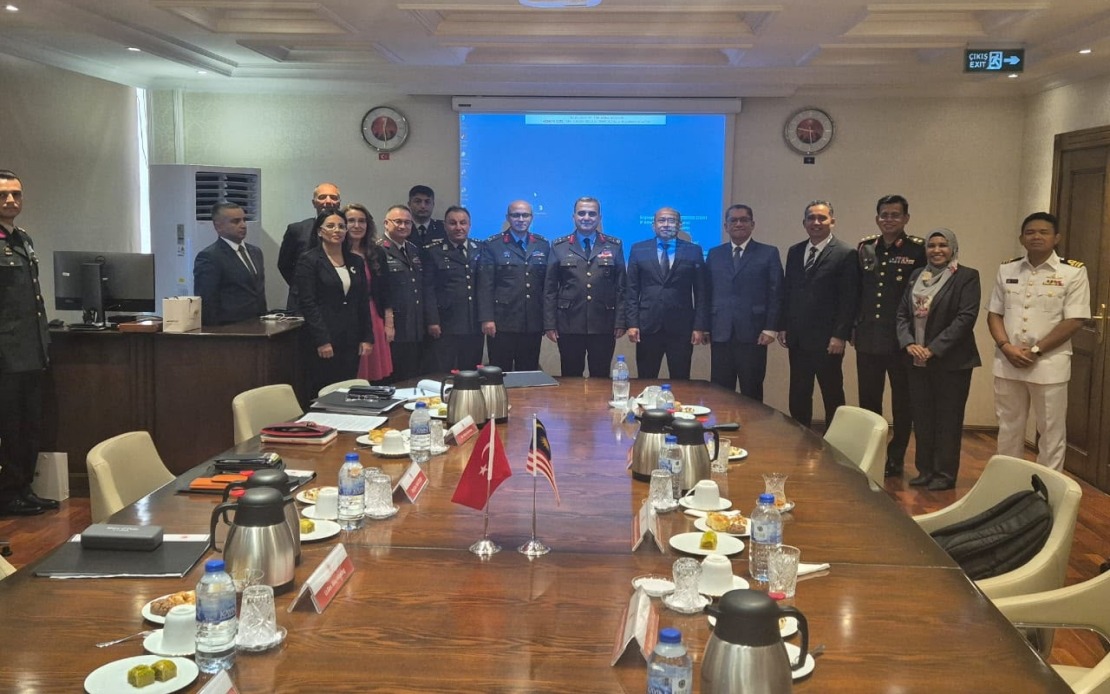
Malaysia and Turkiye have taken a significant step in deepening their defence relationship through the launch of their inaugural Malaysia-Turkiye Policy Talk, marking a new phase of bilateral military engagement between the two nations. The historic meeting convened at Turkiye's Ministry of National Defence headquarters in Ankara on Monday, bringing together senior defence officials from both countries to chart a course for expanded cooperation on matters ranging from strategic doctrine to contemporary security challenges.
The Malaysian delegation was headed by Datuk Yani Daud, deputy secretary-general of policy at Malaysia's Ministry of Defence, while the Turkish side was represented by Lt Gen Ilkay Altindag, the director-general of defence and security at the Ministry of National Defence. This leadership-level engagement underscores the importance both governments attach to building robust institutional channels for defence dialogue, moving beyond ad-hoc interactions toward a structured, regularised framework for ongoing discussions.
The scope of discussions extended well beyond routine military matters, encompassing a comprehensive examination of defence policy architecture and strategic thinking in each nation. Both sides engaged in substantive exchanges about geopolitical security dynamics affecting their respective regions, recognising that Malaysia's position in Southeast Asia and Turkiye's role bridging Europe and Asia require coordinated perspectives on emerging threats and opportunities. The dialogue created space for both nations to share intelligence assessments and strategic outlooks in a confidential setting, building mutual understanding of each other's security priorities and constraints.
Central to the talks was a shared commitment to upholding regional peace and stability—a principle particularly relevant given ongoing tensions in multiple theatres adjacent to both countries' strategic interests. Malaysia expressed particular appreciation for Turkiye's diplomatic efforts in the Middle East, specifically commending the nation's role in facilitating the Makkah Pact, a significant multilateral agreement aimed at de-escalating conflicts in West Asia. This acknowledgment reflects Malaysia's understanding that stability in the Middle East has direct implications for maritime security in the Indian Ocean and broader patterns of international relations affecting the Indo-Pacific region.
A crucial outcome of the meeting was the formal agreement to establish Terms of Reference governing the Malaysia-Turkiye Policy Talk mechanism. This institutional framework will enable both nations to systematically discuss potential defence cooperation instruments and evaluate concrete defence programmes that might serve mutual interests. Rather than leaving future engagement to chance or political convenience, the two countries have created a structured platform for identifying opportunities—whether in training exchanges, technology partnerships, military-to-military visits, or joint exercises—that could yield practical benefits for both armed forces.
The establishment of this formalised dialogue mechanism carries particular significance for Malaysia's defence strategy as outlined in its Mid-Term Review of the Defence White Paper. The document emphasises the importance of cultivating strategic partnerships beyond traditional bilateral relationships, viewing defence diplomacy as integral to national security objectives. Turkiye's position as a NATO member with substantial military capabilities and growing influence in Asia-Pacific affairs makes it an attractive partner for Malaysia seeking to diversify its security partnerships and learn from alternative military doctrines and technologies.
Looking ahead, Malaysia has formally extended an invitation to Turkiye to participate in the second iteration of the Policy Talk, scheduled to take place in Kuala Lumpur next year. This reciprocal hosting arrangement reflects established diplomatic protocol while symbolising equal commitment from both sides to sustaining the dialogue. The Malaysian capital venue will provide an opportunity to showcase regional perspectives on defence matters and may facilitate broader engagement with other Southeast Asian defence establishments, potentially expanding Turkiye's institutional connections within the Association of Southeast Asian Nations.
The timing of this defence engagement is noteworthy given evolving geopolitical currents in the Indo-Pacific and Middle East. As Malaysia navigates complex regional dynamics including maritime security challenges in the South China Sea, defence partnerships with non-traditional allies offer valuable diversification of strategic options. Turkiye's experience in addressing multifaceted security threats across its borders and its distinctive perspective on international security affairs could yield insights applicable to Malaysia's own security environment.
For Turkiye, deepening ties with Malaysia represents expansion of its engagement strategy in Southeast Asia, a region of growing economic and strategic importance. As an increasingly important player in regional and global affairs, Turkiye sees value in strengthening connections with significant ASEAN members like Malaysia, whose strategic location and defence capabilities command respect throughout the region. Such partnerships enhance Turkiye's profile as a responsible stakeholder in international security architecture extending beyond its traditional spheres of influence.
The bilateral defence relationship also carries implications for the broader architecture of multilateral security cooperation in Asia. Rather than viewing defence partnerships as zero-sum competitions, Malaysia and Turkiye's institutional engagement model emphasises dialogue, transparency, and structured cooperation—principles increasingly valued as nations seek to manage geopolitical competition through established diplomatic and defence channels. This approach aligns with Malaysia's advocacy for inclusive regional security frameworks that accommodate diverse stakeholders and perspectives.
The establishment of formal Terms of Reference creates a foundation for sustained engagement that can weather political fluctuations and adapt to changing strategic circumstances. By embedding the Policy Talk in institutional structures with defined purposes and regular meeting schedules, both nations ensure continuity beyond individual leaders or momentary diplomatic initiatives. This institutionalisation represents maturation of the bilateral relationship, transforming defence engagement from occasional encounters into permanent features of the diplomatic landscape.

