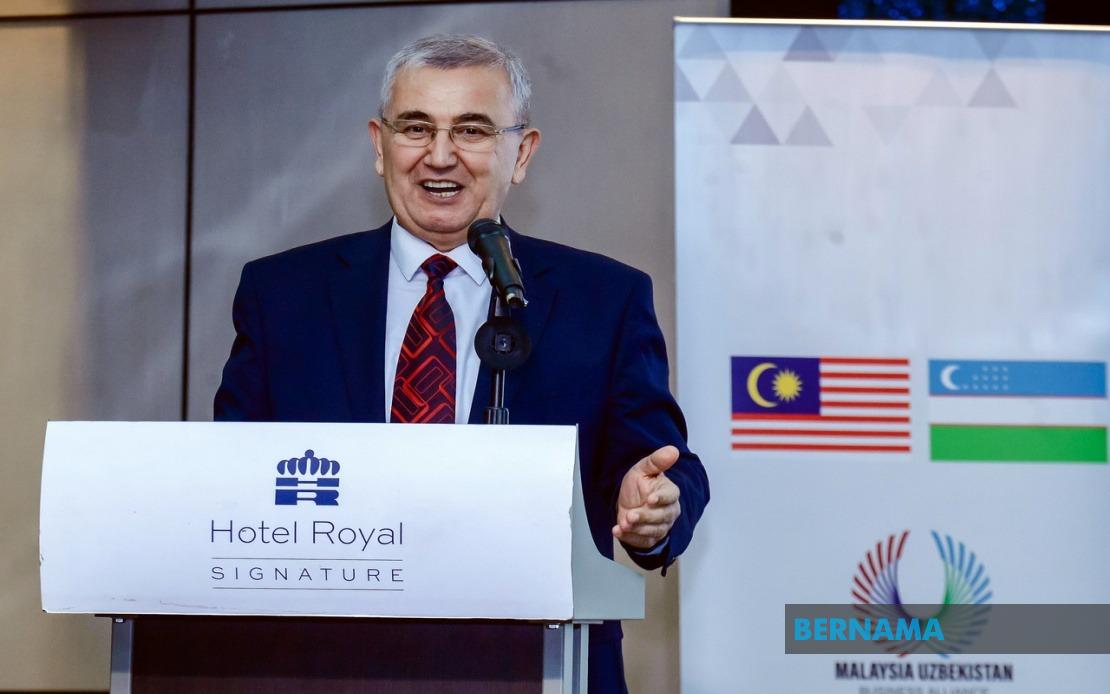
Malaysia and Uzbekistan are charting a new course in agricultural cooperation, recognizing the mutual benefits of combining technological innovation with regional expertise to address mounting food security challenges in Asia and Central Asia. The strategic partnership, which has gained momentum following high-level diplomatic exchanges, signals both countries' commitment to transforming their agricultural sectors through digital transformation and knowledge sharing in an era of climate uncertainty and resource constraints.
The deepening relationship reflects agriculture's prominence in bilateral discussions at the highest levels. Malaysian Prime Minister Datuk Seri Anwar Ibrahim's visit to Uzbekistan in May 2024 and President Shavkat Mirziyoyev's earlier visit to Malaysia in February 2023 both placed agricultural development and food security at the centre of the agenda, demonstrating how both governments prioritize the sector amid global supply chain vulnerabilities. The recent official visit by Agriculture and Food Security Minister Datuk Seri Mohamad Sabu to Uzbekistan has crystallized these intentions into concrete cooperation frameworks.
The two nations bring distinctly complementary strengths to the partnership. Malaysia possesses advanced capabilities across multiple agricultural domains, including paddy cultivation, aquaculture and fisheries management, smart farming infrastructure, and agricultural research and development through institutions like the Malaysian Agricultural Research and Development Institute (MARDI). Uzbekistan, conversely, excels in energy-efficient irrigation technologies, horticulture practices suited to Central Asian climates, and established agri-food production and processing capabilities. This complementarity creates genuine opportunities for technology transfer and operational collaboration rather than simple competitive positioning.
Food security emerges as the paramount driving force behind this alliance. Both nations recognize that digital technologies and artificial intelligence represent transformative tools for enhancing agricultural productivity and building system resilience in an uncertain global environment characterized by climate volatility and competing resource demands. Uzbekistan, with nearly 40 million inhabitants and geographic constraints as a double-landlocked nation, faces particular pressure to secure sustainable food supplies. Malaysia's experience in implementing smart agricultural systems offers practical solutions adaptable to Central Asian conditions and production scales.
Practical initiatives already demonstrate the partnership's substance beyond rhetorical commitment. Malaysian agricultural technology company Miracule has established its first drone showroom in Uzbekistan, signalling the beginning of a broader adoption strategy for aerial agricultural monitoring and precision farming applications. The company's roadmap includes scaling drone deployment across Uzbek agricultural fields and establishing assembly operations within the country, creating local manufacturing capacity and technical expertise. Simultaneously, MARDI engagement with Uzbek institutions is exploring agricultural innovations suited to Central Asian agroecological contexts.
Aquaculture represents a particularly promising cooperation frontier. Malaysia's expertise in biofloc technology—which reduces feed costs by approximately 30 percent while simultaneously boosting productivity and lowering overall production expenses—directly addresses Uzbekistan's growing seafood demand despite its geographical distance from major water bodies. Malaysian enterprises have already commenced feasibility assessments for shrimp farming and fisheries development projects in Uzbekistan, indicating market-driven confidence in the partnership's viability. This sector's expansion could contribute substantially to Uzbekistan's protein security and import substitution objectives.
Bilateral trade performance demonstrates existing commercial momentum. Agri-food trade between Malaysia and Uzbekistan exceeded RM338 million in 2025, with Malaysian palm oil and palm oil derivatives forming the dominant export category. However, both countries perceive this level as representing merely a fraction of achievable potential. Officials express confidence that bilateral agri-food commerce could double or potentially triple within the next five to ten years through strategic infrastructure development and market deepening initiatives. This expansion would require sustained investment in logistics, regulatory harmonization, and supply chain transparency.
Geographic and structural factors create unique competitive advantages for this partnership within the broader Asian context. Malaysia could leverage Uzbekistan as a strategic processing hub for crude palm oil destined for Central Asian markets, reducing transportation costs and tariff barriers while creating value-added employment in Uzbekistan. Conversely, Uzbek enterprises could utilize Malaysian distribution networks and expertise to penetrate Southeast Asian markets with premium fresh fruits, dried produce, and processed food products. Such complementary positioning transforms bilateral trade from simple commodity exchange into integrated value-chain development.
The invitation for Uzbekistan to participate in the Malaysia Agriculture, Horticulture and Agrotourism Exhibition (MAHA) 2026 provides a crucial platform for showcasing both countries' agricultural achievements and attracting business-to-business partnerships. MAHA's established reputation as a significant agricultural marketplace in Southeast Asia positions Uzbek producers and technology providers to access Malaysian and regional commercial networks while simultaneously exposing Malaysian businesses to Central Asian agricultural opportunities and consumer preferences. Such visibility can catalyze private sector initiatives beyond government-facilitated frameworks.
Government support structures remain essential for translating partnership aspirations into tangible outcomes. Regulatory alignment regarding agricultural standards, phytosanitary requirements, and food safety protocols will determine whether bilateral trade can achieve projected expansion targets. Both countries must establish institutional mechanisms for ongoing consultation, dispute resolution, and joint planning to sustain momentum beyond initial enthusiasm. The involvement of MARDI and other research institutions creates pathways for continuous innovation and adaptive management.
The Malaysia-Uzbekistan agricultural partnership reflects broader regional trends toward South-South cooperation and non-traditional partnerships addressing shared development challenges. Unlike traditional agricultural partnerships focused primarily on simple trade relationships, this initiative emphasizes technology transfer, institutional capacity building, and integrated value-chain development. Success would demonstrate how countries with different geographic positions, climatic conditions, and development trajectories can construct mutually beneficial frameworks addressing food security through innovation rather than merely accessing cheaper commodity supplies.
Looking forward, the partnership's trajectory will depend on sustained political support, private sector engagement, and realistic timelines for implementation. While officials express confidence in becoming mutually complementary through combining Malaysia's technological sophistication with Uzbekistan's agricultural heritage and scale, translating this vision requires navigating bureaucratic procedures, investment risks, and market dynamics. The early establishment of drone operations, MARDI research collaborations, and preliminary aquaculture investments suggest genuine commitment extending beyond diplomatic gestures, positioning the partnership as potentially consequential for regional food security and agricultural innovation.

