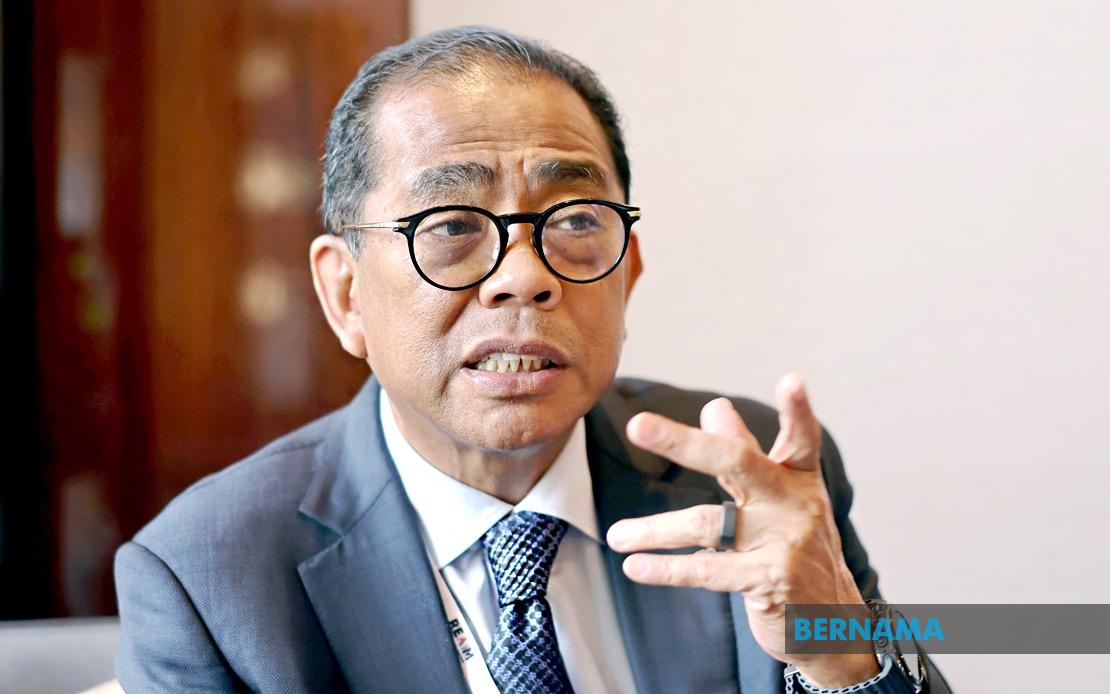
Malaysia and Vietnam have reaffirmed their commitment to deepening defence cooperation as both nations seek to bolster regional security and stability. During an official visit that commenced yesterday, Defence Minister Datuk Seri Mohamed Khaled Nordin held substantive discussions with Vietnamese Minister of National Defence Gen Phan Van Giang, underscoring the strategic importance each country places on their bilateral military relationship in an increasingly complex geopolitical environment.
The two-day engagement reflects the momentum built since Malaysia and Vietnam formalised their defence partnership through a Memorandum of Understanding signed on November 4, 2023. This foundational agreement has since catalysed a range of collaborative initiatives spanning multiple domains, demonstrating both nations' willingness to invest in comprehensive security architecture. The timing of Mohamed Khaled's visit, which also included a courtesy call on Vietnamese Prime Minister Le Minh Hung, signals the elevated diplomatic importance being accorded to defence ties at the highest governmental levels.
Among the focal points of discussion were practical areas where Malaysia and Vietnam can generate immediate strategic value. Military training and officer exchange programmes constitute a cornerstone of the bilateral agenda, with both sides identifying opportunities to coordinate course curricula and enhance professional development for defence personnel. Intelligence sharing mechanisms were also explored, recognising that transnational security threats from terrorism to transnational crime demand rapid information exchange and coordinated responses. The emphasis on submarine rescue operations and maritime domain awareness reflects shared vulnerabilities in protecting extensive maritime territories and maintaining freedom of navigation in contested waters.
Defence industry collaboration emerged as another dimension of the partnership, offering economic and technological benefits beyond traditional military cooperation. Both nations recognise the potential for joint development projects and technology transfer arrangements that could strengthen defence capabilities while reducing costs. Equally significant is the mutual commitment to addressing emerging security challenges, particularly what officials termed "grey zone activities" — a reference to military actions that operate below the threshold of conventional conflict, including cyber operations, maritime harassment, and information warfare tactics increasingly employed across the Indo-Pacific region.
Mohamed Khaled proposed institutionalising the cooperation framework through an enhanced High-Level Committee mechanism, a pragmatic step designed to streamline coordination and ensure initiatives progress from discussion to implementation. Such structural arrangements are vital for sustaining momentum in bilateral relationships, which can otherwise dissipate amidst competing bureaucratic priorities. The proposal demonstrates recognition that ambitious defence partnerships require dedicated governance structures with clear accountability and regular oversight.
On the broader regional strategic landscape, Malaysia emphasised that resolution of contentious issues, particularly the South China Sea dispute, must proceed through dialogue, diplomacy and adherence to international law rather than military posturing or unilateral assertion. This positioning reflects Malaysia's balancing act between major powers and its commitment to the ASEAN way of consensus-based dispute resolution. The Malaysian defence ministry's statement highlighted support for concluding an effective Code of Conduct, a process that has consumed considerable diplomatic energy without yet yielding a binding agreement despite decades of negotiation.
The partnership initiatives directly advance Malaysia's National Defence Strategic Plan 2026-2030, specifically its Core 6 objective of strengthening international defence relations to ensure national sovereignty. This strategic alignment indicates that defence cooperation with Vietnam is not peripheral to Malaysian security planning but rather integral to how the nation conceptualises its long-term defence posture. The connection between bilateral diplomacy and national strategic planning demonstrates the comprehensive approach Malaysia is adopting to security challenges.
For Southeast Asia more broadly, deepened Malaysia-Vietnam defence cooperation carries significant implications. Both nations are substantial maritime powers with overlapping interests in regional stability, and their collaborative framework can serve as a model for other ASEAN members seeking to operationalise defence partnerships within the ASEAN Defence Ministers' Meeting and ADMM-Plus platforms. These multilateral mechanisms remain vital for maintaining consensus on regional security matters and preventing bilateral disputes from escalating into broader conflicts.
The emphasis on ASEAN Centrality in discussions underscores commitment to preserving the bloc's institutional role in regional security architecture during a period when great power competition threatens to marginalise regional organisations. By anchoring bilateral defence cooperation within ASEAN frameworks, Malaysia and Vietnam are implicitly signalling that their partnership complements rather than contradicts collective ASEAN positions, a careful diplomatic formulation in an environment where strategic autonomy is increasingly contested.
Defence cooperation ultimately bridges traditional military concerns with broader national security objectives encompassing economic resilience, technological advancement, and diplomatic influence. Through training exchanges, intelligence cooperation, and joint capacity building, Malaysia and Vietnam are constructing relationships that transcend momentary political fluctuations and create institutional foundations for sustained partnership. The Defence White Paper's emphasis on "Competent Partnership" as a main pillar suggests Malaysian policymakers view these relationships as fundamental to navigating the uncertainties of the contemporary strategic environment.
The initiative also reflects recognition that security challenges in the 21st century — from cybersecurity threats to transnational organised crime to environmental security — require sophisticated, multifaceted responses that no single nation can address independently. By institutionalising defence cooperation, Malaysia and Vietnam are positioning themselves to respond more effectively to these transnational challenges while simultaneously strengthening their bilateral relationship as a hedge against regional instability. The convergence of bilateral interest and regional security imperatives makes this partnership strategically consequential for Southeast Asia's future stability.

