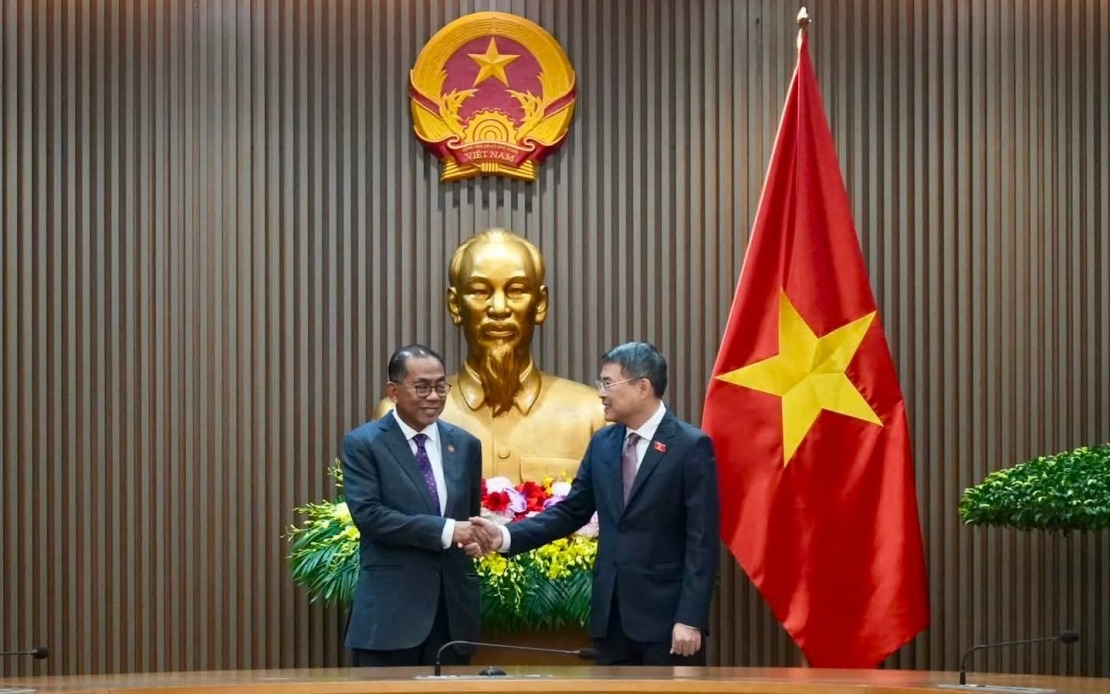
Malaysia and Vietnam are moving forward with concrete plans to deepen their defence relationship, with both nations pledging to broaden cooperation across a spectrum of security domains including maritime operations, technological advancement and industrial defence capabilities. Defence Minister Datuk Seri Mohamed Khaled Nordin underscored the strength of bilateral ties during his official visit to Vietnam, where he held substantive discussions with Vietnamese Prime Minister Lê Minh Hưng on matters of mutual strategic importance.
The partnership between Kuala Lumpur and Hanoi reflects a broader regional understanding that Southeast Asia faces an increasingly interconnected set of security challenges requiring coordinated responses. Malaysia has long positioned Vietnam as a trusted ally in regional affairs, and the defence collaboration serves as a practical manifestation of deeper diplomatic bonds forged over decades of bilateral engagement. The convergence of strategic perspectives between the two countries provides a solid foundation for expanding military-to-military contact and shared security initiatives.
Among the priority areas identified for enhanced cooperation is maritime security, a sector of paramount importance to both nations given their extensive coastlines and significant economic interests in sea lanes. The South China Sea remains a region of considerable strategic significance, and Malaysia and Vietnam face parallel challenges in safeguarding their maritime domains while managing complex geopolitical dynamics. Expanded cooperation in this arena could include joint exercises, intelligence sharing, capacity-building programmes and coordinated patrols aimed at enhancing regional maritime awareness and deterrence.
Technological advancement and defence industrial collaboration represent additional pillars of the strengthened partnership. As regional powers increasingly modernise their armed forces, cooperation in areas such as cybersecurity, artificial intelligence applications and emerging military technologies becomes essential. Both countries recognise that capability development cannot occur in isolation and that pooling expertise and resources can accelerate progress while reducing costs. Joint research initiatives and technology transfer arrangements could yield mutual benefits and contribute to regional technological sovereignty.
Mohamed Khaled emphasised that both Malaysia and Vietnam maintain aligned positions on fundamental ASEAN principles, with dialogue and diplomatic engagement serving as the cornerstones for preserving regional peace and stability. This shared commitment to the ASEAN Way—emphasising non-interference, consultation and consensus-building—provides a framework within which bilateral defence cooperation can flourish without stoking regional anxieties or triggering destabilising rivalries. The emphasis on diplomatic solutions reflects the preferences of both governments in managing regional tensions.
The contemporary security environment facing Southeast Asia presents multifaceted challenges that transcend traditional military concerns. Great power competition, particularly involving major powers with strategic interests in the region, has intensified competition for influence and strategic positioning. Grey zone activities—including coercive measures that fall below the threshold of conventional conflict—pose novel challenges for which standard military responses may prove inadequate. Malaysia and Vietnam must therefore develop sophisticated approaches that blend military capabilities with political acuity and institutional resilience.
Cyber threats represent an escalating dimension of contemporary security challenges, affecting everything from critical infrastructure to government operations to civilian life. As both nations become increasingly digitalised, vulnerability to malicious cyber activities grows correspondingly. Artificial intelligence and cognitive warfare introduce further complexity, as adversaries exploit algorithmic systems and psychological vulnerabilities to advance their objectives. Supply chain disruptions, whether caused by geopolitical friction or other factors, threaten economic stability and defence industrial capacity. These interconnected challenges require comprehensive responses that neither country can effectively address in isolation.
The 2023 Memorandum of Understanding on Defence Cooperation between Malaysia and Vietnam provides a structured framework for implementing enhanced bilateral engagement. Rather than representing a culminating achievement, this document functions as a strategic roadmap outlining the trajectory and scope of defence partnership development. By establishing clear mechanisms for cooperation, regular consultation channels and shared objectives, the MoU facilitates sustained momentum in defence relations even as government officials change and political circumstances evolve. The agreement signals to both militaries that deepening cooperation enjoys political backing at the highest levels.
ASEAN as a collective body stands to benefit from strengthened partnerships among its members, as such bilateral arrangements contribute to the broader objective of maintaining regional resilience and stability. When individual member states develop robust defence relationships grounded in shared values and strategic alignment, the collective capacity of ASEAN to manage regional challenges and respond to external pressures correspondingly increases. Malaysia and Vietnam's commitment to expanding their defence partnership thus carries implications that extend well beyond their bilateral relationship, influencing the trajectory of regional security architecture and ASEAN's collective strategic posture.
Looking ahead, the implementation of enhanced defence cooperation will require sustained attention from military planners, defence industrialists and diplomatic officials in both countries. Regular high-level exchanges, military-to-military engagement, joint training exercises and collaborative research initiatives will translate the ambitious framework into tangible results. For Malaysia, deepening ties with Vietnam offers opportunities to strengthen its own defence capabilities while contributing to a more stable and prosperous Southeast Asia. For the broader region, the Malaysia-Vietnam partnership exemplifies how neighbouring states can build mutually beneficial relationships that strengthen rather than undermine regional peace.

