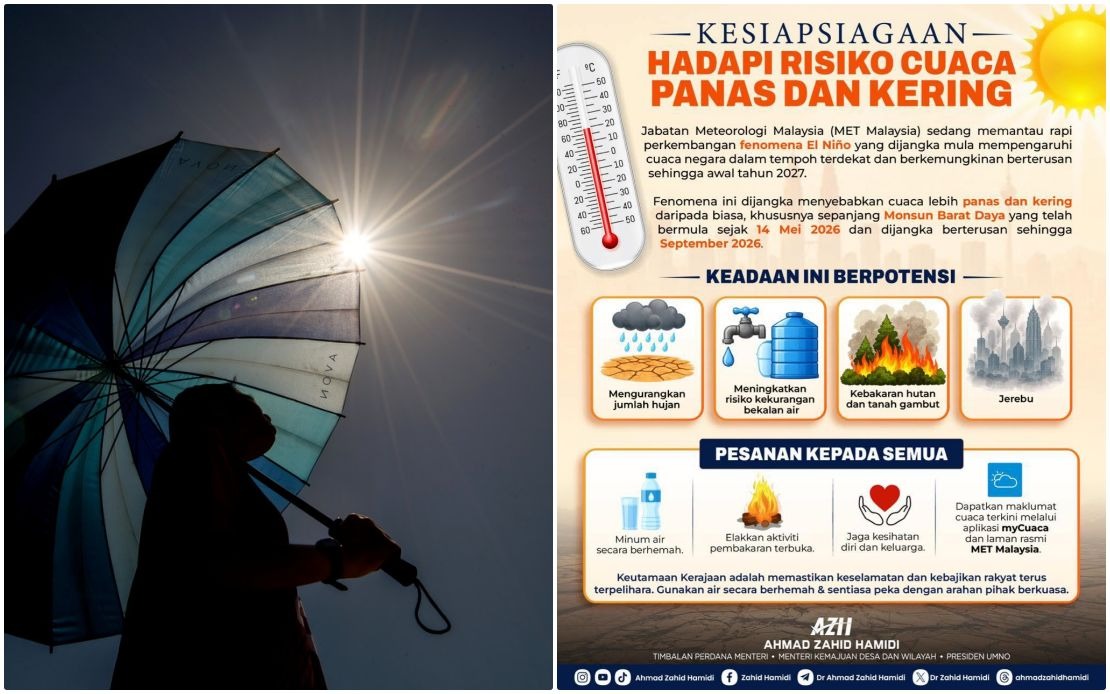
Deputy Prime Minister Datuk Seri Dr Ahmad Zahid Hamidi has issued a comprehensive advisory to Malaysians regarding the imminent arrival of the El Niño phenomenon, which meteorologists project will exert significant influence over the country's weather patterns throughout the Southwest Monsoon period and potentially stretch into the first quarter of 2027. Speaking in his capacity as chairman of the Central Disaster Management Committee, Ahmad Zahid emphasised that the climatic shift will introduce temperatures markedly above seasonal norms alongside substantially reduced precipitation across multiple regions of the nation.
The El Niño weather pattern represents a critical climatic development with far-reaching implications for Malaysia's environmental and socioeconomic landscape. Unlike typical monsoon cycles, El Niño disrupts established weather systems by introducing warmer ocean temperatures in the Pacific, which radiates atmospheric effects across Southeast Asia. For Malaysia specifically, this translates into prolonged dry spells that strain water reserves, heighten wildfire susceptibility, and deteriorate air quality through increased smoke dispersion from regional and domestic burning incidents.
According to the Malaysian Meteorological Department's director-general Dr Mohd Hisham Mohd Anip, the Southwest Monsoon—which commenced on 14 May and will continue until September—will experience above-average temperatures coupled with below-normal rainfall distribution. This combination creates a volatile environment where forest and peatland ecosystems become increasingly vulnerable to uncontrolled ignition. The moisture deficit that characterises El Niño conditions transforms typically resilient vegetation into tinder-dry fuel, enabling fires to spread rapidly and generate substantial transboundary haze affecting neighbouring nations.
The water security implications warrant particular attention for Malaysian policymakers and households alike. Extended drought conditions reduce the natural replenishment rates of reservoirs that supply urban and rural populations. Several states with geographically constrained water infrastructure face acute shortage risks during prolonged dry periods, potentially necessitating rationing mechanisms and supply disruptions. Agricultural sectors relying on rainfall-fed irrigation systems confront reduced yields, whilst hydroelectric facilities generating power from reservoir levels experience capacity constraints.
In response to these converging challenges, Ahmad Zahid has articulated a multi-layered preparedness strategy emphasising citizen participation and institutional coordination. His directive encompasses immediate household-level conservation practices, including judicious water consumption patterns that reduce per-capita demand across domestic, commercial and industrial segments. Simultaneously, the government underscores the critical importance of eliminating open burning activities—whether for agricultural clearing or waste disposal—that introduce additional atmospheric particulates during periods of naturally compromised air dispersion.
Vulnerable demographic groups, including the elderly, young children, and individuals with pre-existing respiratory conditions, face elevated health risks during extended heat and haze episodes. The combination of elevated temperatures and degraded air quality increases heat-stress incidents and exacerbates asthmatic episodes. Ahmad Zahid's advisory specifically directs heightened protective measures toward these populations, recommending enhanced hydration, reduced outdoor exposure during peak temperature hours, and increased medical vigilance.
The government's monitoring infrastructure plays a pivotal role in providing real-time weather intelligence to the public. The myCuaca mobile application, operated by the Malaysian Meteorological Department, furnishes granular meteorological forecasts enabling households and businesses to anticipate adverse conditions and implement timely protective actions. Official MetMalaysia channels disseminate authoritative projections and early warning advisories, reducing information asymmetries that might otherwise impede optimal decision-making.
From a regional perspective, El Niño's extended duration until early 2027 suggests that Malaysia will navigate this climatic phase alongside other Southeast Asian nations experiencing comparable pressures. Transboundary haze, which frequently originates from Indonesian peatland fires exacerbated by drought conditions, creates collective environmental challenges requiring diplomatic coordination and cross-border fire management protocols. The extended timeframe indicates that regional cooperation mechanisms must remain activated throughout the forecast period.
Corporate and municipal preparedness assumes heightened significance given El Niño's prolonged trajectory. Water utility operators must optimise supply chain efficiency and implement demand-management strategies. Industrial facilities dependent on substantial water volumes face operational planning challenges requiring inventory adjustments and production scheduling modifications. Urban local authorities must evaluate drought-contingency protocols and ensure adequacy of emergency water reserves.
The government's commitment to continuous situational assessment, articulated through Ahmad Zahid's statement, reflects recognition that El Niño impacts will manifest unevenly across geographic and temporal dimensions. Some regions may experience more severe water scarcity whilst others confront elevated fire hazards. Adaptive management approaches permitting responsive policy calibration throughout the phenomenon's duration offer superior outcomes to static preparedness postures.
Community-level engagement represents an underappreciated dimension of climate resilience. Neighbourhood associations, village councils and residential cooperatives can organise collective water conservation initiatives, establish fire-watch programs in forest-proximate areas, and coordinate health support networks for vulnerable members. Decentralised action amplifies the impact of central government directives whilst building grassroots capacity for environmental stewardship.
Looking forward, the El Niño forecast extending to early 2027 necessitates sustained institutional and household vigilance spanning multiple monsoon cycles. Malaysians should calibrate expectations toward extended resource constraints and environmental stress rather than anticipating rapid normalisation. This reframing enables more realistic planning horizons and encourages systematic rather than reactive adjustments to consumption and safety practices throughout the extended forecast period.