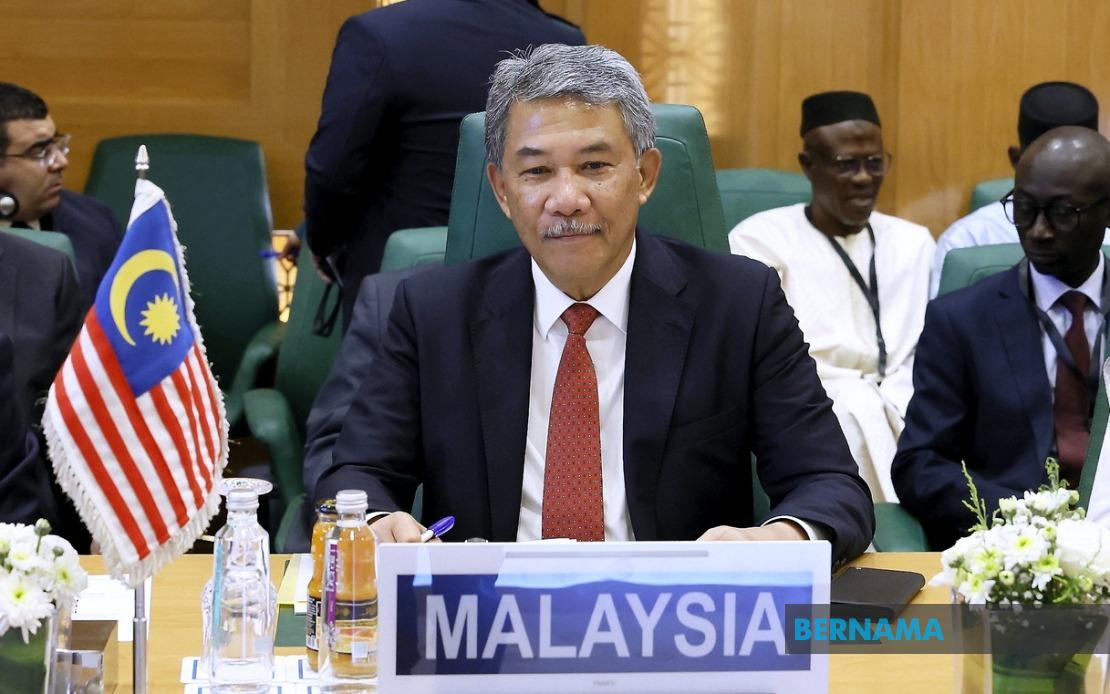
Malaysia has mounted a forceful diplomatic campaign at the Organisation of Islamic Cooperation, demanding that member states unite in rejecting what Kuala Lumpur characterises as Israel's unlawful US$2.3 billion settlement expansion programme in occupied Palestinian territories. Foreign Minister Datuk Seri Mohamad Hasan delivered this plea during an extraordinary gathering of OIC foreign ministers in Jeddah on August 27, signalling Malaysia's determination to translate the International Court of Justice's July 19, 2024 advisory opinion into concrete collective action by the Muslim world's foremost multilateral body.
The crux of Malaysia's intervention centres on the E1 settlement plan, which Kuala Lumpur argues represents a systematic strategy to entrench Israeli control over the West Bank whilst simultaneously dismantling the geographical coherence necessary for Palestinian statehood. Rather than viewing these developments as isolated incidents, Malaysia frames them as part of a deliberate architecture designed to render a two-state solution increasingly untenable. This framing carries significance for Southeast Asian policymakers, as it reflects how territorial facts on the ground accumulate into political irreversibilities that can eventually foreclose diplomatic pathways. The E1 zone, in particular, would connect Israeli settlements and effectively bisect Palestinian territories, creating fragmented enclaves that would prove functionally unviable as a unified state.
Mohamad's remarks underscore Malaysia's interpretation of the ICJ advisory opinion as a legal foundation that demands practical enforcement through coordinated multilateral pressure. Rather than treating the court's decision as a symbolic gesture, Kuala Lumpur explicitly links the opinion to concrete demands for OIC member states to withhold support and recognition from Israel's settlement activities. This represents an escalation beyond diplomatic rhetoric, positioning Malaysia as an advocate for translating legal judgements into tangible diplomatic consequences. For regional observers, this approach signals Malaysia's view that international law mechanisms must translate into actual state behaviour or risk losing credibility entirely.
The situation in Gaza further animated Malaysia's diplomatic offensive, with Mohamad articulating a humanitarian catastrophe that extends well beyond casualty figures. The invocation of nearly 70,000 lives lost sets the scale of tragedy whilst simultaneously challenging what Malaysia characterises as the international community's failure to enforce ceasefire demands spanning nearly three years. This framing proves particularly resonant for Southeast Asian nations with Muslim-majority populations, where the Gaza situation resonates beyond strategic calculations into deeper questions of religious solidarity and humanitarian obligation. Malaysia's emphasis on unhindered humanitarian access and permanent ceasefire reflects frustration with what Kuala Lumpur evidently views as performative international condemnation unaccompanied by enforcement mechanisms.
Mohamad's condemnation of the July 23 Al-Aqsa Mosque incursion by Israeli officials and settlers elevates religious and cultural dimensions alongside territorial and political grievances. The emphasis on safeguarding Al-Quds Ash-Sharif and reinforcing Jordan's historical Hashemite Custodianship over Jerusalem's Islamic and Christian holy sites introduces theological and custodial frameworks that extend the Palestinian question beyond conventional state-centric diplomacy. For OIC member states, particularly those holding custodian roles or theological authority, this dimension activates religious imperatives that transcend ordinary political calculations. Malaysia's positioning of these religious protections as non-negotiable fundamentals rather than negotiable elements reflects how the Israeli-Palestinian question implicates identities and faith commitments that resist conventional compromise.
The broader Malaysian position on Palestinian statehood rests explicitly on June 4, 1967 borders with East Jerusalem as capital, creating a clear demarcation between acceptable and unacceptable territorial arrangements. This specificity matters because it establishes non-negotiable parameters for what Malaysia considers viable Palestinian independence, leaving no ambiguity about red lines. Such definitional clarity, whilst potentially limiting diplomatic flexibility, provides the OIC with unambiguous rallying points and prevents gradual erosion of core positions through incremental compromises. For Southeast Asian policymakers observing this approach, the strategy reflects a calculation that precision regarding final status issues prevents the slow-motion territorial attrition that has historically characterised the Israeli-Palestinian relationship.
Mohamad's call for strengthened Palestinian institutions and reconstruction capacity introduces state-building dimensions alongside political demands. Rather than treating Palestinian self-determination as purely a matter of Israeli withdrawal, this framing emphasises positive obligations to construct functioning governance apparatus, institutional capacity, and economic infrastructure. This represents tacit recognition that Palestinian independence requires not merely removing obstacles but actively constructing state capacity. For the OIC, this creates concrete engagement pathways beyond symbolic resolutions, directing member states toward technical and financial support for Palestinian institution-building. Southeast Asian nations with development assistance programmes can find actionable frameworks for supporting Palestine through this institutional lens.
The references to UNRWA protections and the condemned death penalty legislation targeting Palestinians introduce humanitarian law dimensions that broaden the dispute beyond territorial disputes. Malaysia's emphasis on UN mandate protection and international law enforcement suggests that the diplomatic battle increasingly encompasses questions of legal accountability and institutional preservation. The seizure of UNRWA facilities and anti-Palestinian legislation signal, in Malaysia's reading, systematic efforts to remove institutional protections and legal safeguards for Palestinian populations. This reframing matters because it transforms the discourse from competing nationalist claims toward questions of international legal responsibility and institutional accountability.
Mohamad's repeated invocations of a rules-based international order and calls for Israeli accountability represent Malaysia's attempt to anchor the Palestinian cause within broader frameworks of international law and institutional governance. Rather than presenting the OIC position as motivated purely by religious or ethnic solidarity, this framing situates Malaysian advocacy within universal legal principles and institutional commitments that transcend particular communities. This rhetorical strategy potentially broadens the constituency for OIC positions by appealing to countries committed to international law generally rather than Muslim solidarity specifically. For Southeast Asian nations navigating great power competition and institutional fragmentation, Malaysia's emphasis on rules-based order and international law enforcement resonates with broader desires for stable, predictable, and legally-grounded international systems.
The extraordinary nature of the Jeddah meeting itself signals heightened diplomatic urgency within the OIC structure. Convening foreign ministers outside regular schedules typically indicates that member states view circumstances as requiring immediate and coordinated response rather than routine procedural handling. Malaysia's prominent role in catalysing this gathering and shaping its agenda reflects Kuala Lumpur's positioning as a significant voice within the OIC on Palestine matters. For Malaysian domestic audiences, this prominence reinforces commitments to Muslim causes whilst for regional observers, it demonstrates Malaysia's sustained engagement with Middle Eastern diplomatic structures despite geographical distance and competing regional priorities.
Looking forward, the practical implications of Malaysia's Jeddah intervention hinge on whether rhetorical clarity translates into binding OIC member commitments and coordinated economic or diplomatic consequences for Israeli settlement expansion. The specificity of the US$2.3 billion figure and the E1 settlement designation provide concrete targets for potential member state action, whether through sanctions, boycotts, or exclusion from international forums. For Southeast Asian nations, Malaysia's activism raises questions about their own stances toward Israeli settlement policy and whether they will align with OIC positions or maintain independent foreign policy approaches. The tension between religious solidarity within the Muslim world and diverse national interests continues to define Southeast Asian responses to Middle Eastern conflicts, with Malaysia's advocacy representing one pole in an ongoing negotiation within the region.

