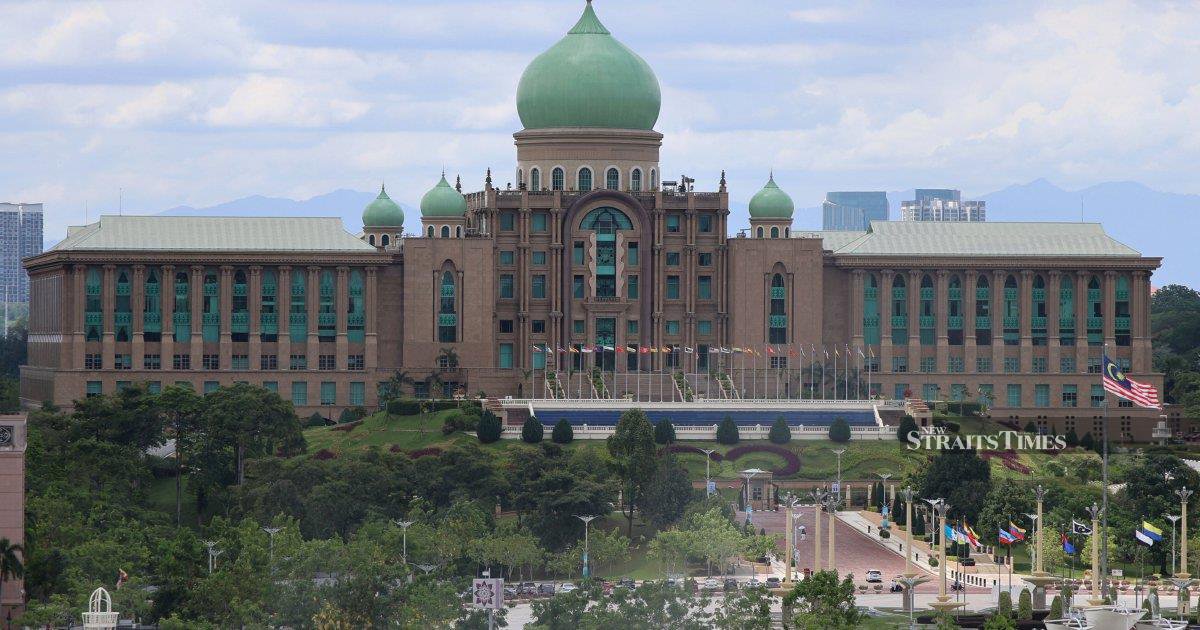
Prime Minister Datuk Seri Anwar Ibrahim placed regional security squarely at the centre of Malaysia's medium-term development agenda when he unveiled the 13th Malaysia Plan in parliament on July 31st, signalling that the nation cannot isolate economic planning from the turbulent geopolitical currents reshaping Southeast Asia. The move reflects a fundamental recognition that Malaysia's prosperity depends as much on regional stability as it does on domestic policy implementation, a reality that extends far beyond traditional security concerns into trade flows, investment climate, and the broader institutional frameworks that underpin regional prosperity.
The emphasis on regional security within the five-year development roadmap suggests policymakers are acutely aware of mounting tensions affecting the broader Indo-Pacific region. From maritime disputes to strategic competition between major powers, the landscape in which Malaysia operates has become markedly more complex over recent years. Unlike larger neighbours that might pursue unilateral strategies, Malaysia's geographic position and economic interdependence with multiple regional partners demand a more nuanced, multilayered approach that preserves strategic autonomy whilst maintaining productive relationships across traditional and emerging power blocs.
Malaysia's approach reflects the particular vulnerabilities of a mid-sized economy heavily dependent on regional trade and investment. The country's maritime routes, including critical sea lanes through which trillions of dollars in global commerce flows annually, face mounting pressures. Ensuring freedom of navigation and maintaining the rules-based order that has enabled Southeast Asia's economic rise over recent decades becomes increasingly consequential as tensions mount. Any disruption to these corridors would directly impinge on Malaysia's import-export dependent model and on the broader regional ecosystem in which Malaysian firms operate.
The integration of security considerations into the 13th Malaysia Plan represents more than rhetorical acknowledgement. It suggests concrete resource allocation, policy prioritisation, and institutional coordination centred on maintaining regional equilibrium. This could encompass strengthened maritime monitoring capabilities, enhanced intelligence sharing with trusted partners, investment in critical infrastructure resilience, and diplomatic initiatives that prevent bilateral disputes from metastasising into broader conflicts. These investments, whilst sometimes characterised as overhead costs to growth, increasingly appear as prerequisites for sustainable development.
Malaysia's balancing act demands careful management of relationships with multiple strategic partners. The country maintains defence ties and economic interdependencies with both established powers and rising regional heavyweights, an arrangement that offers flexibility but requires deft diplomatic execution. Publicly tilting too conspicuously toward any single partner risks provoking reactions from others and undermining the strategic space Malaysia needs to pursue independent interests. This explains the emphasis on maintaining established institutions like ASEAN and supporting ASEAN-centred mechanisms that provide forums for managing tensions without requiring exclusive alignments.
The timing of emphasising regional security within a development plan also reflects lessons learned from previous regional disruptions. Malaysia has experienced the economic impacts of financial contagion, supply chain shocks, and regional instability. The COVID-19 pandemic illustrated how regional crises rapidly cascade into domestic economic devastation, whilst ongoing global trade tensions demonstrate how geopolitical fault lines directly affect development trajectories. Integrating security concerns into economic planning represents institutional memory of these episodes translated into policy framework.
For Malaysian investors and businesses, this strategic reorientation carries significant implications. Companies operating across Southeast Asia need to understand that their government views regional stability not as a peripheral concern but as foundational to the enabling environment for commerce and enterprise. This creates both challenges and opportunities—challenges in navigating more complex regulatory and security landscapes, opportunities in sectors related to resilience infrastructure, maritime security, supply chain diversification, and digital ecosystem strengthening. Businesses aligned with the government's strategic priorities may find enhanced policy support and preferential treatment.
The 13th Malaysia Plan's security emphasis also positions the country as a thoughtful voice within ASEAN deliberations on regional architecture. As middle powers collectively seek to shape the rules and institutions governing regional behaviour, Malaysia's contribution—informed by serious strategic analysis embedded within its development planning—carries weight. The country can present itself as a model of how mid-sized economies balance growth imperatives with security realities, a template increasingly relevant for other Southeast Asian nations confronting similar tensions.
Looking forward, the success of integrating security into development planning depends on execution quality and institutional coherence. Different government agencies must align around shared objectives rather than pursuing siloed interests. Defence spending must complement rather than compete with development investment. Diplomatic initiatives must create genuine regional confidence rather than merely managing appearances. The challenge for Malaysia lies in sustaining this integrated approach through inevitable shifts in regional circumstances and domestic political cycles, maintaining focus on the long-term geopolitical positioning that underpins 2026-2030 prosperity and beyond.

