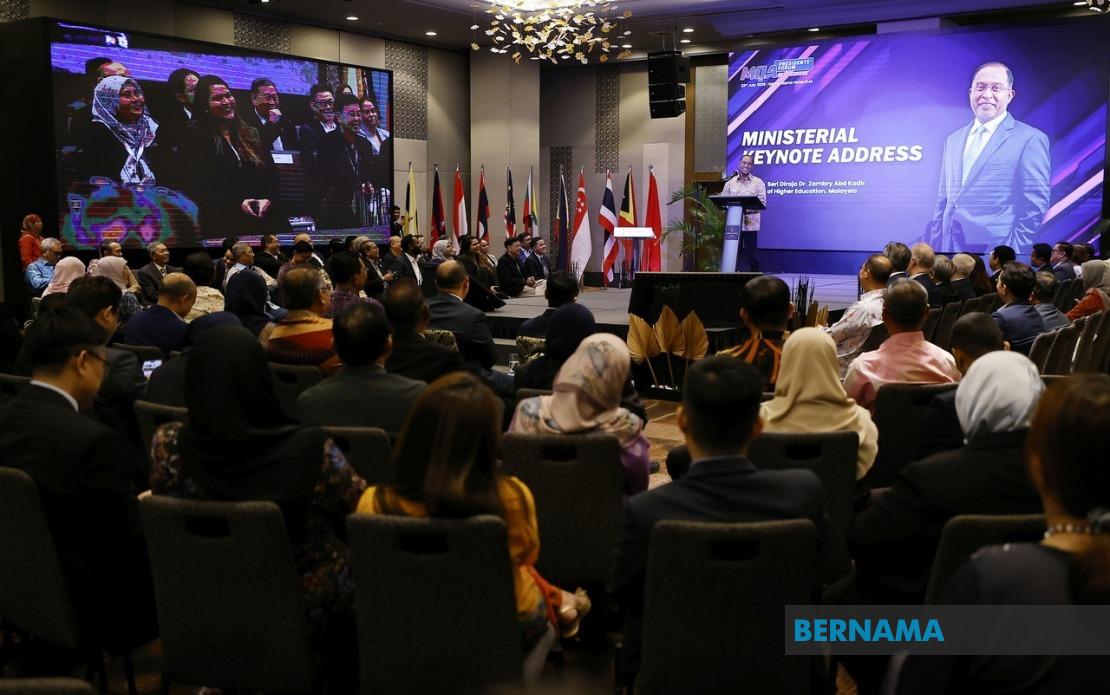
Malaysia's Higher Education Minister Datuk Seri Dr Zambry Abd Kadir has underscored the government's commitment to preserving academic freedom and creating environments where intellectuals can engage in meaningful discourse. Speaking at a public lecture in Putrajaya on July 23, Zambry emphasised that universities must remain bastions of open inquiry where competing viewpoints can be explored and challenged through respectful, evidence-based dialogue. This reaffirmation comes as institutions worldwide grapple with balancing free expression against concerns over polarisation and misinformation.
Zambry outlined a vision of higher education spaces characterised by intellectual rigour and civilised debate. He stressed that while the freedom to express diverse perspectives is paramount, such freedom carries corresponding responsibilities for scholars and students to ground their arguments in evidence and acknowledge the legitimacy of alternative viewpoints. This framing reflects a growing international consensus that academic liberty functions best when accompanied by ethical guidelines and scholarly standards.
The minister's remarks were made during a lecture by Columbia University's Prof Dr Joseph A. Massad on Muslim identity in globalised contexts, illustrating Malaysia's ongoing efforts to attract world-class scholars and facilitate cross-cultural intellectual exchange. By hosting distinguished academics from leading international institutions, Malaysia positions itself as a destination for rigorous academic engagement and demonstrates confidence in its ability to host complex, potentially sensitive discussions within university settings.
Zambry specifically highlighted Malaysia's multicultural and plural society as a compelling reason to prioritise informed dialogue and mutual understanding through academic channels. In a nation where Malays, Chinese, Indians and indigenous communities coexist alongside various religious traditions, universities become crucial forums where citizens can develop nuanced understandings of identity, belonging and difference. Scholarly approaches to contentious topics can model how disagreement need not lead to social fracture when conducted with intellectual integrity.
The minister acknowledged that disagreement is inevitable, particularly in an era dominated by artificial intelligence, rapid information dissemination and social media platforms that amplify polarisation. Rather than viewing this reality as a threat to social cohesion, he framed it as an opportunity for Malaysian society to demonstrate its mature approach to managing diversity. The principle of agreeing to disagree, deeply embedded in Malaysian political culture, provides a foundation upon which robust academic debate can flourish without undermining national stability.
Zambry's message also carries implications for Malaysia's international standing in higher education. As regional competitors like Singapore and South Korea invest heavily in research excellence and university rankings, Malaysia's commitment to academic freedom becomes a differentiating factor. International academics and researchers consider institutional autonomy and freedom of inquiry when choosing where to work and collaborate. By explicitly safeguarding these principles, Malaysia enhances its appeal to global talent pools essential for building world-class universities.
The emphasis on welcoming international scholars reflects strategic thinking about how Malaysia can benefit from global intellectual networks. Exchange programmes, collaborative research initiatives and visiting lectureships expose local academics and students to diverse methodologies, theoretical frameworks and perspectives. Such exposure strengthens the quality of Malaysian scholarship and encourages homegrown researchers to engage more confidently with international academic communities, ultimately elevating the country's research output and innovation capacity.
However, the minister's framing also hints at ongoing tensions surrounding academic expression in Malaysia. References to conducting debate with civility and evidence-based argumentation suggest awareness that some academic discourse has previously generated controversy. Universities operate within national legal and social frameworks that may constrain certain discussions, and the minister's careful language about responsibility alongside freedom indicates the delicate balance authorities must maintain between protecting intellectual inquiry and upholding other societal values and laws.
Looking forward, Zambry's statement signals the Higher Education Ministry's intention to actively cultivate conditions supporting scholarly excellence across Malaysian campuses. This involves not merely removing restrictions on academic speech but positively promoting critical thinking, methodological sophistication and ethical engagement with ideas. Investment in library resources, research facilities, academic conferences and international partnerships all contribute to ecosystems where genuine intellectual discourse can thrive and Malaysian scholars can make meaningful contributions to global knowledge production.
The commitment also reflects Malaysia's broader aspiration to position itself as a knowledge economy. Universities generate innovations, train skilled professionals and produce research addressing pressing global challenges from public health to climate adaptation. When academic freedom is robustly protected, these institutions become more effective engines of social and economic development. Researchers unconstrained by fear of censure pursue bold investigations that may yield unexpected breakthroughs, while students educated in environments valuing diverse perspectives become more adaptable citizens and leaders.
For Malaysian students and academics, the minister's assurances provide reassurance about the intellectual space available within local institutions. Many Malaysian families consider overseas universities partly due to perceptions about freedom of expression on campuses. Clear government backing for academic liberty potentially influences decisions to remain within or return to the Malaysian higher education system, preserving human capital and strengthening local institutions through the retention of talented individuals.
The timing of Zambry's remarks also matters. As global academic freedom faces mounting pressures from authoritarian governments, economic constraints on universities and political polarisation affecting campus climates, Malaysia's explicit endorsement of intellectual openness positions the country favourably within international conversations about university autonomy. Regional leadership in defending academic freedom can enhance Malaysia's diplomatic soft power and cultural influence within Southeast Asia and the broader developing world.

