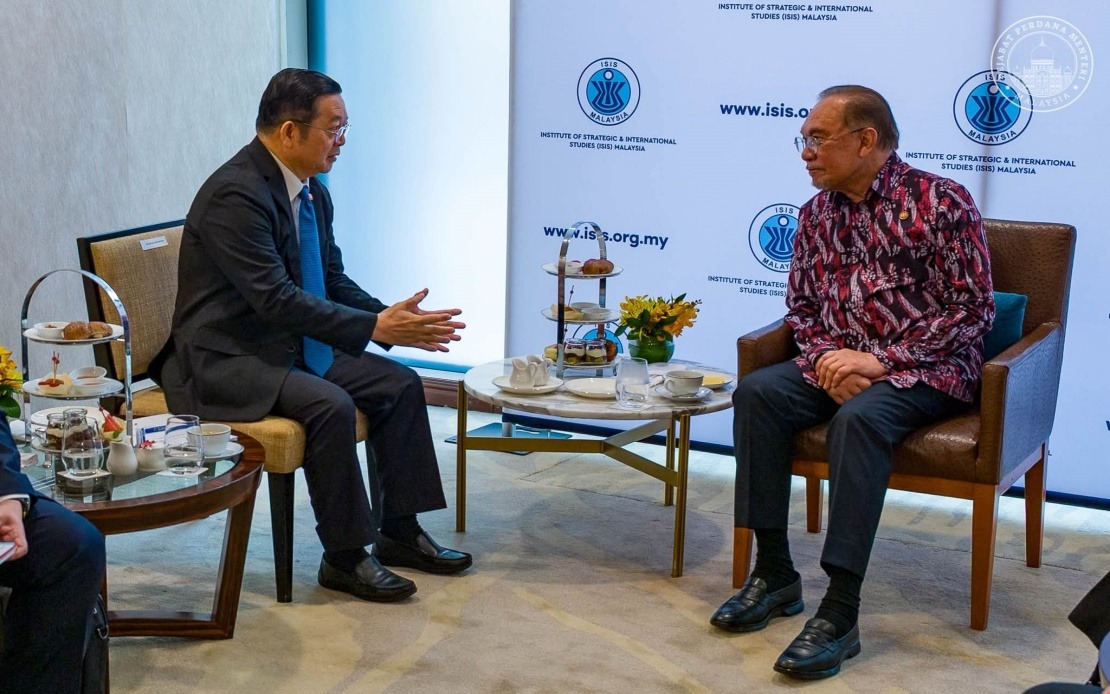
Prime Minister Datuk Seri Anwar Ibrahim has reaffirmed Malaysia's unwavering commitment to strengthening ASEAN as a resilient and inclusive regional community, emphasising the bloc's critical role in ensuring its member nations can fulfil the expectations of their populations. The assurance came during a courtesy meeting with ASEAN Secretary-General Dr Kao Kim Hourn on the sidelines of the 39th Asia-Pacific Roundtable, a high-level forum bringing together regional and global leaders to deliberate on pressing international issues.
The encounter provided a valuable platform for substantive dialogue on the complex array of challenges confronting the region, particularly as ASEAN navigates an increasingly fraught geopolitical environment marked by competing strategic interests and economic headwinds. For Malaysia, which has historically positioned itself as a bridge-builder within ASEAN, such engagements underscore the nation's determination to preserve the bloc's relevance and cohesion in an era of rapid geopolitical realignment and uncertainty.
During the discussion, Anwar, who concurrently holds the Finance Ministry portfolio, highlighted the significance of the meeting for exchanging perspectives on critical regional matters and ASEAN's strategic priorities. The agenda encompassed a wide spectrum of concerns that have become focal points for ASEAN deliberations, reflecting the organisation's expanding remit beyond traditional security and economic cooperation into emerging domains of global significance.
The political crisis in Myanmar emerged as a central topic, underscoring ASEAN's ongoing struggle to develop a unified approach to the deepening humanitarian and political catastrophe unfolding within its own ranks. The military-led government's crackdown on civilians and resistance movements has created a diplomatic quandary for ASEAN, which traditionally abhors external interference yet faces mounting international pressure to take decisive action. Malaysia's engagement on this issue carries particular weight given its geographic proximity and substantial migrant populations affected by Myanmar's instability.
The discourse also encompassed the contentious territorial disputes in the South China Sea, where competing maritime claims among ASEAN members and China continue to strain regional stability. The protracted negotiations surrounding a Code of Conduct and the persistent incidents between naval forces underscore the fragility of the current equilibrium. For Malaysia, which maintains significant interests in the disputed waters, this remains a defining challenge requiring deft diplomatic navigation to prevent militarisation whilst protecting national interests.
Artificial intelligence advancement emerged as another substantive concern, reflecting ASEAN's recognition that technological disruption requires coordinated regional governance frameworks. The rapid development of AI systems poses both transformative opportunities for economic growth and considerable risks to employment, security, and social cohesion across the region. Malaysia's participation in developing shared ASEAN norms around AI governance demonstrates the bloc's intention to shape global technological debates rather than merely respond to them.
Timor-Leste's recent accession to full ASEAN membership represented a significant milestone, bringing the total membership to eleven nations. The meeting addressed the practical implications of integrating the newest member, ensuring its smooth transition whilst maintaining institutional coherence and the organisation's operational effectiveness. This expansion also amplifies ASEAN's voice on the global stage, though it necessitates renewed commitment to consensus-building mechanisms that occasionally strain the bloc's decision-making apparatus.
The implementation trajectory of ASEAN Community Vision 2045, the strategic blueprint guiding the bloc's development over the next two decades, featured prominently in the exchange. This comprehensive agenda encompasses economic integration, social development, environmental sustainability, and political-security cooperation. For Malaysia, realising the Vision's ambitions requires coordinated investment in regional infrastructure, human capital development, and institutional strengthening across the eleven member states.
The implications of Middle Eastern geopolitical tensions for Southeast Asia also warranted serious attention. The escalating conflicts in West Asia have ramifications for regional trade routes, oil price stability, and security architecture. Muslim-majority nations like Malaysia face particular concerns regarding humanitarian dimensions and potential spillover effects, necessitating thoughtful diplomatic engagement that balances principle with pragmatism.
Anwar stressed that ASEAN's capacity to navigate this complex landscape depends fundamentally upon its adherence to foundational principles of unity, centrality, and cooperative engagement. ASEAN centrality—the notion that the bloc should remain the driving force in regional architecture and dialogue frameworks—has become increasingly contested as major powers seek to establish bilateral and minilateral arrangements that circumvent ASEAN mechanisms. Malaysia's advocacy for upholding this principle reflects broader concerns about maintaining ASEAN's agency in shaping its own destiny.
The commitment to collective peacefulness, stability, and prosperity cannot be sustained through rhetoric alone; it demands tangible institutional reforms, resource allocation, and diplomatic ingenuity. Malaysia's demonstrated willingness to engage constructively on these multifaceted challenges positions it as an anchor of ASEAN cohesion, particularly as the bloc confronts mounting pressures that could easily trigger fragmentation along national interest lines.
As ASEAN approaches a critical juncture in its evolution, with generational leadership transitions forthcoming in several member states and external powers intensifying their regional involvement, Malaysia's steadfast commitment to collective frameworks becomes increasingly invaluable. The nation's dual role as a substantial economic actor and a champion of ASEAN solidarity provides unique leverage to foster consensus on contentious matters whilst defending institutional integrity against those seeking to undermine regional solidarity for narrow strategic advantage.

