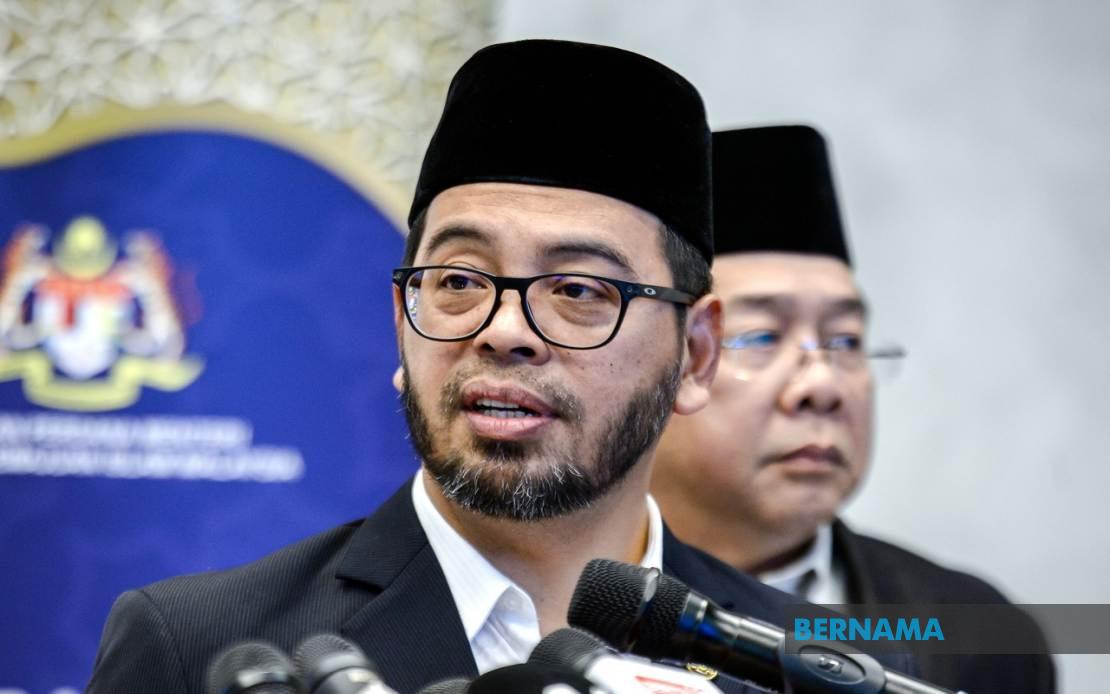
Malaysia's Religious Affairs Minister has issued a forceful rebuke of the detention of Sheikh Muhammad Hussein, the Grand Mufti of Jerusalem and custodian of Al-Aqsa Mosque, following his arrest after Friday prayers last week. The brief custody of the senior Islamic cleric, while ultimately resulting in his release, represents a serious breach of religious liberty and an affront to one of Islam's most sacred sites, according to Senator Dr Zulkifli Hasan of the Prime Minister's Department (Religious Affairs).
The detention incident underscores the escalating tensions surrounding access to and protection of holy sites in Jerusalem. By detaining a religious leader in the act of fulfilling his spiritual responsibilities at Al-Aqsa Mosque, the Malaysian government argues that the Israeli authorities have crossed a line that threatens fundamental principles enshrined in international law. The incident carries symbolic weight beyond the individual case, signalling broader concerns about the safeguarding of Muslim worship spaces and the immunity that ought to protect religious figures performing their duties.
In his official statement, Dr Zulkifli has appealed directly to the international community to intervene. He specifically called upon the United Nations and the Organisation of Islamic Cooperation to exert pressure for stronger protections of the right to worship, the physical safety of religious leaders, and the preservation of Al-Aqsa Mosque's status under international legal frameworks. This multilateral approach reflects Malaysia's long-standing position that regional disputes require mechanisms and oversight transcending bilateral relations.
The minister reiterated Malaysia's unwavering commitment to the Palestinian cause, framing solidarity with Palestinians not merely as a political stance but as a moral imperative grounded in opposition to what he characterised as systematic oppression. Malaysia pledged to continue supporting initiatives aimed at achieving what it views as a just and equitable resolution to the Israeli-Palestinian conflict, one that restores Palestinian dignity and rights while ensuring lasting peace.
In a separate but thematically connected statement, Dr Zulkifli drew attention to the 31st anniversary of the Srebrenica massacre, a mass atrocity that claimed over 8,000 Bosniak Muslim lives in July 1995. The timing and framing of these two statements reveal how Malaysia perceives contemporary religious persecution through the lens of historical Muslim suffering, viewing both as manifestations of sectarian violence and ethnic cleansing that demand remembrance and prevention.
The Srebrenica tragedy remains one of Europe's most devastating post-Cold War crimes. When Bosnian Serb forces captured the eastern town despite its United Nations designation as a safe area, they systematically executed thousands of Muslim men and boys over several days. The incomplete accounting—with more than 1,000 victims still unidentified—perpetuates trauma for survivors and their families, making ongoing identification and burial efforts emotionally and historically significant.
Malaysia's connection to Bosnia extends beyond rhetoric. The country dispatched a substantial military contingent to support United Nations peacekeeping operations there, with more than 10,500 Malaysian armed forces personnel serving in Bosnia and Herzegovina between 1993 and 1998. These troops participated in operations under both the Malaysian Battalion (MALBAT) and the Implementation Force (IFOR), representing a concrete commitment to regional stabilisation and protecting vulnerable populations. Additionally, Malaysia accepted Bosnian refugees and provided educational opportunities through institutions such as the International Islamic University Malaysia.
Dr Zulkifli highlighted the leadership roles of former Prime Minister Tun Dr Mahathir Mohamad and current Prime Minister Datuk Seri Anwar Ibrahim in championing the Bosnian Muslim cause on the international stage. The Muslim Youth Movement of Malaysia (ABIM) initiated early humanitarian relief efforts, demonstrating how Malaysian civil society mobilised in response to the crisis. These historical examples underscore how Malaysia views its responsibility toward Muslim communities facing conflict and persecution globally.
The minister framed the Srebrenica anniversary as a teaching moment for Malaysia's younger generation, urging them to extract lessons about the dangers of hatred, sectarian division, and state-sponsored violence. By invoking the tragedy in educational rather than purely commemorative terms, Dr Zulkifli sought to transform historical memory into a moral compass guiding contemporary attitudes toward pluralism and human rights.
The juxtaposition of these two issues—the detention at Al-Aqsa and the Srebrenica commemoration—reveals Malaysia's strategic narrative linking past and present instances of Muslim persecution. Both incidents, from Kuala Lumpur's perspective, illustrate how religious minorities and Muslim-majority populations can become targets of systematic oppression or security overreach, whether in the Middle East or the Balkans.
For Malaysian readers, these statements carry domestic implications as well. They signal the government's commitment to articulating religious freedom as both a universal principle and a particular concern for Muslim communities. As Malaysia itself navigates religious diversity and inter-faith relations, pronouncements defending the rights of Sheikh Muhammad Hussein and memorialising Srebrenica victims serve as implicit statements about how the Malaysian government believes religious minorities—including Muslims abroad—should be treated.
The minister's appeals to the UN and OIC reflect Malaysia's preference for multilateral mechanisms in addressing what it views as religious persecution. Rather than bilateral confrontation, Malaysia seeks to mobilise international institutions and the collective voice of the Muslim world, a diplomatic strategy consistent with its broader approach to regional and global affairs.

