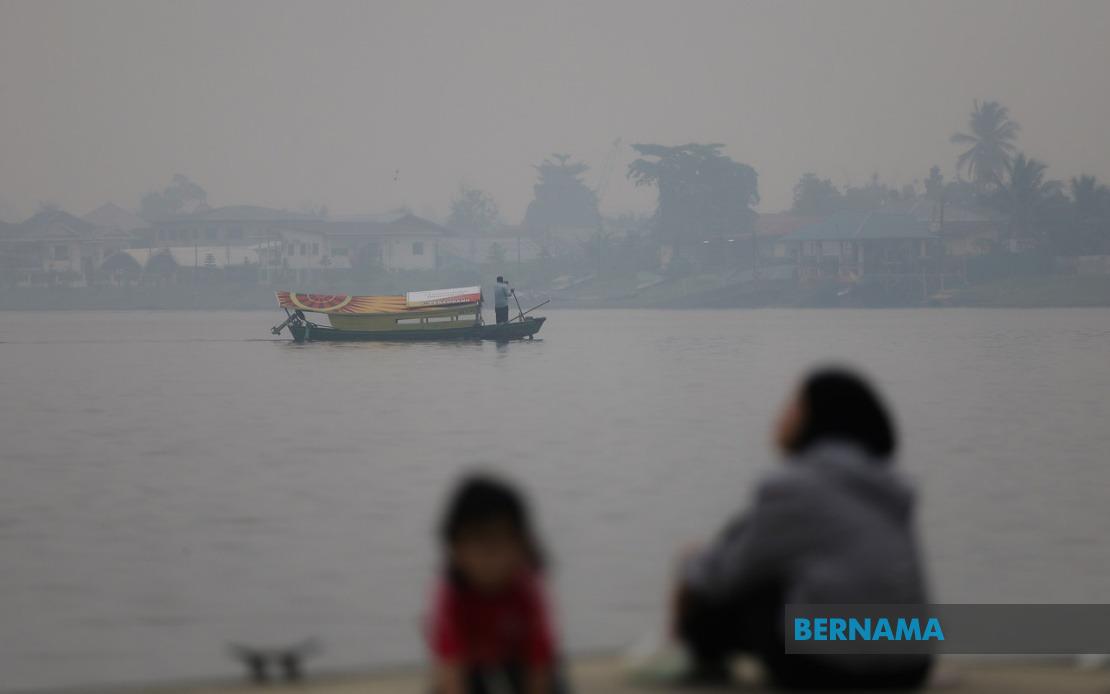
The Malaysian government has activated cloud seeding operations across multiple regions grappling with severe air pollution and water shortages, marking an escalation in its response to the ongoing haze crisis. Deputy Prime Minister Datuk Seri Dr Ahmad Zahid Hamidi disclosed that these weather-modification efforts target areas with Air Pollutant Index readings exceeding 150, while simultaneously prioritising regions where reservoir levels have fallen to concerning thresholds. The dual-focus strategy reflects the interconnected nature of Malaysia's environmental challenges, where transboundary haze not only degrades air quality but also exacerbates water security concerns during periods of reduced rainfall.
The cloud seeding initiative represents a collaborative undertaking involving the Malaysian Meteorological Department and the Royal Malaysian Air Force, pooling technical expertise and operational capabilities to maximise the effectiveness of precipitation enhancement. Ahmad Zahid explained that the timing and execution of such operations remain contingent on meteorological conditions, underscoring the complexity of weather-based interventions. Even when cloud formations are present over target zones, meteorologists must continuously assess whether atmospheric circulation patterns will carry moisture-laden clouds towards areas most in need of rainfall, introducing an element of uncertainty into the planning process.
The Deputy Prime Minister indicated that immediate operations commenced in Putrajaya, with subsequent cloud seeding activities scheduled across Sarawak, Kedah, and Perlis between September 3 and 5. This geographic distribution reflects the spatial variability of Malaysia's pollution challenge and water scarcity, requiring a decentralised approach to address localised conditions. The inclusion of East Malaysian and northern peninsular states suggests that the haze phenomenon, traditionally associated with seasonal patterns, is now manifesting across broader territorial expanse than historical precedent.
The urgency underlying these measures becomes evident when examining current air quality data from affected regions. Sarawak has emerged as a particular hotspot of atmospheric degradation, with three monitoring stations recording hazardous pollution levels as of late August. The Serian Police headquarters station registered an API reading of 412, a level categorised as hazardous and associated with serious health risks for vulnerable populations including children, elderly individuals, and those with respiratory conditions. The situation in Samarahan proved marginally less severe at 332, while Kuching recorded 304, both exceeding the 200 threshold that triggers public health advisory recommendations.
An additional complication appeared in Sri Aman, which recorded a very unhealthy API reading of 228, indicating that transboundary pollution affects not only isolated pockets but spans considerable geographic areas. These readings underscore the persistent challenge that Malaysia faces in combating haze originating from agricultural burning and industrial emissions across its borders, particularly during seasonal patterns when meteorological conditions favour the transport of particulate matter across the South China Sea region.
The connection between air quality deterioration and water resource management reflects Malaysia's vulnerability to compounding environmental stresses. When haze episodes coincide with dry seasons, reduced cloud cover and lower precipitation naturally suppress dam inflow, creating a convergence of water security risks. Cloud seeding in such contexts serves a dual purpose: dispersing pollutant concentrations through precipitation while simultaneously replenishing reservoirs facing draw-down from persistent drought conditions. This makes the intervention particularly relevant for urban centres and agricultural regions dependent on specific dam systems for water supply continuity.
For Malaysian readers, the implications extend beyond environmental metrics into practical daily life. Water rationing affects household consumption, industrial production, and public services, while air pollution imposes health costs ranging from respiratory treatment expenses to lost productivity. The government's proactive engagement with cloud seeding suggests recognition that traditional regulatory approaches targeting local emission sources require supplementation with adaptive strategies addressing transnational pollution and climate-induced water scarcity.
Regionally, Malaysia's experience with intensifying haze and water stress resonates across Southeast Asia, where similar transboundary air quality challenges affect Indonesia, Singapore, Thailand, and Vietnam. The deployment of cloud seeding technology, while not a panacea, represents part of a broader adaptive management framework that acknowledges the limits of conventional mitigation. Success in these operations depends not only on technical execution but also on sustained cooperation between regional governments in addressing the root causes of transboundary haze, particularly through enforcement of agricultural burning restrictions and implementation of cleaner production standards.
The challenge ahead extends beyond the September cloud seeding operations mentioned by Ahmad Zahid. Structural solutions addressing haze require coordinated diplomatic engagement with neighbouring countries and substantial domestic investments in pollution monitoring, early warning systems, and emergency response infrastructure. Cloud seeding operates as a tactical intervention within a broader strategic framework that must ultimately address the drivers of transboundary air pollution while simultaneously building resilience in Malaysia's water supply systems against climatic variability.

