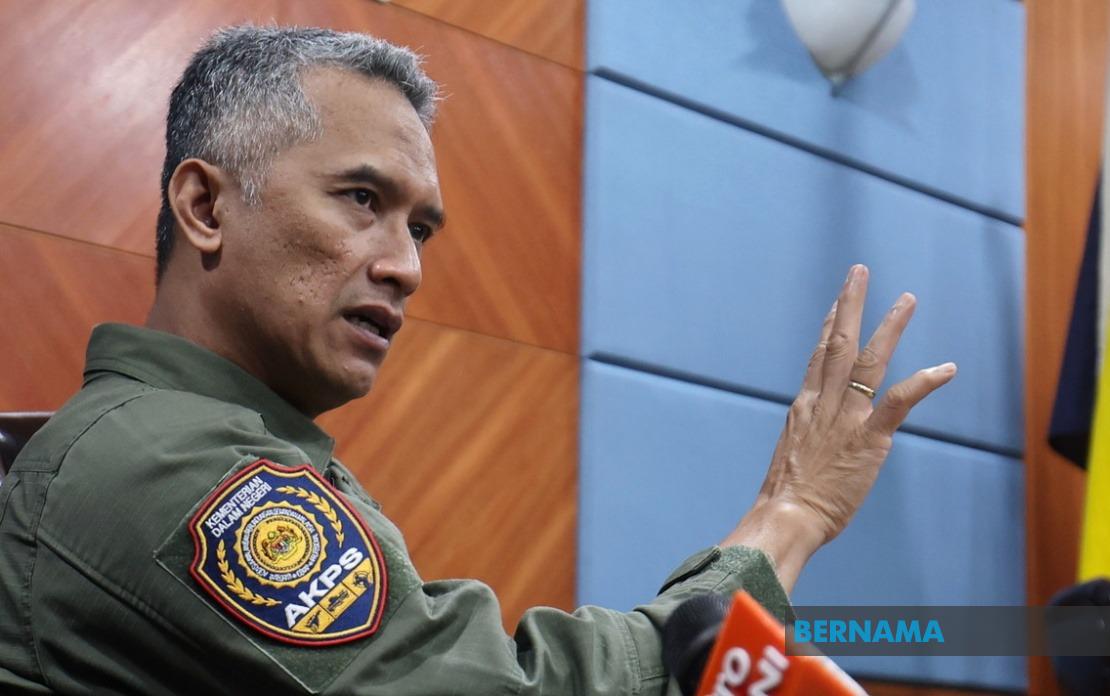
The Malaysian Border Control and Protection Agency (AKPS) is preparing for a significant surge in cross-border traffic this weekend as voters employed in Singapore return home to cast their ballots in the 16th Johor state election on Saturday, July 11. The agency will implement enhanced operations at the Sultan Iskandar Building (BSI) and Sultan Abu Bakar Complex (KSAB) — the country's primary land gateways — starting Friday to ensure orderly processing and minimal delays during the critical electoral period.
Director-general Datuk Seri Mohd Shuhaily Mohd Zain outlined an extensive operational strategy designed to absorb the anticipated influx without creating bottlenecks or congestion. The measures represent a coordinated mobilisation of resources and personnel, reflecting the logistical challenges posed by organising a state election that will determine 56 state assembly seats with 172 candidates in contention. The timing of a Saturday poll creates particular pressure at border facilities, as significant numbers of Johor residents working across the causeway typically commute daily and would need to return to vote.
At BSI, AKPS will activate 38 dedicated inbound car lanes alongside 35 electronic gates, two quick-response code counters, and 18 manual immigration stations throughout the operational period. This multi-layered approach aims to distribute passenger flow across multiple processing channels, preventing queues from forming at any single checkpoint. At KSAB, the agency will open 24 car-zone counters while maintaining between 18 and 24 electronic and manual counters at the bus processing area. These figures represent significant upscaling from routine operations, indicating AKPS's assessment that standard capacity would prove insufficient.
The tempo of enhanced operations will vary across the weekend. Dedicated lanes will run continuously from Friday, when initial waves of returning voters are expected, particularly during afternoon peak hours when Singaporean workplaces empty. On polling day itself, these priority lanes will operate from 12:01 am — effectively Friday night — until 6 pm Saturday evening, covering the full voting window. This extended Saturday afternoon operation reflects awareness that some voters may attempt last-minute returns, though the agency expects most to process through the system by morning.
Flexibility remains built into the operational model through contingency measures. If traffic volumes spike unexpectedly during Friday afternoon or Saturday morning rush periods, AKPS stands ready to activate hybrid counters and contra-flow lanes to expand capacity further. The agency can theoretically open an additional eight manual counters and six autogates at BSI's bus hall if congestion becomes severe. Should passenger processing areas approach capacity — normally accommodating around 1,500 people per hall — AKPS can segregate certain traveller categories and utilise the Golden Service counter area at bus lanes to maintain orderly flow. Historical data suggests BSI has previously handled simultaneous peaks of 5,500 people, with the existing infrastructure capable of processing up to 6,400 passengers hourly.
Mohd Shuhaily cited experience from the 2022 Johor state election to calibrate expectations, noting that most Johor-Singapore commuters are repeat daily travellers likely to ensure their return by Friday rather than risk delays on polling day itself. This pattern suggests that while Friday will see elevated volumes, Saturday congestion may remain manageable. The agency has nevertheless requested that all scheduled system maintenance, software upgrades, and hardware servicing be postponed on July 10 and 11, eliminating any technical vulnerabilities during the critical period.
Coordination extends beyond AKPS's direct purview. The agency is working closely with Singapore's Immigration and Checkpoints Authority (ICA) at the Woodlands Checkpoint to harmonise processing procedures on both sides of the border, preventing scenarios where Malaysian-side efficiency is negated by upstream Singapore delays. Within Malaysia, AKPS is coordinating with the Road Transport Department (JPJ) and the People's Volunteer Corps (RELA) at KSAB to streamline bus and factory vehicle movements, recognising that organised group transport rather than private vehicles will likely characterise much of the voter return traffic.
Recent traffic data provides a statistical foundation for operational planning. Between January and May 2026, BSI recorded daily traveller movements ranging from 300,000 to 350,000 persons. Malaysian citizens constituted 67 percent of this flow, Singaporeans 29.5 percent, with remaining foreign nationals accounting for the balance. This composition indicates that voter-origin traffic will represent a meaningful but not unprecedented surge relative to baseline cross-border activity, though concentrated into a compressed weekend timeframe rather than distributed across the entire week.
The operational focus on this weekend carries implications for longer-term border infrastructure planning. Mohd Shuhaily explicitly linked current preparations to future deployment of the Johor Bahru-Singapore Rapid Transit System (RTS) Link, anticipated to eventually become the preferred mode for such voter movements. The experience gained managing this election's cross-border traffic, he indicated, will inform expectations for RTS-era operations and the checkpoint capacity required to support this new transport corridor. This perspective positions the election preparations as a testing ground for emerging cross-border mobility patterns that will reshape how Malaysian-Singaporean movement flows function within years.
Malaysian voters commuting from Singapore represent a distinctly modern electoral constituency, employed in one nation-state but exercising franchise rights in another. Their participation requires border infrastructure to function efficiently during compressed timeframes, a challenge absent from purely domestic elections. The 172 candidates competing across 56 Johor assembly seats will thus benefit from administrative machinery calibrated to ensure this geographically dispersed voter segment can return, vote, and resume their Singapore work schedules with minimal disruption. Public advisories recommend advance journey planning and monitoring of official AKPS social media channels for real-time updates, acknowledging that informed voters who stagger their return rather than concentrating into final-hour surges substantially ease processing burdens. The coordination effort ultimately reflects how modern elections in border regions demand seamless integration of immigration control, traffic management, and administrative capacity across multiple agencies and even neighbouring jurisdictions.

