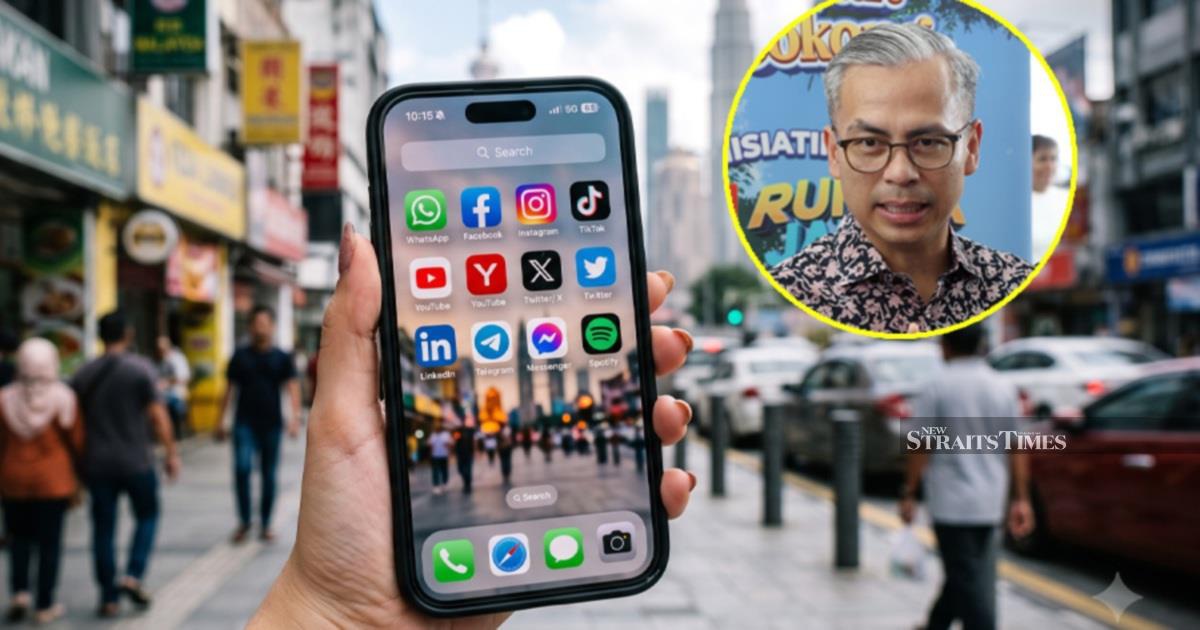
Communications Minister Datuk Seri Fahmi Fadzil has raised fresh alarm over a significant network of fraudulent social media accounts operating within Malaysia's digital ecosystem, disclosing that authorities have identified over 1,800 fake profiles engaged in coordinated inauthentic behavior. The minister's disclosure highlights a troubling pattern where these counterfeit accounts are being weaponized to deliberately amplify content touching on Malaysia's most sensitive social fault lines: matters pertaining to race, religion, and royalty—collectively known as the 3R issues that are explicitly protected under the nation's constitutional framework and laws.
The detection of such a large-scale network suggests a systematic approach to manufacturing artificial engagement and credibility around divisive narratives. Fake accounts operate by creating the false impression of widespread grassroots support for particular viewpoints, a tactic that can distort public perception and erode genuine democratic discourse. In Malaysia's context, where racial and religious harmony has been foundational to national stability since independence, the strategic use of coordinated inauthentic behavior to amplify 3R content represents a particularly concerning form of disinformation.
The identified accounts represent more than mere spam or commercial fraud. The deliberate targeting of 3R issues suggests either domestic actors seeking to inflame intercommunal tensions or potentially foreign entities attempting to destabilize Malaysian society through social division. The sophistication implied by coordinating over 1,800 accounts indicates resources, planning, and technical capability beyond typical bad actors operating casually online. This distinction between opportunistic mischief and organized disinformation campaigns carries significant implications for how authorities should respond.
Minister Fahmi's intervention demonstrates growing government attention to the intersection of technology, national security, and social cohesion. Malaysia's regulatory approach to online content has historically centered on legislation like the Communications and Multimedia Act and various provisions addressing sedition and religious sensitivity. However, the challenge of coordinated inauthentic networks requires responses that extend beyond reactive enforcement against individual pieces of content to encompassing the detection and disruption of organizational structures operating across platforms.
The timing of this disclosure coincides with Malaysia's broader engagement with digital governance challenges affecting the region. Southeast Asian governments collectively face pressure from both emerging technological threats and transnational disinformation operations. The prevalence of fake accounts in Malaysia reflects patterns documented across neighboring countries, where state and non-state actors have recognized social media's vulnerability to manipulation at scale. Understanding how these networks function in the Malaysian context provides valuable intelligence for regional cybersecurity and information integrity efforts.
Players in Malaysia's information ecosystem—including media organizations, civil society groups, and ordinary citizens—face the challenge of navigating an increasingly polluted digital environment where authentic voices compete for attention with coordinated artificial amplification. This dynamic threatens to undermine informed public discourse at precisely the moments when genuine dialogue about national issues becomes most critical. The deliberate targeting of race, religion, and royalty suggests perpetrators understand which topics generate the most emotional response and community engagement, making these vectors particularly effective for spreading divisive narratives.
The government's detection capability itself warrants examination. The identification of 1,800 accounts suggests either systematic scanning of social media platforms or intelligence gathered through reports and platform cooperation. Major social media companies have increasingly invested in detecting coordinated inauthentic behavior, though transparency about their detection efforts and government collaboration remains limited. Whether Minister Fahmi's figures derive from company notifications, independent government monitoring, or some combination determines the actual scope of the threat and reveals something about Malaysia's digital surveillance infrastructure.
Responding to this phenomenon requires balancing competing imperatives. Enhanced monitoring and detection of fake accounts serve legitimate national security interests, particularly concerning content designed to incite interethnic or interfaith tension. Simultaneously, the mechanisms deployed to identify and counter disinformation must avoid overreach that suppresses genuine expression or concentrates excessive power over information flows in state hands. Malaysia's track record of applying security-related laws broadly gives legitimate grounds for civil society concern that counter-disinformation efforts could expand into content suppression more generally.
The strategic focus on 3R issues by these fake accounts illuminates how coordinated disinformation campaigns target specific vulnerabilities within national contexts. In countries with different demographic compositions, threat perceptions, or historical experiences, sophisticated disinformation networks would target entirely different sensitivities. The Malaysia-specific targeting of race, religion, and royalty represents opponent analysis—understanding what will most effectively divide Malaysian society and distract from other national concerns. This customization suggests the disinformation operation was designed specifically for Malaysian conditions rather than representing generic spam or global manipulation campaigns.
Looking forward, addressing this threat comprehensively requires sustained institutional capacity for detection and investigation, transparent cooperation between government and technology platforms, and public awareness about how coordinated inauthentic networks function. Citizens who understand that apparent grassroots support for inflammatory content may actually reflect artificial amplification become more resistant to manipulation. The privacy and civil liberties implications of enhanced monitoring nonetheless demand that responses remain proportionate and subject to genuine oversight mechanisms.
Minister Fahmi's disclosure also underscores why digital literacy and critical consumption of online information matter increasingly for Malaysian society. When over 1,800 accounts can be mobilized to amplify divisive narratives, individuals equipped to evaluate source credibility, recognize signs of coordinated behavior, and resist emotional manipulation become essential to democratic resilience. The government's role includes not only detecting and disrupting these networks but also helping citizens develop the capacities to recognize and resist disinformation operating within their information diets.

