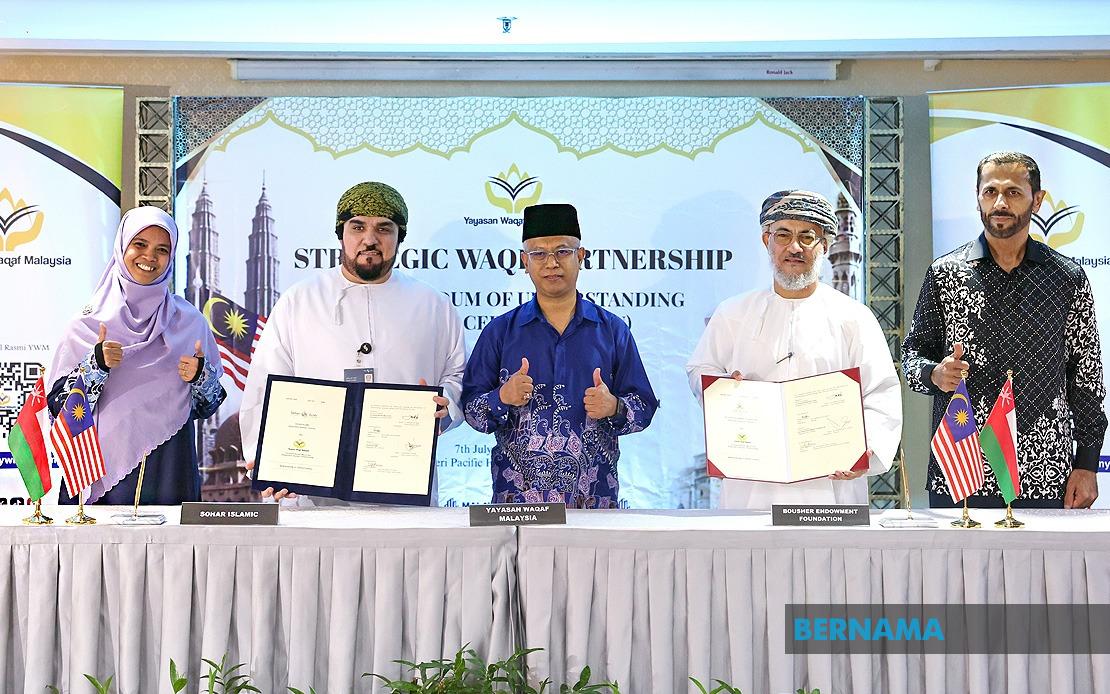
Malaysia has moved to cement its standing as a centre of excellence in Islamic social finance by formalising a strategic partnership with two prominent institutions from the Sultanate of Oman. The Malaysian Waqf Foundation (YWM) has entered into a memorandum of understanding with Sohar Islamic and the Boushar Endowment Foundation, establishing a framework for collaborative work in waqf asset development and innovation in Islamic finance structures. The agreement, signed in Kuala Lumpur, represents a shift in the typical direction of knowledge transfer in the Islamic finance sector, with Malaysia now exporting its expertise rather than importing it from traditional Gulf centres.
The partnership encompasses a comprehensive exchange of best practices, technological solutions, and governance frameworks across the waqf ecosystem. Rather than a superficial alignment of interests, the collaboration has already resulted in substantive institutional recognition, with YWM's chief executive officer Dr Ridzwan Bakar being appointed as Waqf Adviser to both Omani entities. This particular distinction underscores how Malaysian institutions have developed distinctive competencies in managing waqf assets that command respect among peers in the Organisation of Islamic Cooperation member states.
Deputy Minister in the Prime Minister's Department (Religious Affairs) Marhamah Rosli characterised the agreement as emblematic of international acknowledgment regarding Malaysia's capacity to construct a waqf system that functions both as a structured framework and as a vehicle for social impact. She emphasised that such bilateral engagements transcend bilateral benefit, instead contributing to the broader welfare of Muslim communities globally and reinforcing Malaysia's soft power through Islamic institutional leadership. The presence of Mohamed Najeeb Al Bulushi, Deputy Head of Mission of the Sultanate of Oman to Malaysia, alongside Malaysian officials at the signing ceremony underscored the diplomatic significance attached to the arrangement by both nations.
The foundation's international expansion reflects a deliberate strategy to position Malaysia within a network of Islamic finance hubs. Beyond Oman, YWM has been cultivating relationships with Kuwait, Qatar, and the United Arab Emirates, gradually establishing Malaysia as a node in a broader regional ecosystem of waqf innovation. These relationships have developed organically through institutional visits in 2023 and 2024, during which YWM personnel explored the practical opportunities for cooperation in waqf development and investment strategies. The receptiveness of Omani counterparts to Malaysian approaches suggests that Southeast Asian models have resonated with institutional leaders in the Gulf, a significant achievement given the historical dominance of Gulf-centric Islamic finance narratives.
Waqf development itself represents an unconventional approach to addressing poverty and social inequality within Muslim-majority societies. Unlike conventional charitable giving, waqf mechanisms establish permanent asset bases whose returns flow perpetually toward stipulated beneficiaries. This structural distinction positions waqf as a vehicle for building sustained economic capacity rather than providing temporary relief. Dr Ridzwan articulated this philosophy in discussing the necessity of developing productive waqf assets before distributing benefits, arguing that strengthening the underlying economic base enables assistance to reach beyond traditional categories of beneficiaries known as asnaf to encompass B40 and M40 income groups—a broader conception of vulnerability than conventional Islamic jurisprudence typically addresses.
The investment dimension of this partnership carries particular significance for Malaysia's positioning within global Islamic finance markets. YWM currently operates three investment products through Kenanga Investors designed to attract capital into Malaysia from international Islamic investors, particularly from Arab markets. By demonstrating technological sophistication and governance maturity in waqf structures, Malaysia can differentiate itself from competitors and attract asset flows that have traditionally concentrated in Gulf centres. The Oman collaboration serves as a proof point that Malaysian institutions can articulate and deliver solutions for waqf challenges faced across the Islamic world.
From a Southeast Asian perspective, this partnership represents a subtle but important realignment of influence within Islamic institutional networks. Malaysia's success in exporting waqf expertise to the Gulf region—traditionally viewed as the epicentre of Islamic finance innovation—suggests that regional Islamic finance capabilities have matured sufficiently to influence practice beyond Southeast Asia. This development carries implications for how other ASEAN nations perceive opportunities in Islamic finance sectors and for how Malaysia positions itself within broader regional frameworks of financial cooperation and integration.
The timing of this initiative reflects broader momentum in Malaysia's Islamic finance sector. Recent years have witnessed significant regulatory evolution, institutional consolidation, and product innovation within the waqf space domestically. These developments have created both expertise and confidence among Malaysian practitioners, who now view international expansion not as aspirational but as a logical extension of competitive advantages already established at home. The appointment of Malaysian personnel as advisers to foreign institutions formalises what has long been implicit—that Malaysian institutions possess practical knowledge valuable to international peers.
For Malaysian policymakers and stakeholders in Islamic finance, the Oman collaboration signals that expertise development in niche sectors can generate tangible diplomatic and economic returns. The partnership demonstrates how institutional excellence in specialised domains can become a vehicle for soft power projection and for positioning the nation as a thought leader within global Islamic finance architecture. As Malaysia continues cultivating relationships across the Islamic world, such partnerships will likely multiply, embedding Malaysian approaches and Malaysian institutions deeper within international Islamic finance networks and establishing frameworks through which Malaysian practitioners exercise influence over how Islamic finance evolves across multiple jurisdictions.

