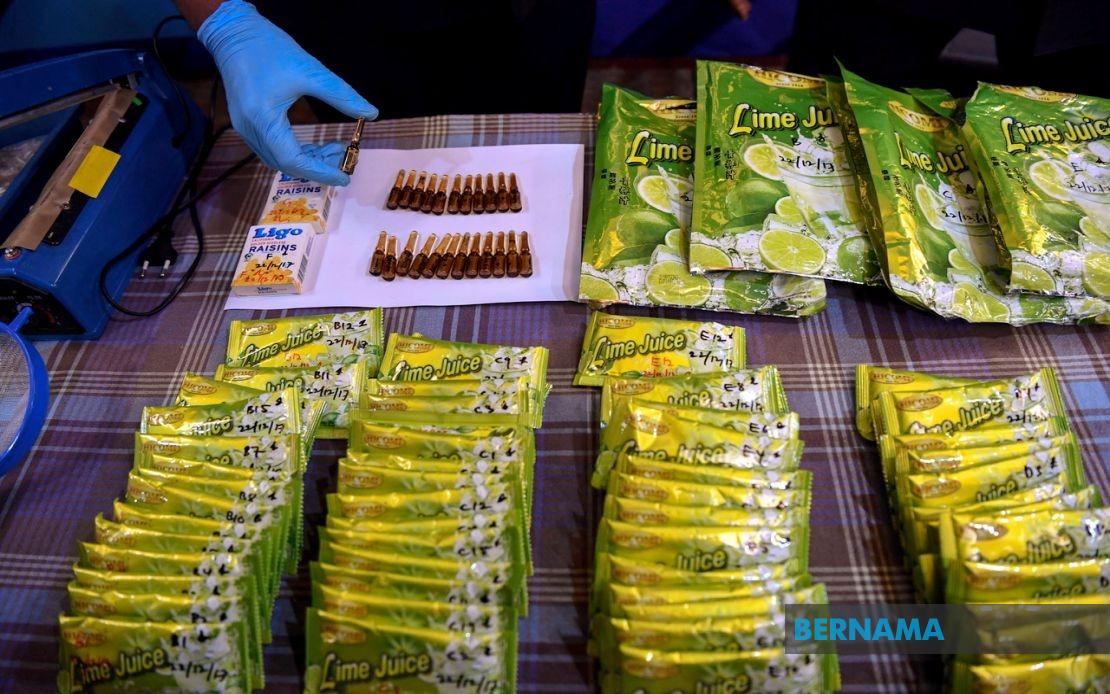
The Malaysian government is moving decisively against a burgeoning synthetic drug epidemic that threatens to destabilise communities across the nation. Home Minister Datuk Seri Saifuddin Nasution Ismail has sounded the alarm over methamphetamine, "piu-piu" psychoactive pills, and fentanyl now circulating in local markets, characterising the surge as a critical public health and law enforcement challenge. The proliferation of these substances has triggered alarm bells at the highest levels of the Home Ministry, with officials pointing to their exceptionally high addiction potential, capacity to trigger fatal overdoses, and their correlation with escalating criminal activity and deteriorating social conditions across urban and rural districts.
The scale of the problem becomes evident in the enforcement figures released during parliamentary proceedings this week. According to data presented by the Home Minister, the Royal Malaysia Police recorded 238,704 arrests nationwide for various synthetic drug-related offences during the period spanning 2023 through June 2026. This represents an unprecedented volume of law enforcement action concentrated on a relatively brief window, underscoring both the pervasiveness of the illicit drug trade and the authorities' determination to reverse its trajectory. The breadth of these arrests encompasses individuals at all levels of the distribution chain, from street-level users to organised trafficking syndicates orchestrating the movement of contraband across international borders and throughout the country's transportation networks.
In response to parliamentary scrutiny from Mohamad Shafizan Kepli, the Batang Lupar representative, regarding synthetic drug distribution and abuse in Sarawak's rural and remote enclaves, the Home Ministry disclosed the operational framework underpinning its counter-narcotics strategy. The police force has activated multiple enforcement operations including Op Tapis and Op Tapis Khas, deploying personnel across diverse geographic terrains from densely populated urban centres to sparsely populated rural and frontier regions. These operations function within an inter-agency architecture that brings together the National Anti-Drugs Agency and the Royal Malaysian Customs Department, creating a coordinated intelligence and enforcement ecosystem designed to intercept contraband and dismantle trafficking networks at multiple chokepoints.
Technological innovation has become integral to the enforcement apparatus. The Home Ministry's statement reveals that authorities are now deploying unmanned aerial vehicles and sophisticated surveillance infrastructure to detect and suppress drug trafficking operations. These technological investments reflect a modernised approach to law enforcement that moves beyond traditional street-level interdiction, enabling detection of activities in areas previously difficult to monitor. The integration of drone surveillance and electronic monitoring systems allows authorities to maintain persistent oversight of suspected trafficking corridors and distribution points, creating an enforcement environment increasingly hostile to organised drug operations.
The legislative framework governing narcotics enforcement is also undergoing evolution. Saifuddin Nasution indicated that the government is contemplating amendments to the Dangerous Drugs Act 1952 specifically designed to accommodate newly synthesised psychoactive substances and novel synthetic compounds classified as New Psychoactive Substances. This legislative adaptation represents a recognition that the statutory schedule of controlled substances must evolve in tandem with chemists' development of novel compounds designed to circumvent existing prohibitions. By updating the legislative schedule to encompass emerging synthetic drugs before they establish significant market presence, authorities aim to arrest the problem at an earlier stage of proliferation.
Beyond enforcement operations, the government has committed substantial resources to demand reduction through community-based preventive initiatives. Between 2023 and June 2026, authorities conducted 1,144 drug prevention programmes across the country, reaching populations with messaging designed to discourage experimentation and raise awareness of synthetic drug dangers. This preventive orientation complements the enforcement dimension, recognising that sustainable progress against drug abuse requires both deterrence through punishment and education through community engagement. The volume of prevention programming reflects an institutional commitment to reshaping social attitudes toward drug consumption rather than relying exclusively on the stick of criminal sanctions.
Sarawak presents a particularly acute challenge for drug enforcement authorities, reflecting patterns evident across Southeast Asia where remote frontier regions often become conduits for international trafficking networks and emerging consumption markets. During the January to June 7, 2026 period, Sarawak authorities apprehended 7,097 individuals on drug-related charges. The composition of these arrests reveals the enforcement strategy's breadth: 342 individuals charged with trafficking, 1,314 apprehended for possession, and 5,441 for consumption-related offences. These figures illustrate a prosecutorial approach that extends from organised traffickers down to individual users, reflecting a comprehensive enforcement philosophy targeting behaviour at every point in the supply and consumption chain.
The material impact of enforcement operations in Sarawak has been substantial. During the same six-month reporting period, authorities confiscated 418.01 kilogrammes of drugs estimated at RM53.73 million in street value, depriving traffickers of inventory and revenue while simultaneously reducing drug availability in local markets. Authorities also secured the detention of 13 individuals under the Dangerous Drugs (Special Preventive Measures) Act 1985, a statute permitting extended custody of individuals deemed to pose particular flight or reoffence risks. Additionally, enforcement actions targeted 131 individuals classified as hardcore drug addicts under Section 39C of the Dangerous Drugs Act 1952, these provisions emphasising compulsory rehabilitation and institutional treatment rather than purely punitive incarceration.
The seizure of syndicate assets worth RM1.95 million represents another dimension of the enforcement strategy targeting the financial foundations of trafficking organisations. By confiscating vehicles, properties, and financial instruments used in drug operations, authorities degrade the operational capacity of trafficking networks and undermine the economic incentives motivating organised crime participation. This asset-based enforcement approach acknowledges that dismantling trafficking organisations requires attacking not merely their personnel but their material and financial infrastructure.
The Home Ministry has also prioritised enhancement of forensic and analytical capabilities essential to combating next-generation synthetic drugs. Forensic laboratory facilities are being upgraded to profile and identify emerging drug variants, particularly fentanyl analogues and synthetic opioids that represent particularly dangerous substances. Enhanced laboratory capacity enables faster analysis of seized materials, more accurate identification of new compounds, and earlier detection of emerging market trends, allowing enforcement resources to be strategically deployed against threats as they materialise rather than after they become entrenched. This intelligence-driven approach positions Malaysia as increasingly sophisticated in its pharmacological monitoring and enforcement response.
The Southeast Asian context amplifies the urgency of Malaysia's anti-synthetic drug campaign. The region occupies a critical position in global narcotics trafficking networks, with geographic proximity to major drug production zones in the Golden Triangle and established smuggling infrastructure facilitating the movement of contraband through Malaysia's ports, borders, and transportation hubs. The proliferation of synthetic drugs represents not merely a local problem but participation in a transnational phenomenon that simultaneously afflicts Indonesia, Thailand, the Philippines, and other regional neighbours, making coordinated international enforcement cooperation an essential component of any sustainable control strategy.

