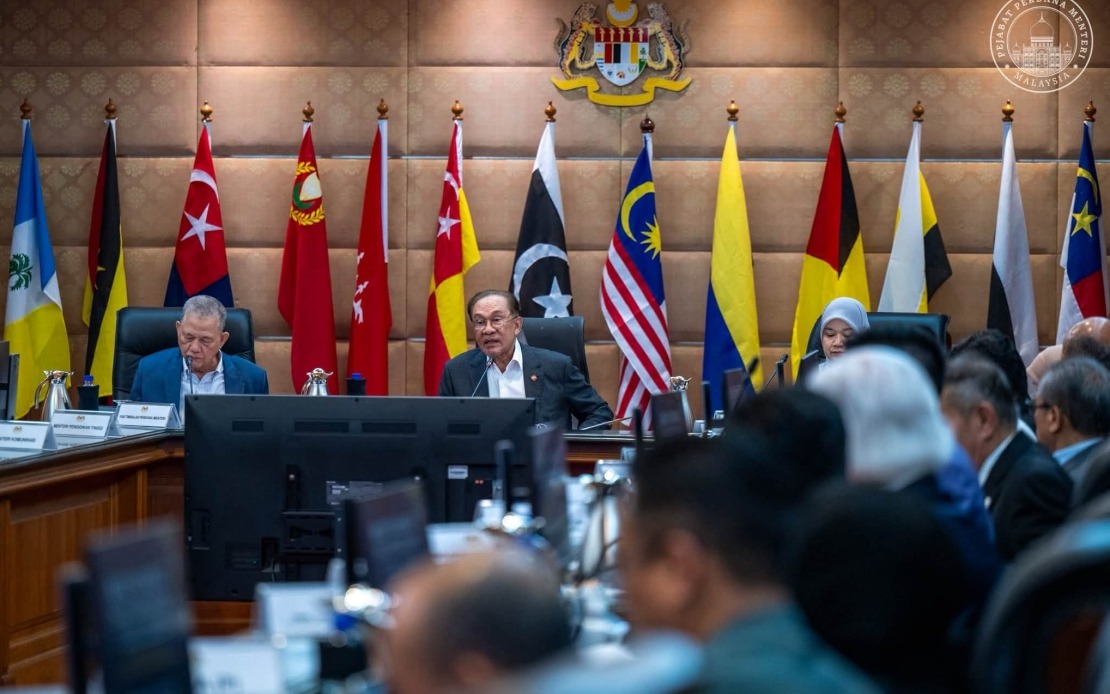
Malaysia has formally established a National Education Council tasked with steering comprehensive reforms across the country's education landscape. Prime Minister Datuk Seri Anwar Ibrahim announced the initiative following the council's inaugural meeting on June 30, 2026, signalling the government's commitment to repositioning education as a strategic priority for national development and future competitiveness.
The council's mandate extends beyond incremental improvements to embrace substantive transformation of how Malaysia educates its young people. Anwar outlined that the body will concentrate on modernising educational content and curriculum frameworks to align with contemporary economic and social demands. This includes a deliberate push to enhance proficiency in English as a second language—a critical skill gap that has long concerned employers and universities across the region—while deliberately preserving the foundational role of Bahasa Malaysia, cultural heritage, and moral education within the broader Malaysia MADANI vision.
The inaugural council meeting examined educational direction across two critical pillars: school-level education and higher learning institutions. This dual focus acknowledges that systemic reform cannot succeed by treating schools and universities in isolation. Instead, a coherent pathway from primary education through tertiary qualifications requires coordinated strategy and shared objectives about what skills and competencies the nation requires.
Strengthening English language instruction carries particular significance for Malaysian economic prospects. As a multilingual nation and a regional business hub, Malaysia's competitive advantage increasingly depends on citizens who can seamlessly operate in English across professional, academic, and diplomatic contexts. The council's explicit attention to this dimension suggests recognition that current outcomes fall short of employer expectations and international standards, particularly among school leavers entering the workforce or pursuing tertiary education abroad.
Territorial and district-level quality improvement featured prominently in the council's discussions, reflecting awareness that educational outcomes vary significantly across Malaysia's geographic and socioeconomic landscape. Concentrating on district-level elevation of educational quality addresses persistent disparities between urban and rural schools, between well-resourced and under-resourced institutions. This localised approach potentially offers better results than centralised mandates that fail to account for differing community needs, infrastructure availability, and demographic realities.
The council also prioritised empowerment of the Bumiputera education agenda, a longstanding policy pillar designed to expand educational opportunity and advancement for indigenous Malaysians. Integrating this priority within a broader reform framework ensures that modernisation efforts do not inadvertently widen existing opportunity gaps. The framing suggests an intention to make Bumiputera advancement compatible with, rather than separate from, overall system improvement.
Building a science, technology, engineering, and mathematics talent pipeline emerged as another strategic focus. Southeast Asian nations, including Malaysia, face acute shortages of qualified STEM professionals even as digital transformation, advanced manufacturing, and biotechnology drive economic growth. A deliberate pipeline approach—beginning at secondary education and extending through tertiary pathways into employment—represents recognition that sporadic interventions have failed to generate sufficient domestic talent. This requires coordinated curriculum development, teacher training, and alignment with industry needs.
Anwar's remarks emphasised that educational evaluation must proceed objectively, drawing on expertise from diverse stakeholders rather than relying on bureaucratic consensus or political ideology alone. This call for evidence-based assessment suggests frustration with longstanding debates about education policy that have sometimes privileged ideological positions over empirical outcomes. By explicitly inviting views from various parties, the government signals openness to input from educators, employers, parents, civil society, and academic researchers.
The Prime Minister cautioned against institutional complacency, arguing that comfort with existing systems represents a serious impediment to necessary progress. This framing rejects the notion that Malaysia's education system, despite recognised challenges, requires only incremental tinkering. Instead, Anwar positioned meaningful reform as both necessary and achievable, provided the nation exhibits sufficient courage and commitment to implementation. The language suggests readiness to challenge entrenched interests or established practices if evidence demonstrates their inadequacy.
For Malaysian policymakers and educators, the council's establishment represents both opportunity and expectation. The incoming months will test whether the council translates aspirational statements about reform into concrete policy changes, resource allocations, and implementation mechanisms that measurably improve student outcomes. Success will require sustained political will, adequate funding, teacher development initiatives, and willingness to adjust course based on evidence rather than defending initial decisions.
The implications extend beyond Malaysia's borders. As Southeast Asia's education systems compete to produce graduates suited to regional and global labour markets, Malaysia's reform trajectory influences the region's overall human capital development. Neighbouring countries will monitor whether the National Education Council delivers genuine transformation or merely represents another institutional layer without substantive change. Success could position Malaysia as a regional education reform leader; failure risks widening the competitiveness gap with other ASEAN economies investing heavily in educational modernisation.
The council's attention to balancing modernisation with preservation of national identity and values reflects Malaysia's distinctive challenge: becoming educationally competitive while maintaining cultural continuity and moral formation. This balancing act, if executed thoughtfully, could offer valuable lessons for other multicultural, multilingual nations navigating similar tensions.

