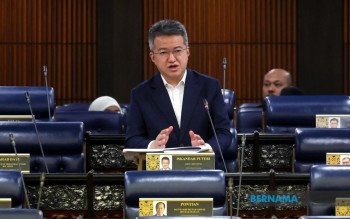
Parliament took a significant step toward securing Malaysia's long-term fiscal stability on July 14 when Deputy Finance Minister Liew Chin Tong tabled the National Trust Fund Bill 2026 for its first reading in the Dewan Rakyat. The proposed legislation establishes the National Trust Fund (KWAN) and its governing entity, the National Trust Fund (Incorporated), with the mandate to administer, manage and invest accumulated reserves across coming decades. This structural approach reflects growing recognition among Malaysian policymakers that demographic shifts, resource depletion, and shifting global economic conditions demand forward-looking financial mechanisms to protect national interests beyond the current electoral cycle.
The bill represents a departure from Malaysia's traditional approach to managing sovereign wealth, moving toward institutionalized long-term savings comparable to Norway's Government Pension Fund Global or similar vehicles adopted across developed and developing economies. Rather than allowing revenue windfalls to flow directly into annual budgets, the framework creates a dedicated repository designed to insulate reserves from short-term political pressures and cyclical spending demands. The second reading is scheduled during the current parliamentary session, indicating the government's intention to advance the legislation expeditiously through remaining procedural stages.
Government contributions form the financial backbone of this initiative. The Federal Government commits to transferring a minimum of 0.1 percent of its projected annual revenue annually into KWAN, ensuring baseline contributions that scale with national economic performance. This foundational commitment alone would funnel billions of ringgit into the fund over successive decades, particularly during periods of robust revenue growth. The contribution structure remains flexible; parliamentary oversight through annual financial statements tabled in the Dewan Rakyat ensures transparency while allowing adjustment mechanisms as circumstances warrant.
Petroleum revenues feature prominently in the funding architecture. The government must channel at least two percent of annual dividends received from Petroliam Nasional Bhd (Petronas) into the fund, leveraging the state oil company's substantial earnings to build reserves. This allocation recognizes that Petronas dividends, while significant, remain volatile depending on global crude prices and production volumes—conditions largely beyond Malaysian control. By systematizing these transfers, the legislation protects the fund from ad-hoc appropriation while institutionalizing a share of hydrocarbon wealth for posterity.
Resource extraction duties similarly contribute to KWAN. The government commits no less than two percent of export duties derived from depleting resources—after deducting duty-related assignments to resource-producing states—to the fund. This provision acknowledges that finite natural resources cannot sustain revenue indefinitely and that prudent governance requires converting temporary resource rents into permanent intergenerational assets. States deriving royalties from petroleum or mineral exploitation may also contribute voluntarily, creating a cooperative federalism mechanism that incentivizes resource-rich jurisdictions to participate in national wealth preservation.
The National Trust Fund (Incorporated) board shoulders responsibility for translating these contributions into meaningful returns. The legislation mandates formulation of a strategic asset allocation framework specifying long-term investment philosophy, presumably extending across decades and encompassing diversified global asset classes. This approach moves beyond simple capital preservation toward genuine wealth-building through disciplined portfolio management. Investment returns, compounded over 20, 30, or 50-year horizons, could amplify initial contributions substantially, magnifying the fund's capacity to generate sustainable income streams for future public expenditure.
Accountability mechanisms underpin the fund's governance structure. The National Trust Fund (Incorporated) must furnish the Finance Minister regular returns, reports, accounts and other information respecting fund assets and activities as required. This reporting framework ensures ministerial oversight while maintaining institutional distance from electoral political cycles. The integration of accountability requirements into statute protects against mission creep or politicization while preserving democratic control through parliamentary scrutiny of annual financial statements and legislative amendments.
Operational expenses and board remuneration represent permitted fund applications, alongside legitimate investment costs. The legislation authorizes KWAN's moneys to cover compensation, reimbursement and related expenses for National Trust Fund (Incorporated) board members, officers and servants, ensuring the governing institution attracts capable administrators. Investment management costs, administration fees, and other direct expenditures necessary to fund operations remain authorized draws. This pragmatic approach recognizes that effective stewardship requires adequate resourcing while maintaining discipline against mission-unrelated spending.
The National Trust Act 2026 will commence operations on a date appointed by the Finance Minister through Gazette notification, allowing preparatory administrative work to proceed after royal assent. This staggered activation accommodates establishment of governance structures, recruitment of investment professionals, and development of operational protocols before funds begin accumulating systematically. For Malaysian investors and financial professionals, the fund's eventual operation creates substantial institutional asset management opportunities and career pathways within a sophisticated, large-scale investment vehicle.
Regionally, Malaysia's trust fund initiative positions the country alongside peers adopting similar mechanisms. Singapore's Government Investment Corporation and Indonesia's proposed sovereign wealth reorganizations reflect comparable recognition that systematic wealth preservation requires dedicated institutions insulated from annual budgetary pressures. As Southeast Asian economies mature and face demographic transitions, such mechanisms increasingly characterize responsible fiscal stewardship. Malaysia's approach, grounded in transparent statutory requirements and mandatory government contributions, offers a potentially replicable model for other ASEAN members contemplating similar institutional reforms.
The legislation's passage would mark a philosophical shift in Malaysian governance toward intergenerational equity. Rather than assuming perpetual resource availability or expecting future generations to manage without accumulated reserves, the trust fund embodies commitment that prosperity should be shared across time. For ordinary Malaysians, this means future government revenues potentially supported by compounding fund earnings, reducing fiscal pressures during economic downturns or demographic strains. The institutional architecture, while technically complex, ultimately serves a straightforward purpose: ensuring that Malaysia's current wealth benefits not merely this generation but generations yet unborn.

