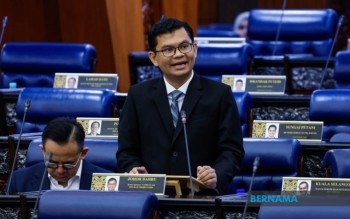
The Malaysian government is mobilising a comprehensive response to the cascading effects of the global supply crisis, with Economy Minister Akmal Nasrullah Mohd Nasir informing Parliament that it has initiated or is pursuing 120 decisions approved by the National Economic Action Council. Speaking in the Dewan Rakyat on June 29, Akmal Nasrullah underscored that 27 of these interventions have reached full implementation while the remaining 93 are currently in execution, demonstrating what he characterised as the government's sustained commitment to managing supply chain instability and protecting Malaysia's economic foundation.
The breadth of the government's intervention framework reveals recognition that supply-side shocks are now a structural feature of the global economy rather than temporary aberrations. By articulating a distinction between completed and ongoing measures, the minister sought to convey both concrete progress and realistic acknowledgement that managing such crises demands continuous recalibration. The targeted nature of these 120 decisions reflects a deliberate strategy to cushion vulnerable segments of the economy—particularly micro, small and medium enterprises—while maintaining the flow of critical goods that ordinary Malaysians depend upon daily. This dual focus on protecting livelihoods and ensuring essential supply availability has become central to how governments across Southeast Asia frame their economic stability narratives.
Akmal Nasrullah's remarks to Parliament acknowledged that the government operates from a sobering assessment: the global supply crisis will not be swiftly resolved. Rather than treating this as a temporary inconvenience, the administration has consciously adopted what it describes as a "realistic approach," implicitly rejecting the notion that waiting passively for international normalization is a viable strategy. This positioning matters for Malaysian confidence. By signalling that intervention will persist throughout the recovery period—however extended—the government aims to prevent the public and business sectors from experiencing decision fatigue or losing faith in policy consistency. The message is one of extended vigilance rather than crisis theatre.
The specific timeframe offered by the minister provides important context for regional supply chain planning. Energy markets are expected to stabilise gradually only from the third quarter of 2026 onwards, contingent on geopolitical stability holding and major trade routes functioning normally. This projection implicitly acknowledges the vulnerability of Malaysia's position as a trading nation dependent on uninterrupted flows of raw materials, semi-finished goods, and fuel. The caveat that uncertainty around energy pricing and availability could persist for another one to two years signals that businesses and households should prepare for prolonged volatility rather than anticipate imminent relief.
The government's approach also reflects lessons learned from earlier economic crises. Rather than treating supply disruptions as purely market phenomena requiring minimal intervention, Malaysia has chosen coordinated action across multiple agencies and decision-making bodies. The invocation of MTEN—the National Economic Action Council—as the coordinating mechanism suggests institutionalisation of crisis response. This is significant because it indicates the disruptions are being treated not as exceptional events but as persistent conditions requiring standing governance arrangements. For Malaysian businesses, particularly those in manufacturing and export sectors, this institutional stability may provide somewhat more predictability than would exist if crisis response remained ad hoc.
The minister's emphasis on protecting MSMEs carries particular weight in Malaysia's economic ecosystem. Small and medium enterprises employ millions of Malaysians and form the backbone of many supply chains as component suppliers or distributors. When supply crises occur, they often lack the financial buffers and alternative sourcing options available to multinational corporations. By explicitly directing mitigation measures toward this segment, the government acknowledges that supply shocks translate rapidly into employment and income pressures at the grassroots level. The government's commitment to "ease the burden" on MSMEs and industry suggests targeted programmes—whether financing support, regulatory relief, or preferential access to essential inputs—though the specific mechanisms remain somewhat opaque in the parliamentary statement.
The government's communication strategy appears designed to balance reassurance with candour. Akmal Nasrullah stated plainly that prolonged supply crises pose "significant risks" to the economy, rejecting the temptation toward false optimism that sometimes characterises political rhetoric around economic challenges. Yet he immediately reframed these risks as manageable through "structured, prudent and data-driven" intervention. This dual acknowledgement—yes, things are difficult, but we are responding systematically—attempts to anchor public and business confidence without inducing either complacency or panic. For regional observers, this tonal balance is worth noting as Malaysia competes with other Southeast Asian economies to retain investor and business confidence during periods of global uncertainty.
The commitment to transparent information-sharing represents another dimension of the government's crisis management posture. By pledging that information will be disseminated "as needed to ensure that all parties receive clear, accurate and up-to-date information," the administration is signalling awareness that information vacuums breed speculation and pessimism. In an era where supply chain intelligence and market signals travel instantaneously across digital networks, maintaining credible official communication channels has become as important as the interventions themselves. Malaysian businesses operating in regional and global supply chains need reliable data from their government to make inventory, sourcing, and investment decisions.
The minister's framing of the required response as demanding "cooperation from all stakeholders" acknowledges a reality that purely governmental action cannot solve supply crises. Private sector actors—importers, manufacturers, logistics providers—must also adapt their behaviour, accept temporary margin compression, and coordinate with competitors where necessary. Labour unions must moderate wage demands in context of external shocks. Consumers may need to accept temporary product unavailability or modest price increases. By naming stakeholder cooperation as essential, the government is distributing responsibility for managing the crisis beyond the state itself, though it remains to be seen whether this exhortation translates into concrete coordination mechanisms.
Ultimately, the government's assertion that Malaysia can remain "vigilant without undue concern, realistic without being defensive, and proactive in responding to challenges" encapsulates an ambitious balancing act. Maintaining this equilibrium requires sustained credibility, consistent messaging, and visible effectiveness of the 120 measures being executed. For Malaysian readers and business leaders, the key question will be whether the government can deliver on its commitment to protect economic stability and ease the burden on the public and enterprises as global supply disruptions continue to unfold over the months and years ahead.

