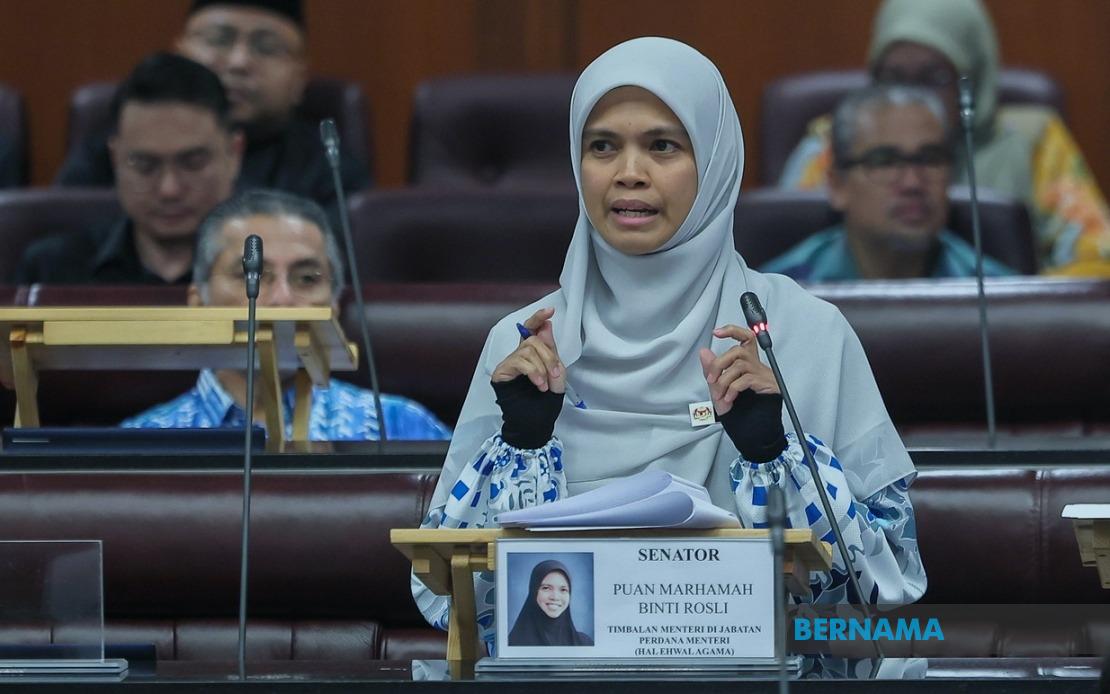
The Malaysian government is stepping up efforts to strengthen Islamic practice and education among Muslim Orang Asli communities nationwide, combining immediate grassroots initiatives with longer-term institutional strategies. Deputy Minister in the Prime Minister's Department (Religious Affairs) Marhamah Rosli outlined the multifaceted approach during parliamentary proceedings, emphasising the dual mandate of reinforcing Islamic observance while simultaneously building human capital within one of Malaysia's most marginalised populations.
The short-term measures being deployed represent a ground-level mobilisation effort, with daily Fardu Ain (KAFA) classes forming the foundation alongside expanded dakwah programmes timed to coincide with significant Islamic celebrations. This timing strategy appears designed to leverage heightened religious engagement during peak observance periods such as Ramadan and Eid. The implementation cascades through Orang Asli Community Mobilisers (PMOA) and state-level religious institutions, reflecting a recognition that top-down religious initiatives often struggle without community-level intermediaries who understand local languages, customs, and social dynamics.
A defining characteristic of this initiative is its emphasis on community-centric engagement rather than purely doctrinal instruction. Marhamah described intensive interpersonal outreach visits where government representatives provide not merely religious guidance and spiritual counsel but also tangible welfare assistance. This bundled approach acknowledges that religious messaging often gains traction only when accompanied by material support addressing immediate community needs—a lesson learned through decades of development work in indigenous populations worldwide.
The structural backbone supporting these grassroots activities involves significant institutional coordination. The Department of Islamic Development Malaysia (JAKIM), the Islamic Dakwah Foundation Malaysia (YADIM), and state-level Islamic religious departments and councils are collaborating to ensure consistent messaging and resource allocation across geographically dispersed communities. This multi-agency coordination reduces duplication while building redundancy into a system that must function across challenging terrain and irregular population distributions.
A critical component involves the revitalisation of suraus—prayer halls serving as spiritual and social anchors within Orang Asli villages. The federal government currently funds allowances for 13 administrative assistants dedicated to conducting religious classes within these spaces, transforming them from mere prayer facilities into active educational hubs. More significantly, 75 imams and 66 bilals have been recruited directly from the Orang Asli community itself, addressing both religious leadership needs and employment concerns while ensuring religious instruction emerges from culturally embedded authority figures rather than external appointees.
Longer-term sustainability underpins the government's strategic vision. A Special Orang Asli Dakwah Unit has been formally established within JAKIM's Dakwah Division, specifically under the Islamic Understanding Strengthening Branch and supported by the Du'at Development Division. This institutional embedding signals that Orang Asli religious engagement is not a temporary project but an ongoing priority warranting permanent bureaucratic infrastructure. The unit's remit encompasses coordination, strengthening, and continuous improvement of dakwah effectiveness—language suggesting iterative refinement based on field experience rather than static programming.
Implementation at scale relies on an expanding corps of community mobilisers. Seven PMOA coordinators oversee 243 PMOAs operating under JAKIM's framework, creating a network capable of reaching dispersed settlements across Peninsular Malaysia's interior regions. These mobilisers function as bridges between government initiatives and community reality, translating policies into contextually appropriate actions. For a population historically experiencing marginalisation and inadequate service delivery, the presence of trained community members in leadership roles represents both symbolic recognition and practical assurance that programmes address local circumstances.
Monitoring and accountability mechanisms form the final layer of this framework. While Marhamah's response to supplementary questions regarding programme effectiveness monitoring was notably truncated in available records, the existence of dedicated coordinators and formally appointed officials suggests some capacity for tracking participation rates, knowledge retention, and behavioural change among beneficiary communities. However, the absence of specific quantitative targets or published evaluation metrics in her response raises questions about whether effectiveness measurement extends beyond administrative tallies to actual impact on religious literacy and practice.
This initiative occurs within Malaysia's broader context of religious governance and indigenous affairs. The Orang Asli population, numbering approximately 180,000 individuals across multiple ethnic groups, has traditionally experienced significant religious, educational, and economic disadvantage. Muslim Orang Asli face particular complexity—simultaneously members of Malaysia's indigenous population (historically subject to paternalistic policies) and the Muslim ummah (expected to conform to standardised Islamic practice). This dual identity sometimes creates tension between preserving indigenous cultural practices and adopting mainstream Islamic observance standards. The government's emphasis on employing Orang Asli as religious teachers and community mobilisers potentially navigates this tension by rooting Islamic practice within culturally familiar leadership rather than imposing external standards.
For Malaysian policymakers and development practitioners, this programme offers lessons about indigenous engagement. Successful initiatives in other Southeast Asian nations similarly demonstrate that sustainable religious and educational advancement requires community participation in programme design and implementation, not merely consumption. The appointment of Orang Asli imams and PMOAs reflects this understanding, though questions remain about whether these individuals receive adequate training, support, and recognition within formal religious hierarchies dominated by non-indigenous Malaysians.
Regional implications merit consideration as well. Several Southeast Asian nations host indigenous Muslim populations with comparable development challenges. Malaysia's approach—combining religious education with welfare support, embedding community members in administrative roles, and creating dedicated institutional units—potentially offers transferable models, though implementation success ultimately depends on adequate funding, political commitment sustained across electoral cycles, and genuine respect for community voice in programme evolution.

