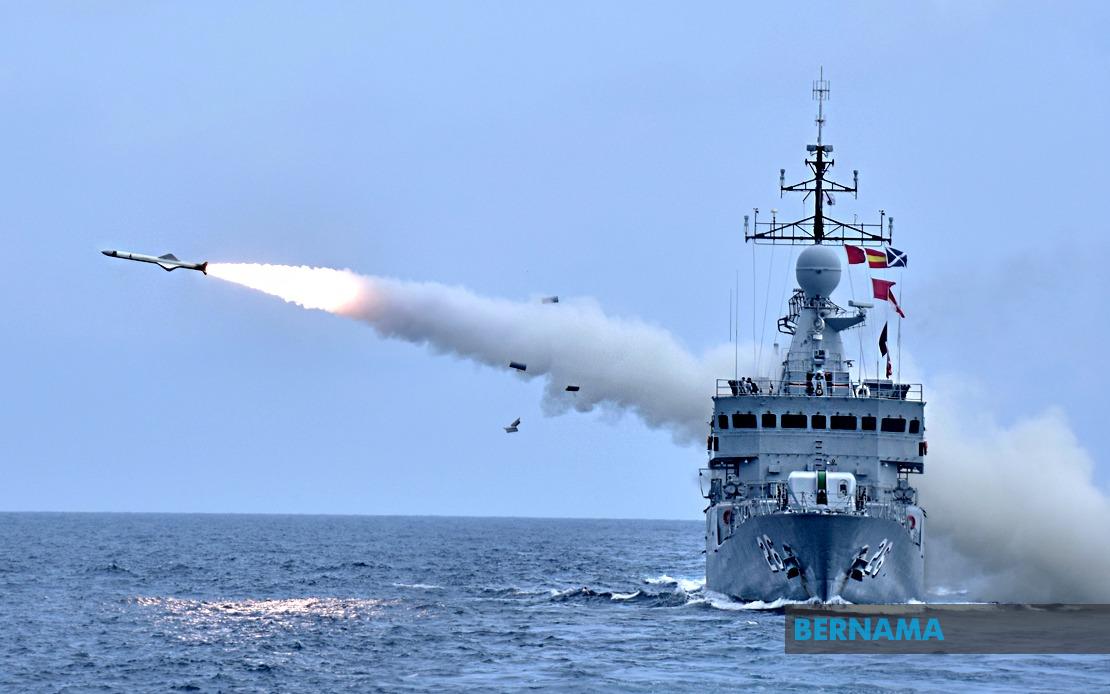
Malaysia's case for substantially higher defence spending extends well beyond traditional regional security concerns, with Defence Minister Datuk Seri Mohamed Khaled Nordin emphasising that emerging technological and informational threats have fundamentally reshaped how the government assesses its strategic needs. Speaking in Kuala Lumpur on August 19, the minister outlined a multifaceted security challenge that requires a comprehensive response spanning conventional military capabilities and digital resilience. This position follows Prime Minister Datuk Seri Anwar Ibrahim's announcement that Malaysia may require additional defence investments potentially running into hundreds of millions or billions of ringgit to maintain adequate operational capacity in an increasingly unpredictable landscape.
Among the novel threats reshaping defence planning are cyber intrusions and electromagnetic warfare capabilities that did not feature prominently in earlier strategic assessments. Mohamed Khaled specifically highlighted the proliferation of coordinated misinformation campaigns, which can destabilise societies without firing a shot. These non-traditional security challenges complement longstanding concerns about maritime incursions and territorial disputes, creating a layered threat environment that demands investment across multiple domains. The government's recognition of such threats reflects a global shift among military planners toward understanding security through a broader lens than kinetic conflict alone.
The regional context driving this reassessment stems from intensifying strategic competition among major powers, whose military presence in Southeast Asia has become noticeably more assertive. Rather than naming any specific country as an adversary, Mohamed Khaled characterised the situation as a natural consequence of shifting geopolitical dynamics: when one major power increases its military footprint or develops new capabilities, neighbouring powers frequently respond in kind, creating cascading pressures throughout the region. For a country like Malaysia occupying a strategic maritime position between major powers, such tit-for-tat military posturing creates uncertainty and demands corresponding readiness.
The compressed geography of Southeast Asian waters amplifies these concerns considerably. Mohamed Khaled drew attention to how military assets operating within a relatively confined area raise the statistical likelihood of accidents, miscalculations, or minor incidents spiralling into broader confrontations. In such an environment, possessing adequate defensive capabilities and maintaining clear communication channels becomes not merely advantageous but essential for national survival. The minister's emphasis on this dynamic reflects sophisticated strategic thinking about how density of military activity correlates with crisis risk, a lesson reinforced by historical incidents in the region.
Recent developments in the southern Philippines, particularly near Sabah's maritime boundaries, illustrate these interconnected security challenges. While Mohamed Khaled stressed that Malaysia respects Manila's sovereign right to structure its own defence arrangements, he underscored that instability in adjacent areas carries direct implications for Malaysian security interests. An escalation involving Philippine forces could rapidly engulf the broader South China Sea, threatening vital shipping lanes and fisheries upon which Malaysia's economic wellbeing depends. This reasoning explains why Malaysian strategic planners cannot remain indifferent to developments in neighbouring jurisdictions, even when Malaysia itself is not directly involved.
Navigating these complexities requires Malaysia to maintain what Mohamed Khaled described as a dual-track approach: developing sufficient military capacity to safeguard sovereignty while simultaneously championing dialogue and restraint. This balancing act reflects Southeast Asia's particular vulnerability to being caught between competing great powers, a position that demands careful diplomatic footwork alongside credible deterrent capabilities. The government seeks to avoid perceptions that it is aligning with any particular bloc, a concern that resonates across ASEAN as member states grapple with analogous pressures.
Malaysia's intention to gradually increase defence spending to 1.5 per cent of Gross Domestic Product by 2030 should be understood as a long-term modernisation programme rather than a reaction to immediate threats, according to the Defence Minister. This planned trajectory allows for systematic upgrading of aging equipment and development of capabilities in strategically significant areas without precipitous spending spikes that might destabilise public finances. The modernisation of the Malaysian Armed Forces represents continuity with established planning horizons rather than an abrupt policy reversal driven by recent tensions.
Key to this strategy is strengthening capabilities around Pulau Layang-Layang and other locations vital to Malaysia's strategic interests. Mohamed Khaled characterised these investments as expressions of national defence priorities rather than provocative moves targeting specific neighbours. The distinction matters because it frames Malaysian defence planning as inward-focused and status-quo oriented, unlikely to trigger regional arms race dynamics. However, the reality that other nations may interpret similar investments differently underscores the communication challenges facing Malaysian strategists in a multipolar environment.
On the South China Sea specifically, Mohamed Khaled emphasised that all stakeholders must exercise restraint and avoid actions that could trigger escalatory cycles. Progress on negotiating a Code of Conduct among claimant states remains essential for reducing ambiguity and establishing predictable rules of engagement. Malaysia's advocacy for ASEAN centrality in managing these disputes reflects the bloc's traditional strength: providing space for dialogue among competing parties rather than imposing hierarchical solutions. Maintaining this approach while simultaneously building defensive capabilities represents the fundamental tension in Malaysian strategy.
For Malaysian observers, these statements signal that defence planning will increasingly address threats beyond traditional interstate conflict, encompassing digital vulnerability and information warfare. The government's willingness to articulate such concerns suggests growing confidence in public understanding of contemporary security challenges. However, the careful framing of Malaysia's own military development as defensive rather than provocative indicates awareness that defence spending announcements can inadvertently trigger regional reactions. Balancing transparency about genuine security needs against avoiding inflammatory rhetoric will test Malaysian strategic communications in coming years.
The broader implication for Southeast Asia is that Malaysia joins other regional states in confronting the reality that rising defence expenditure may be unavoidable given external pressures. Yet unlike great powers that can impose their preferences on neighbours, Malaysia must pursue these investments while maintaining the regional stability that economic prosperity requires. This constraint explains the emphasis on dialogue, ASEAN consensus-building, and reassurance alongside military modernisation—a combination that may prove essential for navigating the competitive multipolar environment taking shape across Asia.

