The Malaysian government has outlined an ambitious calendar of activities designed to deepen the nation's observance of its founding moments. Starting with tomorrow's launch ceremony in Ipoh, the 2026 National Month Celebration and Jalur Gemilang Flag-Waving Campaign (MPBKKJG 2026) will set the tone for months of patriotic engagement across the country. The initiative reflects official commitment to maintaining and reinvigorating national pride among citizens, a perennial priority in multiethnic Malaysia where such occasions serve as crucial unifying moments.
Datuk Aminurrahim Mohamed, who oversees the Main Committee for these celebrations in his capacity as Senior Undersecretary (Management) at the Communications Ministry, provided a preview of the programming following yesterday's full rehearsal at Tanjung Rambutan. His remarks indicated a deliberate strategy to maintain public interest through phased revelations rather than comprehensive disclosure upfront. The countdown phase alone incorporates Kembara Bahasa HKHM 2026, a travelling initiative presumably emphasising linguistic and cultural dimensions, alongside RIUH Merdeka, suggesting high-energy community engagement activities designed for broad participation.
Beyond these established frameworks, the organising committee has commissioned fresh components intended to stimulate patriotic sentiment and encourage Malaysians to actively participate in celebrations rather than merely observe them. The continuation of the Qur'an Hour programme indicates sensitivity to Malaysia's Muslim-majority composition and suggests efforts to integrate religious observance with secular nationalism. Officials have deliberately withheld details about supplementary elements, seeking to generate anticipation and maintain public enthusiasm across the extended celebration window. This approach acknowledges the challenge of sustaining momentum for month-long patriotic observances in an increasingly crowded information environment.
Aminurrahim's public appeal for citizens to commence displaying the Jalur Gemilang flag and broadcasting patriotic music represents an attempt to transform August into a month visibly distinct in Malaysia's public sphere. The emphasis on prayer for national stability and prosperity carries particular resonance given contemporary regional uncertainties and domestic challenges ranging from economic pressures to social cohesion. Such appeals function simultaneously as nationalist messaging and implicit calls for national unity, themes particularly relevant in a country where periodic religious, ethnic, and political tensions require careful management.
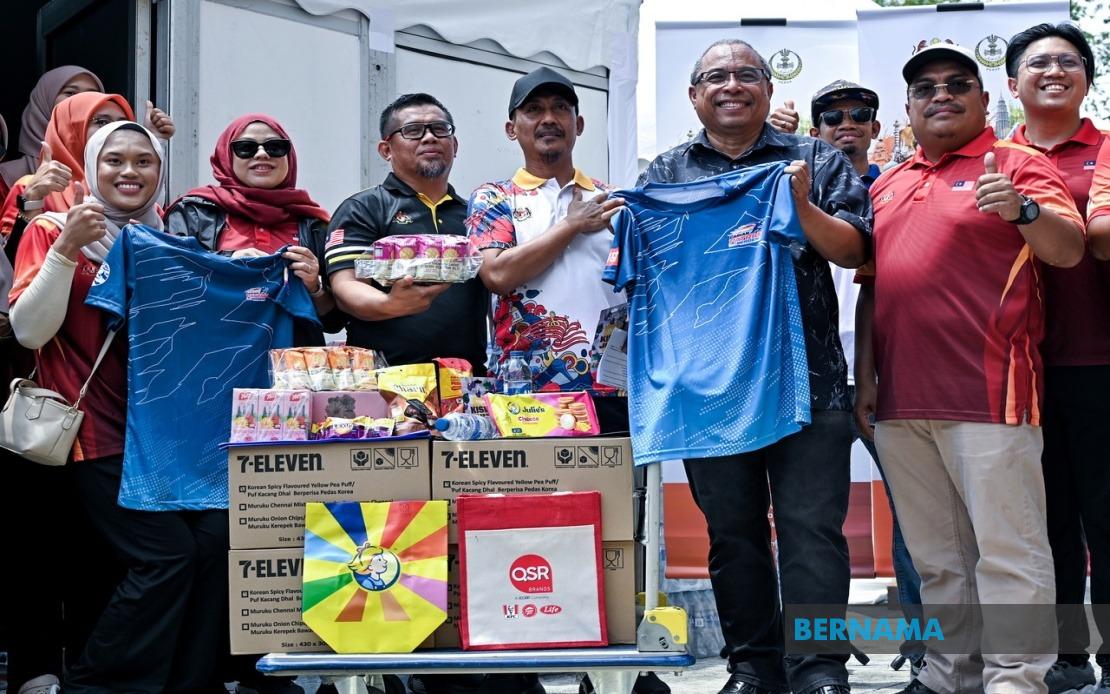
The financial dimension underpinning these celebrations reflects Malaysia's capacity to mobilise private sector resources toward public objectives. Fifteen companies have committed sponsorship for the Ipoh leg alone, including logistics operator J&T, convenience store chain 7-Eleven, coffee brand ZUS Coffee, and QSR Brands, which operates multiple food franchises domestically. This corporate participation signals business recognition that patriotic occasions present branding opportunities while simultaneously allowing companies to demonstrate national commitment. Aminurrahim's public gratitude toward sponsors, coupled with his indication that current pledges may exceed last year's totals, suggests healthy competitive dynamics among potential sponsors and confidence in the event's visibility.
The official launch ceremony itself, scheduled for 10 am tomorrow and to be helmed by Prime Minister Datuk Seri Anwar Ibrahim, incorporates performance elements calculated to generate visual impact and media coverage. The Patriot Merdeka Run component introduces participatory fitness dimensions, allowing ordinary Malaysians to physically engage in the celebration. The unveiling of the HKHM 2026 theme song, to be performed by a prominent Malaysian male vocalist before approximately 3,000 attendees, represents a deliberate investment in cultural production as nationalist messaging. Such songs typically achieve extended lifespan through broadcast repetition and public familiarity, becoming synonymous with the celebration period.
The decision to livestream proceedings across Radio Televisyen Malaysia (RTM), state news agency Bernama, and social media platforms including Merdeka360 reflects contemporary recognition that official celebrations must accommodate digital consumption patterns. Younger Malaysians increasingly access national programming through social channels rather than traditional broadcast media, necessitating multiplatform distribution. This approach democratises access to official narratives and reduces geographical barriers that might otherwise prevent participation by citizens in remote areas. The deployment of multiple institutional Facebook pages—representing the Communications Ministry, Information Department, and Merdeka360—suggests deliberate efforts to maximise reach across different demographic segments.
For Southeast Asian observers and Malaysian diaspora communities, these celebration plans underscore the continuing importance assigned to National Day observance within Malaysia's political calendar. In regional context, such festive programming reflects patterns common across ASEAN nations, where independence anniversaries receive extensive official support and public investment. Malaysia's particular approach—combining religious elements, linguistic components, corporate participation, and digital distribution—demonstrates how postcolonial Southeast Asian nations navigate the challenge of constructing inclusive national identity narratives within genuinely diverse societies.
The coordination evident in tomorrow's launch, extending across government ministries, private sponsors, and media institutions, illustrates the substantial bureaucratic machinery mobilised to sustain nationalist sentiment. Such efforts acknowledge an implicit official concern that without deliberate programming and public investment, patriotic sentiment might otherwise attenuate in contemporary Malaysia. The scale and ambition of HKHM 2026 preparations suggest government determination to project an image of national vitality and governmental effectiveness during a period marked by various competing domestic priorities. Whether these initiatives successfully catalyse genuine patriotic renewal among ordinary Malaysians, or function primarily as symbolic performances for elite audiences, remains a question that will become clearer as August 2026 approaches and these plans translate into lived experience across the nation.

