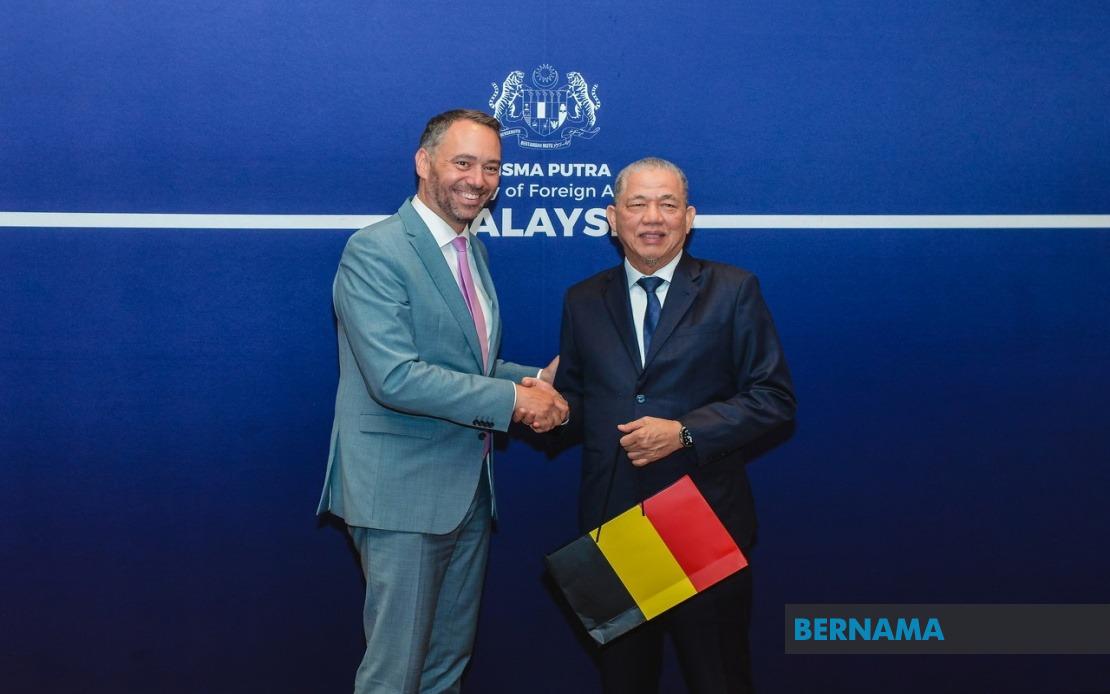
Malaysia has moved to reassure Belgium about unimpeded maritime access through the South China Sea, addressing international concerns about potential shipping disruptions in the vital waterway. Deputy Prime Minister Datuk Seri Fadillah Yusof conveyed this commitment during talks with Belgium's Deputy Prime Minister and Foreign Minister Maxime Prévot, who is visiting the country this week. The assurance underscores ASEAN's stance on maintaining stability in a region where geopolitical tensions have occasionally sparked worry about freedom of navigation and international commerce.
Fadillah's statement reflects growing international anxiety about maritime security following disruptions witnessed in other critical chokepoints. Belgium, as a European trading nation with significant commercial interests in Asia-Pacific sea routes, has legitimate concerns about potential obstacles to its shipping lanes. By framing the guarantee within ASEAN's broader commitment to neutrality and peace, Malaysia positions the ten-member bloc as a custodian of regional stability rather than a player advancing any particular great power's interests in territorial disputes or maritime management.
The Deputy Prime Minister explicitly rejected the possibility of any blockades impeding traffic through these waters, emphasizing Malaysia's credentials as a nation that prioritises security and peaceful coexistence. This messaging carries weight given Malaysia's geographical position astride major shipping arteries and its role within ASEAN's decision-making architecture. However, the assurance also reveals the diplomatic tightrope that Southeast Asian governments must walk, where public commitments to open access must accommodate the complex reality of competing claims and great power competition in the region.
During the meeting, Prévot sought Malaysia's assessment of current regional security dynamics and the likelihood of disruptions comparable to those that have affected the Strait of Hormuz. This line of questioning suggests that European policymakers view ASEAN nations, particularly Malaysia, as reliable sources of intelligence and perspective on Asia-Pacific stability. The exchange highlights how regional middle powers like Malaysia serve as important interlocutors between Europe and Asia, translating concerns and bridging communication gaps between distant but economically interdependent blocs.
Beyond security matters, the two countries discussed expanding their bilateral relationship across multiple dimensions. Belgium expressed enthusiasm for deepening trade ties with Malaysia and signalled its intention to reconsider its travel advisory for Sabah, potentially upgrading the status of the East Malaysian state for tourists and business travellers. This diplomatic softening reflects confidence in Malaysia's ability to manage security challenges and maintain an attractive environment for foreign investment and tourism, even amid regional complexities.
A particularly significant area of discussion involved Malaysia's halal ecosystem and standards. Belgium's proposal to examine Malaysia's halal certification framework as a potential template for broader European Union adoption represents recognition of Malaysia's technical expertise and market leadership in this sector. As the global halal market expands and European Muslim populations grow, harmonising standards with a respected originator like Malaysia could streamline international trade and reduce compliance burdens for companies operating across continents. For Malaysia, this elevation of its halal model validates years of investment in building world-class infrastructure and credibility in the sector.
Energy cooperation constituted another pillar of the discussions, with particular emphasis on Malaysia's transition away from fossil fuels. Belgium's technological prowess in advanced materials and renewable energy solutions offers potential avenues for collaboration as Malaysia pursues its energy transition agenda. Such partnerships benefit both nations: Malaysia gains access to cutting-edge expertise and technology, while Belgian firms find growing markets for their innovations in a region increasingly committed to sustainability goals.
Fadillah, who simultaneously holds the portfolio of Minister of Energy Transition and Water Transformation, is well-positioned to drive these discussions forward. His dual role signals the interconnectedness between Malaysia's foreign policy, economic development strategy, and domestic sustainability priorities. Investment opportunities for Belgian companies in Malaysia's clean energy and advanced materials sectors could generate tangible outcomes from this diplomatic engagement, translating high-level political goodwill into concrete commercial arrangements.
PreVot's visit marks his first trip to Malaysia since assuming his ministerial position in February 2025, suggesting this journey was deliberately scheduled to strengthen ties and gather firsthand impressions of the country's strategic importance. The presence of senior Malaysian officials, including Foreign Ministry Secretary-General Tan Sri Amran Mohamed Zin and Belgium's Ambassador to Malaysia Peter Van Acker at the luncheon, underscored the official significance attached to the bilateral meeting.
The timing of Belgium's engagement with Malaysia carries broader significance for ASEAN's international positioning. As European nations increasingly focus on Indo-Pacific strategy and supply chain resilience, partnerships with Southeast Asian nations become more valuable. Malaysia's role as both a regional anchor and a bridge between Europe and Asia makes it a natural focal point for deepening engagement. By hosting Prévot and facilitating substantive discussions on security, trade, and technology, Malaysia reinforces its status as a preferred partner for European powers seeking to strengthen their presence and influence in the region.
The discussions also reflect subtle shifts in how ASEAN nations frame their commitments to open maritime access. Rather than simply reacting to external pressures or great power competition, Malaysia is proactively offering reassurances and positioning ASEAN principles as solutions to international anxieties. This approach allows Southeast Asian governments to exercise agency in regional affairs while maintaining their core diplomatic commitment to neutrality and non-alignment.
Looking ahead, the outcomes of Prévot's visit may establish templates for deeper Malaysia-Belgium cooperation that extend beyond traditional diplomatic exchanges. Concrete deliverables, whether in halal standards adoption, energy technology partnerships, or enhanced security dialogue mechanisms, would represent tangible progress toward the people-to-people, business-to-business, and government-to-government cooperation that both sides indicated they wish to develop. For Malaysia, expanding its international partnerships beyond Asia helps diversify its strategic relationships and demonstrates that regional stability is not merely an ASEAN concern but a shared objective of the broader international community.

