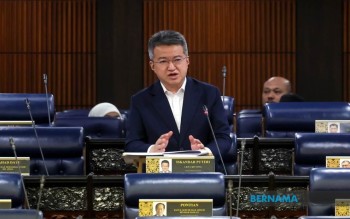
Malaysia's government has signalled stability in its fiscal planning framework, with Deputy Finance Minister Liew Chin Tong confirming there is currently no requirement to adjust the projections underpinning Budget 2027. Speaking during parliamentary oral answers on July 15, Liew noted that although the first half of 2026 has presented fiscal challenges, the administration remains confident in its medium-term approach and will reserve any substantive reassessment until the budget is formally presented in October. This measured stance suggests confidence that current interventions and revenue mechanisms can absorb near-term pressures without triggering fundamental revisions to the government's financial blueprint.
The backdrop to this fiscal holding pattern is substantial: surging crude oil prices have pushed fuel subsidy expenditure up by approximately RM40 billion—a significant outlay that has strained the government's spending envelope. The escalation reflects global geopolitical tensions, particularly developments in West Asia, which have kept energy prices elevated and forced the Malaysian authorities to absorb higher costs at the pump to shield consumers and domestic industries from immediate price shocks. Such subsidies represent a structural fiscal burden, one that cannot easily be unwound without triggering economic and political ripple effects across the population.
However, Liew highlighted a critical offsetting mechanism: the same petroleum price surge that inflates subsidy costs simultaneously boosts government hydrocarbon revenues. The relationship is direct and quantifiable—each US$1 increase in world crude oil prices adds roughly RM300 million to Malaysia's petroleum-related revenue intake. This automatic stabiliser effect, combined with dividend contributions from Petronas, the state oil company, creates a natural hedge that partially mitigates the subsidy burden. While the revenue gain falls short of fully compensating for the RM40 billion subsidy increase, it meaningfully reduces the net fiscal impact and lessens pressure to introduce emergency revenue measures such as new taxation.
The government's capacity to absorb these shocks without immediately revising budget parameters owes much to proactive management during the first half of 2026. Liew indicated that the administration has implemented what he termed "immediate, comprehensive, and structured intervention initiatives" designed to maintain overall expenditure within sustainable bounds. These measures encompass targeted subsidy reform, reallocation of spending priorities away from lower-impact areas, and continuous operational efficiency drives across ministries and agencies. Rather than reactive, ad hoc adjustments, the approach reflects a deliberate strategy to preserve fiscal consolidation momentum despite external headwinds.
Monitoring mechanisms have been substantially enhanced to provide early warning of emerging fiscal strains. The government operates weekly crisis management task force sessions under the National Economic Action Council (NEAC), a platform that pulls together senior officials to assess economic developments in real time. This engagement rhythm permits swift identification of revenue shortfalls, unexpectedly elevated expenditure, or emerging bottlenecks in the supply and pricing of essential goods. The frequency of these reviews underscores the seriousness with which policymakers view the current geopolitical and energy environment, and signals readiness to escalate responses should conditions deteriorate markedly.
Liew's parliamentary response also emphasised the government's close tracking of revenue collection performance. Tax compliance and the actual yield from existing levies represent variables that the treasury monitors with particular intensity, since collection performance directly determines how much fiscal space is available for discretionary spending. In an environment of global economic uncertainty and regional instability, revenue surprises—whether positive or negative—can significantly alter the sustainability calculus. By maintaining continuous oversight, the Ministry of Finance aims to avoid situations where budget assumptions diverge sharply from reality, a situation that could force uncomfortable mid-year adjustments.
The decision to defer a formal fiscal reassessment until Budget 2027 is tabled reflects confidence that first-half performance, while presenting challenges, does not yet warrant fundamental changes to the government's medium-term fiscal consolidation path. Malaysia's fiscal framework has long prioritized bringing the deficit down as a share of gross domestic product and stabilizing public debt ratios. This multi-year consolidation trajectory has been a cornerstone of Malaysia's macroeconomic credibility with international investors and rating agencies. Abandoning or substantially weakening this commitment in response to a single volatile commodity cycle would risk undermining confidence in the government's fiscal discipline, potentially driving up borrowing costs and creating longer-term economic headwinds.
Instead, the government appears to be betting that the policy arsenal currently deployed—targeted subsidies that protect vulnerable groups while allowing some price transmission in less sensitive segments, expenditure restructuring, and efficiency gains—will prove adequate to navigate the current challenge. The approach also implicitly assumes that oil price volatility, while elevated, will eventually stabilize at levels that are manageable within the existing budget envelope. Should prices spike further or remain persistently above forecasts, however, the calculus may shift, and the government may find that even its intervention toolkit requires supplementation through revenue-raising measures.
For Malaysia's broader economy and Southeast Asian context, the handling of this fiscal episode carries broader significance. The country has positioned itself as a relatively prudent fiscal manager within the region, and unexpected slippages in deficit or debt targets can ripple through regional financial markets and investor sentiment. By maintaining public commitment to its consolidation path and insisting that no immediate projections revisions are necessary, the government sends a signal of steadiness to domestic and international audiences. Conversely, if pressures continue to build and Budget 2027 eventually requires substantial revision downward in terms of deficit reduction ambitions or upward in terms of new revenue sources, the credibility impact would be correspondingly larger.
The specific mention of monitoring through to October—when Budget 2027 is introduced—establishes a clear governance calendar and acknowledges that conditions may well shift between now and then. This honest framing avoids locking the government into an unsustainable position while preserving flexibility. If, for instance, West Asian geopolitical risks ease and oil prices retreat by autumn, the rationale for fiscal strain evaporates. Conversely, if tensions escalate and prices spike further, the government will have the window to explain and implement corrective measures within a revised budget framework.
Ultimately, Liew's statement reflects the delicate balance that finance ministries must strike in times of uncertainty: projecting confidence and stability to anchor expectations, while remaining vigilant and prepared to adapt should material new information emerge. For Malaysian businesses, investors, and citizens watching budget developments, the message is one of continuity in fiscal intent, even as the tools and targets may require refinement before October. The government's emphasis on subsidy targeting, expenditure restructuring, and revenue compliance suggests a reform-oriented rather than tax-raising approach, an important distinction that shapes how different constituencies view the fiscal outlook.

