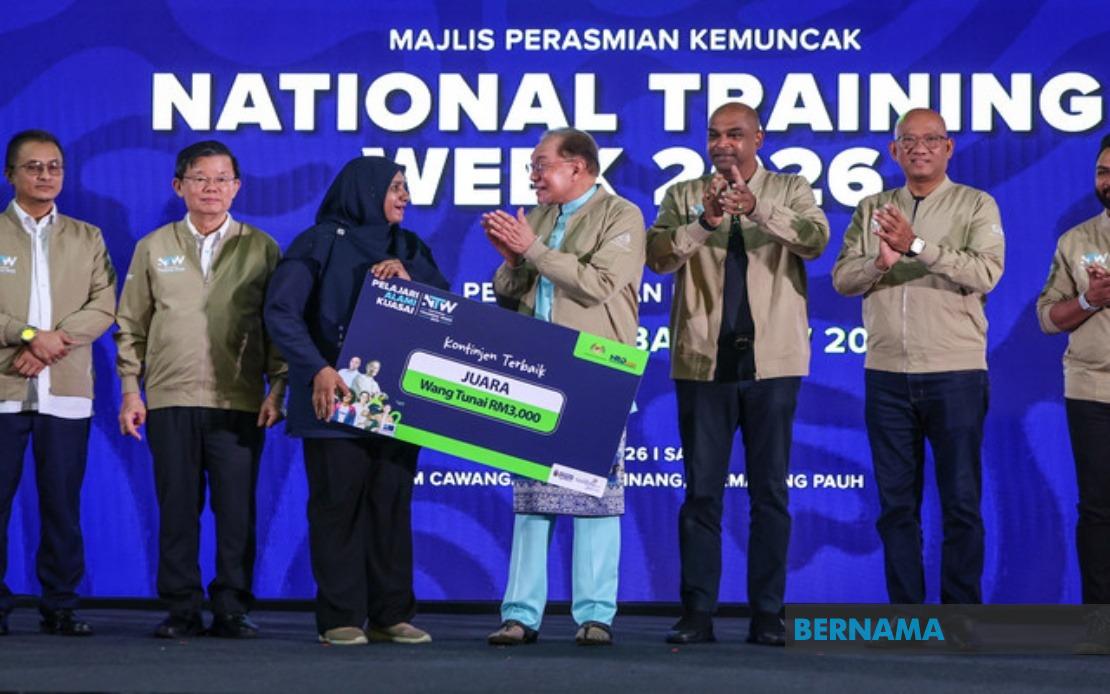
Malaysia stands on the precipice of a major economic milestone. Human Resources Minister Datuk Seri R. Ramanan has declared that the country is now within striking distance of the World Bank's high-income nation classification, a symbolic achievement that would mark decades of sustained economic progress. Speaking at the National Training Week 2026 opening ceremony at Universiti Teknologi MARA's Permatang Pauh campus in Penang, Ramanan pointed to Malaysia's Gross National Income per capita of USD12,380 as evidence that the nation is traversing the final stretch of an ambitious economic journey that began at independence in 1957.
The significance of this milestone extends beyond raw statistics. Under Prime Minister Datuk Seri Anwar Ibrahim's stewardship, Malaysia has achieved its highest GNI per capita since independence, signalling sustained economic momentum across diverse sectors. The figure represents not merely numerical progress but reflects underlying improvements in productivity, wage growth, and economic diversification that should theoretically benefit broader segments of the population. For Malaysian policymakers and the business community, this represents validation of reform agendas pursued over multiple administrations, each building incrementally on predecessors' work.
The gap remaining between current performance and the 2027 World Bank threshold appears modest on the surface. The high-income classification requires a GNI per capita of USD14,376 under the World Bank Atlas methodology for the 2027 financial year, leaving Malaysia approximately USD1,996 per capita short of the target. At current trajectories and assuming continued economic growth, closing this gap over the next 18 months appears technically feasible, though not guaranteed. Economic headwinds from global trade tensions, commodity price volatility, or regional instability could potentially disrupt the pathway, making the final leg of this journey perhaps more precarious than the confident rhetoric suggests.
Beyond per capita income metrics, Malaysia's overall economic footprint has expanded substantially. The country's Gross Domestic Product has climbed to USD472 billion, the highest absolute figure recorded since the nation's independence. This expansion reflects both population growth and genuine per-unit economic productivity improvements, though distinguishing between the two components matters for understanding whether prosperity gains will be broadly distributed. The doubling of nominal GDP over the past two decades has been remarkable, yet Malaysian policymakers recognise that headline growth figures obscure persistent regional disparities and sectoral imbalances that remain unresolved.
Ramanan's comments underscore the government's framing of high-income status as the product of deliberate economic governance rather than fortuitous circumstances. He attributed the progress to continuous efforts strengthening the economy, attracting foreign and domestic investment, and enhancing workforce competitiveness. This narrative emphasises strategic policy interventions over passive benefit from global commodity cycles, though Malaysia's actual experience reflects both elements. The resource-rich nation has benefited from commodity exports during boom periods, yet its transition towards higher-value manufacturing and services has required genuine institutional adaptation and human capital investment.
The Human Resource Development Corporation's role in this narrative proves instructive for understanding how Malaysia intends sustaining momentum toward high-income status. Penang alone recorded more than 8,000 registered employers encompassing 445,792 employees within the HRD Corp system, demonstrating the scale of institutionalised workforce development infrastructure. During the first half of 2026, the state collected RM129.72 million in training levies from employers, channelling RM113.74 million back into 125,398 training programmes. These figures suggest substantial ongoing investment in worker upskilling, though questions remain about programme quality, relevance to evolving labour market demands, and whether training translates into meaningful wage progression for participants.
Integrity in fund management emerged as a central theme in Ramanan's remarks, reflecting ongoing concerns about governance quality in Malaysian public institutions. He emphasised that transparent stewardship of employer-contributed training levies was prerequisite for building trusted, capable institutions capable of developing national talent effectively. The minister noted that strengthened governance mechanisms enabled recovery of RM437.3 million during the first six months through optimisation and portfolio recovery measures, suggesting that previously mismanaged or inefficiently deployed resources were being redirected toward productive use. For Malaysia to sustain economic progress toward and beyond high-income status, such governance improvements across public agencies remain essential.
The National Training Week 2026 initiative itself reflects recognition that high-income status cannot be achieved through market forces alone without complementary public investment in human development. The programme targets diverse societal segments including youths, workers, homemakers, and retirees, acknowledging that skills enhancement must encompass the full population spectrum rather than concentrating on formal sector employees. This inclusive approach contrasts with narrower approaches focusing solely on manufacturing or services export sectors, instead attempting to lift capability across the entire labour force. Whether such broad-based initiatives can deliver meaningful outcomes at scale remains an open question, particularly regarding measurement and accountability.
From a Southeast Asian perspective, Malaysia's approach toward high-income status carries regional significance. As a middle-income nation pursuing upper-middle-income and then high-income classification, Malaysia's experience provides a potential template for neighbouring economies like Thailand and the Philippines navigating similar development trajectories. The emphasis on institutional capacity-building, workforce development, and governance improvement reflects lessons learned from peer economies and international best practice. Should Malaysia successfully achieve high-income classification, it would join only Singapore and Brunei in the region at that income level, potentially shifting regional economic dynamics and demonstrating feasibility of the pathway for other ASEAN members.
However, attaining high-income status presents its own challenges distinct from the journey to reach it. High-income nations typically face pressures to transition toward knowledge-intensive industries, confront rising labour costs that threaten manufacturing competitiveness, and grapple with middle-income trap dynamics where growth plateaus as comparative advantages erode. Malaysia's success in crossing the threshold will ultimately be measured not merely by achieving the classification itself, but by sustaining inclusive growth, maintaining institutional quality, and continuing productivity improvements even as relative labour costs rise. The next 18 months will prove revealing for whether Malaysia can bridge the remaining gap convincingly while laying groundwork for the structural transformations that high-income status will demand.

