Religious authorities in Malaysia are escalating their digital surveillance operations as unorthodox Islamic movements exploit online platforms to expand their reach beyond conventional enforcement methods. The shift in tactics reflects mounting concerns within government circles that traditional approaches have become inadequate for addressing theological heterodoxy in the internet age, where geographical borders pose minimal barriers and recruitment occurs through encrypted communication channels rather than physical meetings.
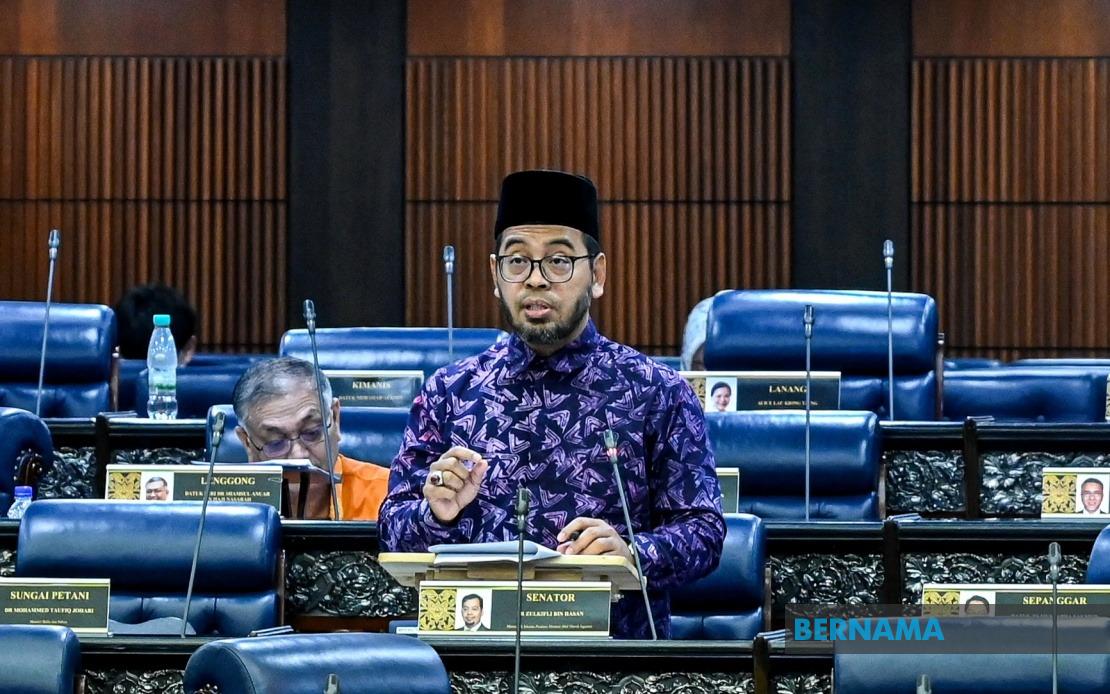
Dr Zulkifli Hasan, Minister in the Prime Minister's Department (Religious Affairs), outlined the government's comprehensive strategy during parliamentary proceedings, emphasising that Malaysia's enforcement apparatus now faces a substantially more complex operational environment. What once constituted isolated, localised movements operating in secrecy have metamorphosed into networked communities spanning multiple jurisdictions, with adherents communicating instantaneously across continents through social media platforms, messaging applications and online forums that traditional monitoring mechanisms struggle to penetrate effectively.
The minister's parliamentary statement reveals the evolving sophistication of groups promoting teachings divergent from the Ahli Sunnah Wal Jamaah school of thought. These organisations have adopted a deliberately deceptive marketing strategy, presenting their ideological content under benign labels including personal development initiatives, charitable organisations, alternative health therapies and informal educational programmes. This rebranding exercise significantly complicates government identification and intervention efforts, as potential recruits encounter polished, mainstream-appearing messaging rather than overtly religious propaganda that would trigger immediate regulatory scrutiny.
Notably, these movements employ multiple persuasion mechanisms to attract adherents, deploying psychological techniques, conspiracy narratives and the charisma of influential figures to construct compelling alternative worldviews. By framing their teachings through motivational and spiritual rhetoric rather than conventional theological argumentation, these groups exploit psychological vulnerabilities and existential anxieties within their target demographics, particularly among younger Malaysians navigating identity questions and seeking community belonging in increasingly atomised urban environments.
The government's response mechanism has evolved into a genuinely integrated cross-institutional framework encompassing JAKIM, state-level Islamic authorities, national police forces, the Malaysian Communications and Multimedia Commission, the National Security Council, municipal governments, immigration officials and national registration bodies. This orchestrated collaboration signals recognition that theological heterodoxy cannot be effectively combated through fragmented departmental action, requiring instead seamless information-sharing and coordinated enforcement operations across traditionally compartmentalised bureaucratic structures.
Recent enforcement operations demonstrate the scale of the challenge facing Malaysian authorities. The detention of 288 Ahmadiyya Qadiani adherents in Sabah during May represented a significant single operation, followed by a raid on a Syiah centre in Petaling Jaya that apprehended 226 foreign nationals. These operations underscore that unorthodox religious movements maintain substantial membership bases within Malaysia, often incorporating significant international components that further complicate legal and operational considerations around detention, deportation and rehabilitation procedures.
The government's intervention methodology extends considerably beyond enforcement action into rehabilitative and preventive domains. Individuals identified as followers of deviant teachings undergo targeted counselling sessions supervised by Islamic authorities, while some face court-ordered placement in faith rehabilitation facilities specifically designed to realign theological understanding with officially sanctioned Islamic orthodoxy. The Syariah courts thus function as gatekeepers determining who requires mandatory religious reorientation and for what duration such programmes should continue.
To address the root causes of religious heterodoxy rather than merely treating symptoms, the government has established the National Steering Committee to Address Threats to Faith, representing a strategic acknowledgement that preventive religious education may prove more efficient than reactive enforcement operations. This committee coordinates among the Ministry of Education, Ministry of Higher Education, Ministry of Home Affairs and JAKIM, recognising that young people's religious understanding fundamentally shapes their receptiveness to heterodox ideologies during formative developmental years.
Multiple initiatives now operate under this preventive umbrella, including programmes administered by Institut Pemantapan dan Perkaderan Akidah Malaysia (IPHAM), the My Insaniah Programme and the Rakan Masjid Programme developed jointly with the Ministry of Youth and Sports. Simultaneously, the government has substantially revised the KAFA 2.0 curriculum addressing Quranic studies and obligatory Islamic knowledge, embedding stronger identity reinforcement and religious resilience-building mechanisms specifically calibrated to inoculate young Muslims against heterodox theological appeals.
The Malaysian approach reflects broader Southeast Asian governmental anxieties regarding ideological pluralism and theological diversity, particularly concerning movements perceived as externally-influenced or ideologically incompatible with national Islam as officially formulated. By combining surveillance, enforcement, rehabilitation and education, authorities attempt to maintain theological conformity while paradoxically operating within constitutional frameworks nominally protecting religious freedom, creating inherent tensions between security imperatives and individual liberty that remain largely unresolved within official discourse and policy frameworks.

