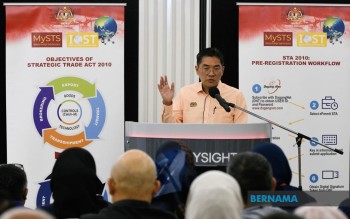
The Ministry of Investment, Trade and Industry has renewed its commitment to bolstering Malaysia's electrical and electronics sector, recognising the industry's strategic importance to the country's economic standing and its role within global technology manufacturing networks. Speaking in George Town, Deputy Minister Sim Tze Tzin underscored the significance of maintaining and expanding the nation's competitive advantages in a sector that has long been fundamental to Malaysia's export economy and technological development.
The E&E industry encompasses a broad spectrum of high-value manufacturing activities, from semiconductor assembly and testing to precision sensor production and telecommunications components. Malaysia's participation across these segments has positioned the country as an indispensable link in the worldwide technology supply chain, attracting multinational corporations and generating substantial foreign direct investment over several decades. This diversified engagement means the sector's health directly impacts employment, government revenues, and technological spillover effects throughout the broader economy.
Penang and Malaysia's northern region have emerged as the geographical centrepiece of this industrial ecosystem, hosting hundreds of established technology manufacturers ranging from global leaders to specialised contract manufacturers. This concentration of expertise, infrastructure, and human capital has created a self-reinforcing cluster effect, where companies benefit from proximity to suppliers, skilled workforce pools, and research institutions. The region's prominence in semiconductor assembly, testing, and packaging activities particularly underscores its role as a manufacturing powerhouse in Southeast Asia.
Beyond production capacity, MITI is placing renewed emphasis on export control compliance and the orderly operation of technology trade mechanisms. This reflects growing international scrutiny of electronics and semiconductor flows, particularly given geopolitical sensitivities surrounding advanced chip manufacturing and dual-use technologies. By ensuring Malaysian companies maintain robust compliance frameworks, the ministry aims to preserve the country's reputation as a reliable, rule-abiding manufacturing destination—a critical asset when multinational corporations evaluate supply chain vulnerabilities and regulatory risks.
The ministry's strategic engagement with industry stakeholders has taken concrete form through programmes such as the Strategic Trade Act Customer Day and the STA Northern Region Clinic, which drew 86 participants this year. These platforms serve multiple purposes: they provide companies with direct advisory support on product classification, permit requirements, licensing procedures, and internal audit standards, while simultaneously allowing policymakers to maintain close contact with frontline manufacturers and understand emerging challenges or opportunities within the sector.
Sim's emphasis on the connection between trade performance and worker welfare highlights a broader conversation about ensuring Malaysia's manufacturing success translates into improved living standards for the workforce. The country's strong trade results in the first half of the year created space for companies to enhance compensation packages, a development the ministry actively encouraged. This messaging signals recognition that sustaining Malaysia's competitive position requires not only investment in plants and equipment but also retention of skilled talent through competitive wages and conditions.
The semiconductor industry's particular prominence within this strategic framework reflects its outsized importance to Malaysia's technological footprint and export earnings. Semiconductors represent high-value-added activity where Malaysia commands significant global market share, particularly in assembly and testing operations. However, this specialisation also carries risks: heavy dependence on a single sector leaves Malaysia vulnerable to cyclical downturns, technological disruption, or supply chain reorientation by multinational corporations.
Close government-industry collaboration emerges as the linchpin of MITI's strategy to maintain Malaysia's trusted status as an investment and manufacturing destination. In an environment where companies increasingly evaluate geopolitical stability, regulatory predictability, and policy consistency alongside traditional factors like labour costs and infrastructure, the relationship between policymakers and industry leaders becomes crucial. Regular engagement through clinics, workshops, and advisory services helps ensure policies remain attuned to real-world constraints and opportunities that manufacturers face.
For Malaysia and the Southeast Asian region, sustaining prominence in the global electronics supply chain carries implications extending beyond the E&E sector itself. Success attracts skilled migration, drives demand for advanced logistics and financial services, and generates tax revenues that fund broader development priorities. Conversely, any erosion of Malaysia's position could accelerate the relocation of manufacturing to competing jurisdictions in Vietnam, Thailand, or beyond, with cascading effects on employment and tax bases across Penang and surrounding regions.
Looking forward, MITI's strategy hinges on continuously upgrading the sophistication and resilience of Malaysia's electronics ecosystem. This requires simultaneous attention to workforce skills development, infrastructure modernisation, research partnerships with universities, and the regulatory frameworks that govern technology trade. The ministry's willingness to invest in compliance support and direct advisory services to companies signals understanding that remaining competitive is not simply a matter of passive advantages but demands active, ongoing policy intervention.

