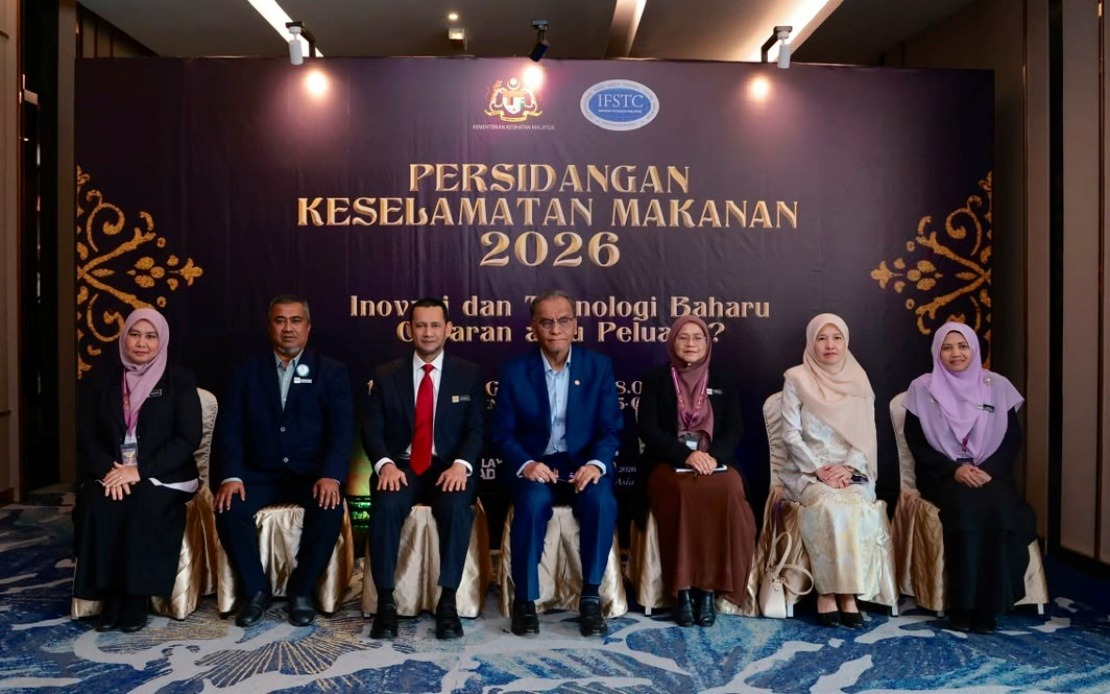
Malaysia has taken a significant step towards bolstering its food security architecture by formally joining the Asia-Pacific Food Regulatory Authority Summit (APFRAS), a move approved by Cabinet in June and formalised through a membership signing ceremony in Putrajaya on August 11. The accession represents a strategic commitment to elevating the nation's capacity as a regional gatekeeper and positions Malaysia at the forefront of reshaping how food safety is governed across Southeast Asia and the broader Asia-Pacific region through innovative technological frameworks.
Health Minister Datuk Seri Dr Dzulkefly Ahmad articulated the significance of this membership during the opening of the 2026 Food Safety Conference, underscoring how the decision aligns with Malaysia's broader ambitions to establish itself as a Smart Gatekeeper at the regional level. The minister emphasised that Malaysia's entry into APFRAS enables the country to lead digital transformation initiatives in food safety governance, a particularly crucial role given the mounting complexities of modern supply chains. This leadership responsibility encompasses not only the oversight of traditional food imports but also the regulation of emerging materials such as biodegradable packaging and the harmonisation of legislative standards for novel food innovations that may not yet have established international precedents.
The urgency of Malaysia's participation becomes evident when examining the nation's food import trajectory. Over the past decade, Malaysia's reliance on imported food has grown substantially, with annual food imports expanding from RM42.6 billion in 2013 to RM78.9 billion in 2023—an 85 per cent increase that fundamentally alters the risk landscape for domestic food safety. This escalation means that the average Malaysian consumer now depends on food products that traverse lengthy and intricate global supply chains, crossing numerous borders and regulatory jurisdictions before reaching local markets. Each additional layer in this supply network introduces potential vulnerabilities, from contamination risks to deliberate adulteration, making the traditional reactive approach to food safety inadequate.
Dr Dzulkefly stressed that APFRAS membership directly supports both the National Food Safety Policy and the National Food Security Policy, two complementary frameworks that address the immediate challenge of ensuring the safety of imported food while also building long-term resilience in the nation's food system. The connection between these policies highlights an important recognition: food safety and food security are increasingly intertwined in a globalised marketplace. A single contamination event affecting a major supplier could disrupt supplies to Malaysia, while simultaneously, inadequate screening of imports threatens public health across the entire population.
The Health Ministry's exploration of artificial intelligence and predictive analytics exemplifies the technological pivot that APFRAS membership facilitates. Rather than relying solely on post-import testing and inspections, Malaysia is moving towards anticipatory monitoring systems that can identify risks before products enter circulation. Predictive analytics can analyse historical supply chain data, identify patterns associated with contamination outbreaks, and flag high-risk shipments for enhanced scrutiny. This approach acknowledges a fundamental reality of modern food systems: the sheer volume of imports makes comprehensive testing of every product economically and logistically impossible, necessitating smarter resource allocation guided by data-driven intelligence.
The 2026 Food Safety Conference, which drew over 300 participants, centred on the theme of evaluating whether new innovations and technologies in food production and distribution represent challenges or opportunities. This framing reflects an underlying tension in contemporary food systems. Advanced technologies such as genetic modification, novel processing techniques, and synthetic biology-derived ingredients offer potential benefits—improved nutritional profiles, extended shelf life, reduced pesticide use—yet they also present regulatory uncertainties. Malaysia, through APFRAS, must develop the governance capacity to evaluate these innovations rigorously while avoiding either protectionist barriers that deny consumers potential benefits or permissive approaches that expose populations to inadequately tested products.
The conference's focus on evidence-based control represents a departure from more arbitrary or politically motivated food regulation. Evidence-based approaches demand that food safety decisions rest on scientific data, international best practices, and transparent risk assessment methodologies. For Malaysia, this commitment is particularly valuable given that the nation sits at a crossroads of regional and global trade. By anchoring its regulatory approach in evidence, Malaysia strengthens its standing with trading partners and consumer advocacy groups, reducing the likelihood that food safety decisions will be perceived as protectionist measures disguised as health interventions.
APFRAS membership also positions Malaysia to influence regional standard-setting at a critical moment. As other Southeast Asian nations grapple with similar pressures—rising food imports, limited regulatory resources, and the pressure to embrace food innovation—Malaysia's leadership role offers opportunities to harmonise approaches across the region. Fragmented food safety standards across ASEAN can create inefficiencies and inconsistencies; a supplier meeting standards in one country may face different requirements in another, raising costs and complicating compliance. Conversely, harmonised standards, coordinated through platforms like APFRAS, can facilitate seamless trade while maintaining rigorous safety thresholds.
The decision to prioritise biodegradable packaging regulation warrants particular attention given Malaysia's broader environmental commitments. As single-use plastics face increasing restrictions globally, food importers and domestic producers are transitioning to alternative materials. However, biodegradable packaging introduces new variables that traditional food safety frameworks were not designed to assess—questions about migration of degradation byproducts into food, the stability of packaging under various storage conditions, and the environmental persistence of these materials in incomplete composting scenarios. Malaysia's proactive engagement with this regulatory frontier positions the nation as a thought leader while protecting consumers from potential risks associated with premature adoption of unproven materials.
The conference structure, emphasising challenges and opportunities rather than prescriptive solutions, reflects a mature approach to governance. Food safety regulation operates in an environment of perpetual uncertainty and evolving knowledge. Innovations that appear promising may later reveal unforeseen complications; conversely, restrictive approaches to novel foods may unnecessarily deny consumers access to improved products. By convening stakeholders to examine these dynamics, Malaysia creates spaces for deliberation that can inform more adaptive regulatory frameworks—frameworks that can accommodate change without sacrificing safety.
Looking forward, Malaysia's APFRAS membership carries implications extending beyond technical food safety protocols. The membership signals to regional and global partners that Malaysia takes seriously its responsibility as a food importer with considerable purchasing power and as a food producer exporting to discerning regional markets. For Malaysian companies exporting food products to other APFRAS members, harmonised standards and coordinated approaches lower compliance burdens. Conversely, for the Malaysian consumer, it should eventually translate into greater confidence that imported food products have been vetted against rigorous, internationally aligned criteria.
The Food Safety and Quality Programme (PKKM), which organised the conference, bears the operational responsibility for translating APFRAS membership into tangible improvements in food safety governance. This will require substantial investments in training regulatory personnel, upgrading laboratory capacity to conduct advanced testing, and establishing digital infrastructure capable of tracking products throughout complex supply chains. The RM78.9 billion in annual food imports represents both an enormous responsibility and an opportunity for Malaysia to demonstrate how a middle-income nation can manage sophisticated supply chains while maintaining safety standards comparable to developed economies.
Ultimately, Malaysia's participation in APFRAS and the concurrent focus on digital transformation, evidence-based control, and innovation governance reflects a maturation of food safety thinking in the region. Rather than viewing food regulation as a static compliance exercise, Malaysia is positioning it as a dynamic discipline requiring continuous learning, technological adaptation, and collaborative international engagement. For a nation where food security remains a genuine concern—given geographic constraints, climate variability, and trade dependencies—this strategic investment in governance infrastructure represents a prudent hedge against future disruptions.

