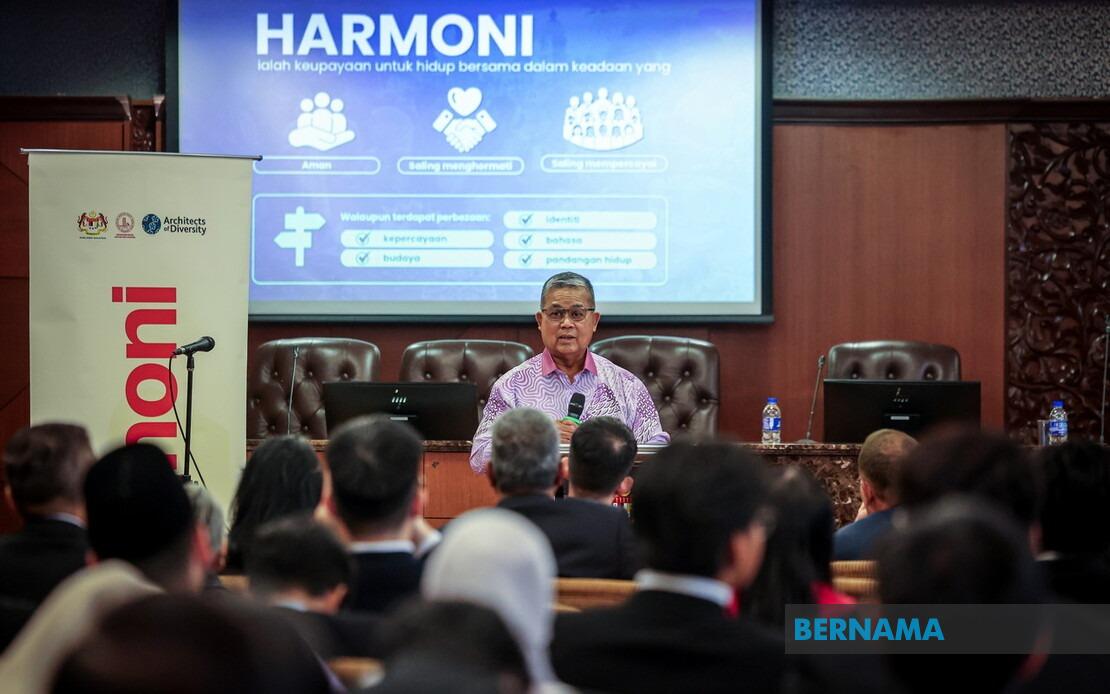
The Department of National Unity and National Integration (JPNIN) is moving to create a systematic framework for tracking and understanding community tensions across Malaysia, reflecting growing concern about the fragility of social cohesion in an increasingly polarised digital environment. Minister of National Unity Datuk Aaron Ago Dagang announced the development of a Community Tension Index at the 2026 Harmony Symposium on June 26, positioning the tool as a crucial instrument for measuring social stability and identifying emerging flashpoints around sensitive issues. The index represents a shift towards data-driven policymaking in one of Malaysia's most delicate governance challenges: maintaining unity among a racially and religiously diverse population while navigating the complexities of modern communication technologies.
The impetus for this initiative stems partly from accelerating concerns about online divisiveness. Between January 1, 2025 and January 31, 2026, Malaysia's Communications and Multimedia Commission removed 1,493 pieces of online content related to religion, royalty and race—collectively known as 3R issues—demonstrating the scale and persistence of inflammatory material circulating on digital platforms. This enforcement action, while substantial, likely represents only a fraction of problematic content that remains undetected or unreported. The steady removal of such material underscores how traditional offline tensions have now found refuge in the virtual world, where the speed and scale of dissemination far exceed what formal enforcement mechanisms can address.
A particular challenge identified by Minister Dagang relates to the structural features of social media platforms themselves. Algorithm-driven content curation creates what researchers term "filter bubbles" and "echo chambers"—self-reinforcing information environments where individuals encounter only perspectives aligned with their existing beliefs. This technological phenomenon amplifies polarisation by narrowing exposure to diverse viewpoints and inhibiting the kind of cross-community dialogue necessary for social cohesion. What makes this especially concerning for Malaysian policymakers is that such digital dynamics operate largely outside traditional regulatory frameworks, making conventional enforcement approaches insufficient on their own.
The proposed Community Tension Index will function as an early-warning system, providing government agencies with empirical data on levels of social strain across different communities and demographic groups. By measuring and monitoring cohesion indicators in real time, policymakers can identify deteriorating situations before they escalate into serious conflict. The index would serve as an evidence base for targeted intervention strategies, allowing authorities to direct resources and diplomatic efforts towards areas experiencing heightened tension. This preventive approach contrasts with reactive crisis management, offering potential cost savings and human benefits by addressing fractures before they become irreparable.
Beyond the tension index, JPNIN is advancing a complementary institutional proposal: the establishment of a National Harmony Commission (SKN). According to Minister Dagang, this commission would operate as a dedicated mechanism for early prevention, mediation, and conflict resolution. Rather than simply investigating breaches after they occur, the commission would actively work to prevent disputes from escalating while simultaneously conducting investigations into matters affecting national harmony. The emphasis on mediation and constructive resolution suggests a preference for dialogue-based approaches over punitive measures, acknowledging that enforcement alone cannot build the understanding and trust necessary for genuine social harmony.
The government has commenced preliminary consultations with various stakeholders regarding the SKN proposal, gathering feedback and building consensus around its design and mandates. This consultative process reflects recognition that harmony initiatives cannot be imposed top-down but must reflect the input and buy-in of communities themselves. The breadth of consultation—encompassing diverse racial, religious, and civil society groups—indicates an attempt to construct legitimacy and ensure the commission's mechanisms resonate with ground-level realities rather than remaining bureaucratic abstractions.
For Malaysian readers, these developments carry several important implications. First, they acknowledge that digital polarisation represents a genuine and growing threat to national stability, requiring systematic rather than ad-hoc responses. Second, they signal government intention to move beyond reactive content removal towards proactive social monitoring and conflict prevention. Third, the emphasis on mediation and dialogue, rather than purely enforcement-based approaches, suggests openness to addressing root causes of tension rather than just symptoms. However, the effectiveness of these initiatives will ultimately depend on their implementation, the allocation of adequate resources, and the political will to act impartially across all communities.
The timing of this initiative also reflects broader regional dynamics. Southeast Asia has witnessed several instances of communal tension linked to digital misinformation and polarising rhetoric, making Malaysia's approach potentially significant for neighbouring countries. How successfully JPNIN implements the Community Tension Index and establishes the National Harmony Commission could offer lessons—both positive and cautionary—for other multiethnic, multireligious societies grappling with similar challenges. The initiative demonstrates that governments in the region are taking digital-era polarisation seriously and attempting to develop sophisticated policy responses.
However, observers have noted that data collection and institutional frameworks alone cannot ensure harmony. The effectiveness of these tools depends heavily on how findings are used and whether recommendations are acted upon decisively. There is also the question of transparency: how openly will tension data be shared, and will it be used to strengthen communities or to justify restrictive measures? Building public confidence in these mechanisms will require clear communication about their purposes, methods, and safeguards against misuse.

