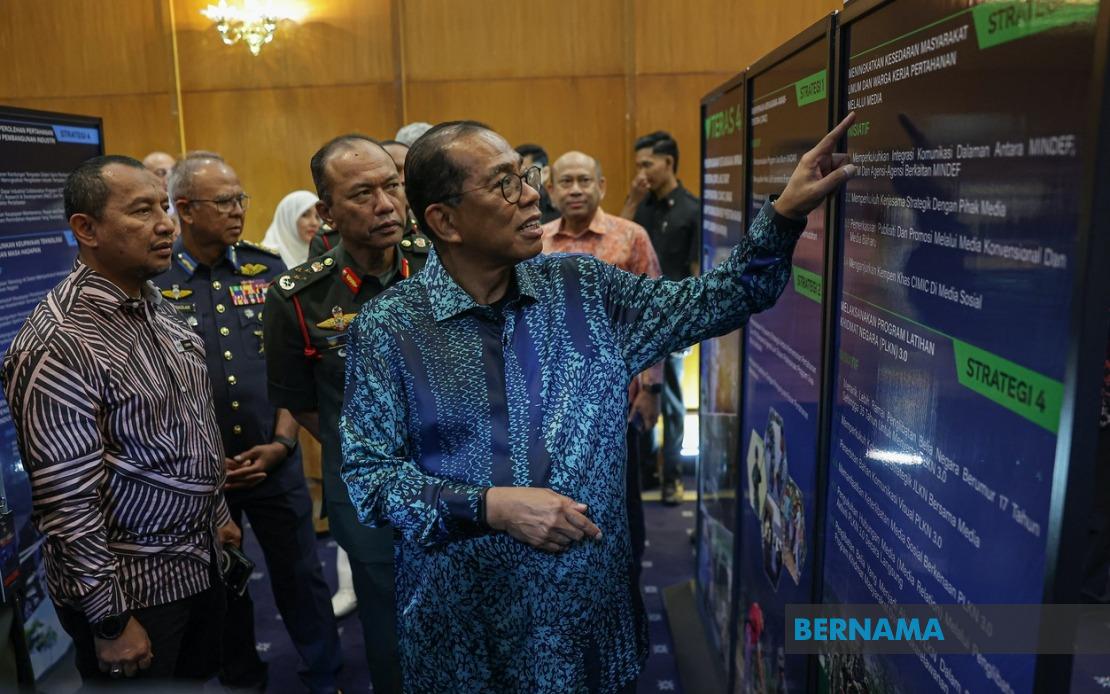
Malaysia's Defence Ministry has rolled out an ambitious two-part strategic framework designed to systematically strengthen the country's security posture in an increasingly volatile regional environment. The National Defence Strategic Plan (PSPN) and the Defence Capacity Blueprint (RTKP) 2026-2030, launched on June 25 in Kuala Lumpur, represent a coordinated approach to modernising defence operations and ensuring the Malaysian Armed Forces can effectively counter both traditional and emerging threats.
Defence Minister Datuk Seri Mohamed Khaled Nordin framed the initiative as a necessary adaptation to unprecedented global conditions. The world is confronting simultaneous pressures from geopolitical instability, rapid technological transformation including artificial intelligence and automation, and the proliferation of non-traditional security challenges that fall outside conventional military frameworks. These threats require defence planning to be dynamic rather than static, capable of pivoting as new dangers materialise. The Defence Ministry undertook a Mid-Term Review of its existing Defence White Paper to identify vulnerabilities and recalibrate strategic priorities accordingly.
The PSPN serves as the conceptual architecture for Malaysia's defence ambitions over the next five years. It operates through seven strategic pillars, each addressing a critical dimension of military effectiveness. Operational readiness of the Malaysian Armed Forces constitutes the foundation, ensuring troops can respond swiftly to threats. Enhancement of defence capabilities addresses the need for modern equipment and systems. Personnel welfare and veteran support recognise that military strength ultimately depends on motivated, healthy personnel. Defence technology and innovation acknowledge that technological superiority increasingly determines battlefield outcomes. These pillars work in concert to create a comprehensive vision for what Malaysian defence should accomplish.
Yet having a strategic vision means little without the operational machinery to execute it. This is where the RTKP becomes critical. The Defence Capacity Blueprint functions as the implementational pathway, translating strategic intent into tangible outcomes. It identifies and strengthens capacity across four foundational domains. Financial resources must be adequate and efficiently deployed to procure equipment and fund operations. Human capital—the recruitment, training, and retention of skilled personnel—underpins all defence activities. Technological expertise enables the armed forces to operate modern systems and innovate solutions to emerging problems. Inter-agency coordination ensures that defence efforts integrate seamlessly with other government departments and civilian agencies responsible for national security.
The distinction Mohamed Khaled drew between the two documents illuminates an often-overlooked challenge in strategic planning. Ambitious goals are worthless without the material capacity to achieve them. A strategic plan might declare an aspiration to field cutting-edge cyber defence capabilities, but without investment in recruiting specialised personnel, acquiring sophisticated systems, and establishing research partnerships, the declaration remains aspirational. The RTKP explicitly recognises that capacity encompasses not merely financial outlays but leadership quality, professional competencies, research infrastructure, and the institutional relationships necessary for whole-of-government coordination.
The emphasis on a whole-of-government and whole-of-society approach reflects a sophisticated understanding of modern security challenges. Terrorism, cybercrime, drug trafficking, human smuggling, and climate-related disasters do not respect the boundaries between military and civilian domains. Maritime security in the Straits of Malacca, for instance, involves the navy, coast guard, customs, port authorities, and international maritime partners. Pandemic preparedness requires coordination between defence, health, border security, and logistics agencies. By positioning national defence as a shared responsibility rather than purely a military function, the strategy acknowledges that comprehensive security requires alignment across government silos and engagement with private sector and civil society actors.
The strategic framework arrives at a moment when Malaysia faces specific capability gaps. The recent acquisition of three ANKA Medium Altitude Long Endurance Unmanned Aircraft Systems, delivered in March and now operational at Labuan Air Base, demonstrates concrete progress in modernisation. These platforms significantly extend the armed forces' surveillance and reconnaissance reach across Malaysian territory and surrounding waters. The forthcoming arrival of FA-50M light combat aircraft, maritime patrol aircraft, and additional Littoral Mission Ships represents substantial investment in capabilities essential for a maritime-dependent nation.
For Malaysian defence planners, the timing of these acquisitions alongside the PSPN and RTKP matters considerably. New equipment alone does not create military effectiveness. Personnel must be trained to operate systems effectively. Maintenance infrastructure must be established. Supply chains for spare parts must be secured. Integration with existing platforms requires careful coordination. The capacity blueprint addresses these implementation challenges that procurement announcements typically omit. By front-loading investment in human capital and inter-agency coordination, Malaysia aims to translate expensive capital acquisitions into genuinely operational capabilities rather than impressive hardware sitting underutilised.
Regionally, Malaysia's defence modernisation carries implications for Southeast Asian security architecture. The Association of Southeast Asian Nations operates on principles of non-interference and consensus, which constrain collective defence coordination. Yet individual members upgrading their defence capabilities influences regional force balances and the ability of ASEAN to play a stabilising role in disputes. Malaysia's enhanced surveillance and maritime capabilities directly affect the security environment in the South China Sea and critical shipping lanes that sustain Southeast Asian trade. As the country strengthens operational readiness and technological capabilities, it becomes a more credible partner in multilateral security arrangements with Australia, Japan, India, and increasingly, the United States.
The Defence Capacity Blueprint also signals Malaysia's recognition that defence modernisation requires sustained commitment to research and innovation ecosystems. Countries that outsource all defence technology to foreign suppliers face vulnerability to supply disruptions, sanctions, and technological obsolescence. By investing in domestic expertise and research partnerships, Malaysia positions itself to develop indigenous solutions to particular security challenges while building an industrial base that generates economic benefits beyond defence applications. The blueprint's explicit inclusion of research and innovation as capacity pillars suggests the Defence Ministry understands that current technological advantages become vulnerabilities if not continuously updated through investment in R&D.
Implementing these ambitious strategies requires political durability and budget discipline. Defence planning horizons span decades; equipment purchased today will operate for thirty years. Personnel trained in emerging technologies must remain in service long enough to recoup training investments. Inter-agency coordination mechanisms must persist across government transitions. The PSPN and RTKP provide a strategic anchor that should outlast individual political administrations, providing continuity even as ministers change. This institutional approach to defence planning reflects maturation in Malaysian strategic thinking, moving beyond announcement-driven policy toward systematic, sustained capability development.
For Malaysian citizens and businesses, the implications extend beyond military circles. The defence sector generates employment in manufacturing, engineering, and technology services. Enhanced national security reduces uncertainty that deters foreign investment. Modern defence capabilities protect critical infrastructure and maritime commerce essential to the economy. The capacity blueprint's emphasis on inter-agency coordination means defence initiatives will increasingly integrate with civilian agencies managing infrastructure, transportation, and disaster response. Understanding defence strategy becomes relevant not just for security specialists but for anyone concerned with Malaysia's institutional capacity to manage complex challenges in an unstable region.

