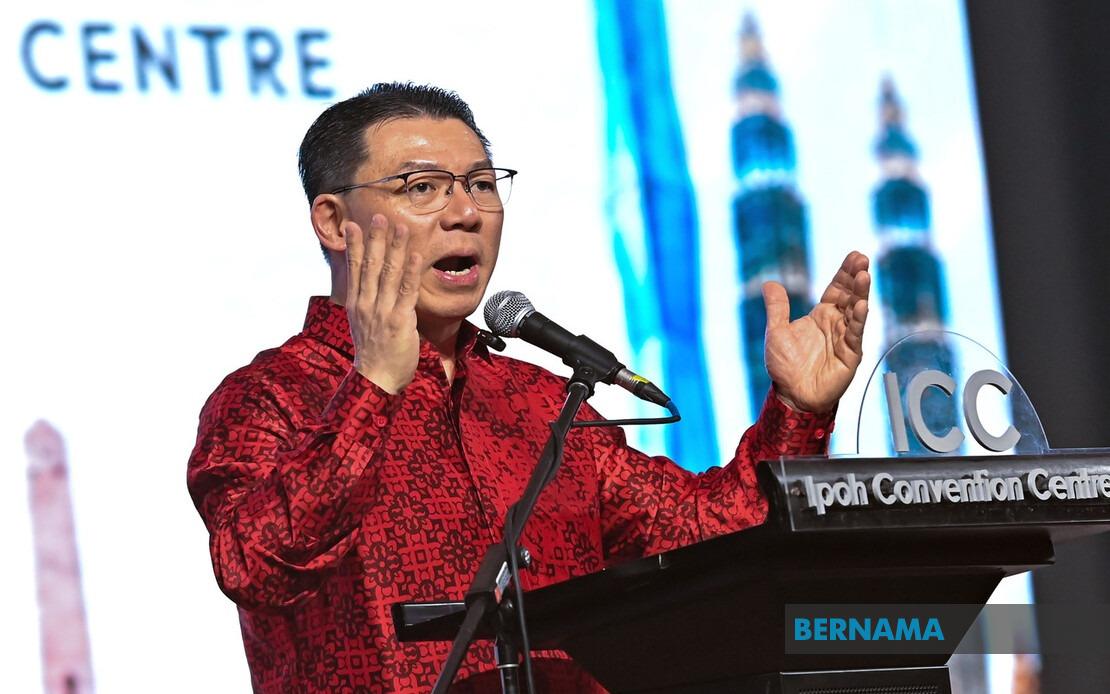
Malaysia has embarked on an ambitious programme to reimagine its public spaces through the MY Public Space initiative, a strategic partnership between the Ministry of Housing and Local Government and UN-Habitat designed to elevate the country's urban environments to international standards. Housing Minister Nga Kor Ming unveiled the initiative during the 2026 National Landscape Day Celebration in Melaka, positioning it as a cornerstone of the government's urban development agenda alongside Prime Minister Datuk Seri Anwar Ibrahim's presence at the ceremony.
The MY Public Space framework addresses a critical gap in Malaysian urban planning by establishing a systematic approach to public space management grounded in global best practices. Rather than adopting foreign models wholesale, the initiative tailors international standards to Malaysia's unique urban context, recognising that what works in European cities may require adaptation for tropical climates, demographic patterns, and cultural preferences. This calibrated approach reflects growing sophistication in how developing nations approach urban development, learning from peers without abandoning local identity.
At its core, the initiative pursues four interconnected strategic pillars that collectively reshape how Malaysia develops and maintains its public realm. The first involves creating a national recognition framework aligned with the Rosa Sinensis Award, establishing clear benchmarks for excellence in landscape design and public space development. Simultaneously, the MY Public Space Toolkit pilot project will translate these standards into practical implementation tools that developers, local authorities, and landscape professionals can deploy. Strengthening existing public space management practices forms the third pillar, acknowledging that many Malaysian towns possess assets that require rejuvenation rather than replacement. The final component integrates these practices into national guidelines, embedding quality standards into policy and ensuring consistency across state lines.
The UN-Habitat partnership carries particular significance for Malaysia's positioning on the global stage. As the current President of the UN-Habitat Assembly, Malaysia has committed to accelerating the Sustainable Development Goals through enhanced international cooperation. This initiative demonstrates that commitment tangibly, leveraging the world body's expertise while contributing Malaysian insights to global conversations about sustainable urbanisation. The collaboration signals that Malaysia views urban development not merely as domestic infrastructure policy but as part of its broader diplomatic and development agenda in the region.
Complementing the MY Public Space initiative is the government's parallel push to establish 1,000 MADANI Parks nationwide by 2035, a programme that directly addresses equitable access to green space across all communities. The momentum behind this goal is remarkable: between 2024 and 2025, authorities successfully developed 217 MADANI Recreational Parks, substantially exceeding the annual target of 100 parks. This acceleration demonstrates both political commitment and operational capacity, though sustaining this pace across more remote or economically challenged regions will test implementation capabilities. Melaka alone has benefited from ten of these parks, with three additional sites planned in Ayer Keroh and Masjid Tanah.
The economic dimensions underlying these initiatives reveal ambitions that extend well beyond urban aesthetics. The landscape industry currently contributes meaningfully to Malaysia's economy, with 2025 exports of landscape products valued at RM534.3 million destined for sophisticated markets including Singapore, Japan, Australia, and the United States. The government has set a target for the industry to contribute up to RM40 billion to Gross Domestic Product by 2035, a tenfold increase that reflects confidence in rising global demand for sustainable environmental solutions. This expansion would position the landscape sector among Malaysia's significant economic contributors, comparable to many traditional industries.
To realise these economic ambitions, the National Landscape Department is preparing the Malaysian Landscape Industry Blueprint, a comprehensive strategic document addressing multiple dimensions of sector development. Workforce capacity building emerges as a critical concern, as rapid growth requires training thousands of landscape professionals, urban planners, and technicians across the country. Industry standard coordination ensures that diverse practitioners meet consistent quality benchmarks, preventing a race to the bottom where cost-cutting undermines professional standards. Green technology innovation represents Malaysia's opportunity to leapfrog older methodologies, incorporating climate-resilient design, water-efficient systems, and renewable energy integration into public space infrastructure.
The value chain strengthening component recognises that Malaysia's landscape export success depends on competitive domestic supply networks. Local suppliers of materials, equipment, and services must be internationally competitive while generating meaningful employment. The competitiveness strategy balances domestic protection with export ambition, seeking to build champions capable of competing on global markets while creating high-quality jobs at home. This mirrors successful models in other Southeast Asian economies where niche industries have achieved global prominence.
For Malaysian readers, these initiatives carry tangible implications for daily urban life. Public spaces—parks, plazas, pedestrian precincts, and recreational facilities—shape how communities interact, where children play, and whether cities feel welcoming or hostile. The emphasis on inclusivity and safety addresses persistent concerns about inadequate public facilities in many towns, particularly in underserved communities. The quality standard focus should improve maintenance practices, moving beyond initial development to sustained upkeep that too often falters in Malaysian cities once political attention moves elsewhere.
The environmental angle deserves particular attention in a region confronting heat stress, flooding, and urban sprawl. Well-designed public spaces incorporating green infrastructure—permeable pavements, shade trees, bioswales, and wetland gardens—can reduce urban temperatures, manage stormwater naturally, and support biodiversity within built environments. These benefits extend beyond leisure value to public health, reducing heat-related illnesses and improving mental wellbeing through accessible nature contact. For cities like Kuala Lumpur, Penang, and Johor Bahru grappling with tropical heat intensification, public space quality becomes a climate adaptation strategy.
The initiative also signals evolving governance approaches where international partnerships strengthen domestic capacity rather than replacing it. The National Landscape Department now leads a professionalised field rather than managing scattered municipal efforts, potentially reducing fragmentation and political short-termism. Yet implementation challenges remain substantial. Consistency across state jurisdictions requires navigating federal-state dynamics, particularly where local governments lack resources or expertise. Melaka Chief Minister Datuk Seri Ab Rauf Yusoh's involvement suggests state-level buy-in, essential for translating national frameworks into local reality.
Looking forward, the MY Public Space initiative and MADANI Parks programme represent Malaysia's assertion of distinctive approaches to Southeast Asian urban development. Rather than importing wholesale solutions from advanced economies or abandoning development for conservation, these frameworks propose managed growth prioritising livability, inclusivity, and environmental performance. Success will ultimately depend on implementation rigour, sustained funding beyond political cycles, and genuine community engagement in shaping the public spaces where Malaysians live their daily lives.

