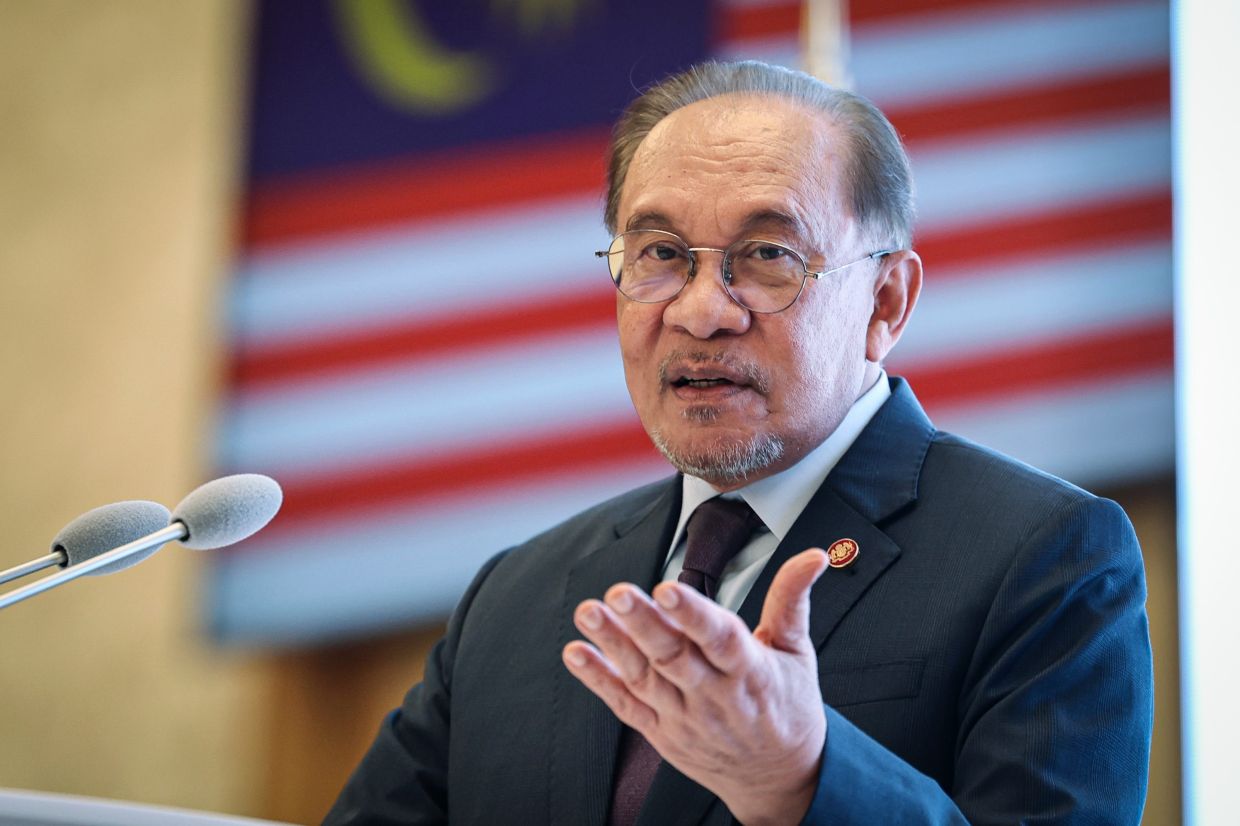
Malaysia's geographical position at the intersection of major international trade routes has become central to the country's broader economic diplomacy strategy, according to Prime Minister Datuk Seri Anwar Ibrahim. Speaking at the 39th Asia-Pacific Roundtable forum, he characterized the nation's role as a significant trading hub as a defining feature of how Malaysia projects influence and advances its interests on the world stage. This positioning, he suggested, extends far beyond simple commercial transactions, reflecting instead a sophisticated approach to statecraft that intertwines economic objectives with diplomatic and geopolitical considerations.
The government's longstanding commitment to deepening ties with established trading and investment partners remains a foundational pillar of Malaysia's external economic engagement. However, Anwar, who also holds the portfolio of Finance Minister, indicated that this traditional focus is being complemented by a more expansive and forward-thinking strategy. The Prime Minister highlighted Malaysia's instrumental role in advancing multilateral trade frameworks that seek to reduce barriers, expand market opportunities, and establish more balanced investment relationships. Through mechanisms including the ASEAN Free Trade Area, the Regional Comprehensive Economic Partnership (RCEP), and the Comprehensive and Progressive Agreement for Trans-Pacific Partnership (CPTPP), Malaysia has positioned itself as a proactive participant in reshaping the architecture of regional and global commerce.
The centrality of ASEAN to Malaysia's future trajectory cannot be overstated, according to Anwar. Despite various challenges and reservations that occasionally complicate regional cooperation, he emphasized that ASEAN centrality must remain the foundational principle guiding Malaysia's foreign policy formulation. This commitment extends beyond narrow national interest to encompass broader aspirations for regional peace, stability, and shared prosperity. By anchoring its diplomatic framework within ASEAN structures, Malaysia seeks to amplify its voice within a collective framework while contributing to the resolution of challenges that affect the entire region. This approach acknowledges the interdependencies that bind Southeast Asian nations and recognizes that individual prosperity is intrinsically tied to regional harmony.
Yet Malaysia's economic diplomacy is not confined to its immediate geographical sphere. Recognizing the need for portfolio diversification in an increasingly unpredictable global environment, the government is actively pursuing commercial and investment relationships with markets that have historically received less attention. West Asia, Central Asia, Latin America, and African nations represent frontiers of economic opportunity that Malaysia is systematically cultivating. This geographical expansion reflects a deliberate strategy to reduce dependence on any single market or region, thereby enhancing the resilience of Malaysia's economy against external shocks and fluctuations.
The framework underpinning Malaysia's outreach to these emerging markets extends beyond conventional trade in goods. Anwar articulated a vision of economic engagement built on genuine collaborative projects addressing contemporary challenges and opportunities. The halal industry represents one such domain, where Malaysia's credentials as a leading global player position it advantageously to capture growing demand from Muslim-majority and Muslim-minority populations worldwide. The digital economy constitutes another frontier, where Malaysian expertise and technological capabilities offer value-added solutions to developing markets seeking to accelerate their digital transformation. Agricultural cooperation and green technology partnerships round out this multidisciplinary approach, reflecting recognition that economic engagement must address the full spectrum of developmental needs and sustainability imperatives.
Energy cooperation emerges as a particularly strategic dimension of Malaysia's expanded economic diplomacy. The Prime Minister specifically referenced recent developments in Central Asia, highlighting Petronas' agreements with Turkmenistan's state entities to explore and develop two significant gas fields. These commercial arrangements extend beyond simple commodity transactions to encompass a comprehensive hydrocarbon development framework between the two nations, incorporating provisions for human capital development and technical expertise sharing. Such arrangements exemplify how Malaysia leverages its resource sector capabilities to establish deeper, more multifaceted partnerships that create sustained points of contact and mutual interest.
The emphasis on energy cooperation reflects broader geopolitical calculations within the Asian region and globally. As energy security increasingly dominates strategic calculations, Malaysia's ability to diversify its supply sources and develop new partnerships in energy-producing regions enhances its security posture. Simultaneously, participation in energy development projects abroad expands Petronas' operational footprint and revenue generation capacity, contributing to national economic objectives. This convergence of commercial opportunity and strategic necessity demonstrates how contemporary economic diplomacy operates at the intersection of multiple policy objectives.
Understanding diversification as a national necessity rather than merely a tactical economic maneuver reflects sophisticated policymaking cognizant of long-term structural shifts in the global economy. The Prime Minister's characterization of diversification in these terms acknowledges that the international trading system is undergoing significant transformation, with geopolitical tensions, technological disruption, and shifting power dynamics creating unprecedented uncertainty. For a nation whose prosperity depends substantially on trade and investment flows, maintaining broad-based economic relationships across multiple regions, sectors, and partners represents essential risk management.
The Asia-Pacific Roundtable provided an appropriate venue for these policy articulations, bringing together regional leaders, policymakers, and strategists to discuss pressing regional challenges and opportunities. Organized by the Institute of Strategic and International Studies (ISIS) Malaysia over three days from June 30 to July 2, the forum enabled Malaysia to position itself as a thoughtful participant in regional dialogue regarding the future architecture of Asian cooperation and economic integration. For Malaysian audiences, these pronouncements signal continued government commitment to maintaining the nation's relevance and prosperity within evolving regional and global contexts, even as traditional certainties give way to new competitive dynamics and collaborative possibilities.

