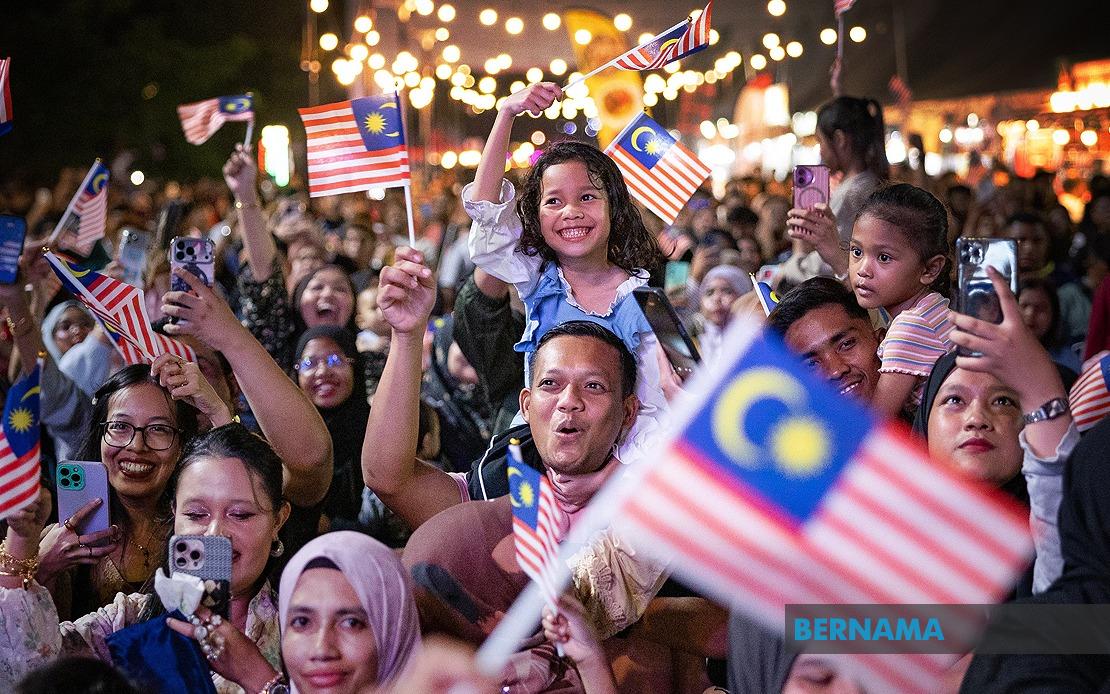
Malaysia erupted in celebration on National Day Eve as citizens across the nation marked the countdown to the country's 69th National Day, with iconic venues hosting multitudes of people eager to honour the occasion. The scale of participation underscored the persistent appeal of Malaysia's independence narrative and the continued resonance of national unity messaging among diverse communities.
Kuala Lumpur's Dataran Merdeka became the epicentre of festivities, attracting more than 100,000 visitors who converged on the historic square to participate in the 'Kita Bagi Jadi @ Ambang Merdeka 2026' concert and join the midnight countdown. According to observations on the ground, crowds of varying ages began arriving as early as 8 pm, filling the square with the sight of the Jalur Gemilang flags waving against the illuminated backdrop of the iconic Sultan Abdul Samad Building, creating a visually striking tableau of national sentiment.
The centrepiece entertainment programme spanned 90 minutes and featured performances by established local artistes including Aina Abdul, Aman RA, Nadia Aqilah, Asmidar, Haziq Rosebi, Mimifly, Izen Kong and Pasya. Notably, these performances were supported by approximately 350 additional performers who collectively presented a narrative tapestry combining music, dance and storytelling focused on Malaysia's historical journey and cultural heritage. This emphasis on indigenous artistic expression and historical remembrance reflected an intentional curation aimed at reinforcing national identity through cultural channels rather than purely ceremonial means.
Government representation at the Kuala Lumpur venue included Hannah Yeoh, the Minister in the Prime Minister's Department (Federal Territories), alongside Kuala Lumpur Mayor Datuk Seri Fadlun Mak Ujud, signalling official endorsement and coordination of the event. The formal political presence established a bridge between grassroots celebration and state machinery, though the attendance focused primarily on civic rather than partisan dimensions.
The programme's structure incorporated diverse entertainment elements spanning military precision and popular culture. Selangor's Menteri Besar Datuk Seri Amirudin Shari arrived at 9.20 pm to preside over subsequent proceedings, which included a dramatic skydiving display by the elite VAT 69 Commando unit. The traditional singing of Negaraku preceded a parade featuring decorated vehicles and contingents, followed by demonstration performances by the Fire and Rescue Department, police and the Malaysian Armed Forces. These elements combined professional military spectacle with civilian participation, creating a layered representation of national defence and civilian cooperation.
The climax arrived at midnight with shouts of 'Merdeka' orchestrated by the Menteri Besar, synchronized with fireworks and a light display that transformed the square into a cascading visual celebration. The finale featured concert performances by veteran entertainers including Datuk Ramli Sarip, Datuk Awie, Gerhana Skacinta, Merrah and Wani Kyrie, extending the festivities beyond the symbolic midnight moment. The midnight countdown and fireworks were also attended by Chief Minister Datuk Seri Ab Rauf Yusoh, his wife Datin Seri Zuriyah Abd Aziz, and state executive council members from an adjoining state, indicating the interconnected nature of National Day observances across state boundaries.
Beyond the primary concert venue, Dataran Merdeka offered a comprehensive programme of ancillary activities designed to create multiple engagement points for visitors. The Bulatan Sultan Azlan Shah Run provided athletic participation opportunities, while Jualan Rahmah retail initiatives and a thrift market incorporated economic and social welfare dimensions. Food stalls catered to sustenance needs, free health screenings addressed preventive health concerns, a karaoke contest enabled amateur participation in performance, the Tantarina Haunted House offered entertainment for younger attendees, and continuous live concert performances maintained the festive atmosphere throughout the evening.
Perlis state authorities reported attracting over 46,000 visitors to its sports complex venue, demonstrating that National Day Eve celebrations transcended Kuala Lumpur's capital-centric focus. The Perlis event similarly opened with Negaraku and featured martial arts displays, establishing consistent ceremonial frameworks across different state-level commemorations. State leadership, through Muhammad Sanusi's remarks, emphasised public appreciation and safeguarding of national independence, articulating the didactic purpose underlying the festive gatherings.
The participation across multiple venues and states reflected a carefully orchestrated national observance that balanced formal state commemoration with popular celebration. The integration of military displays, artistic performances, civic activities and entertainment created layered messaging: independence represented as requiring ongoing defence, worth commemoration through cultural expression, worthy of participation across socioeconomic divides, and remaining central to national identity. For Malaysia, where independence involved negotiated constitutional arrangements rather than armed struggle, these celebrations emphasise continuity, stability and the ongoing relevance of the independence achievement to contemporary citizen engagement.
The scale of turnout at Dataran Merdeka and across other venues suggested sustained public investment in National Day observances despite contemporary political fragmentation and competing national narratives. The diversity of ages among attendees indicated intergenerational transmission of national commemoration practices, though the actual depth of patriotic sentiment versus casual attendance for entertainment purposes remained unmeasurable. Nevertheless, the consistency of large-scale gatherings year upon year indicates that National Day Eve has become institutionalised as Malaysia's primary national celebration moment, transcending specific political administrations or partisan contests.

