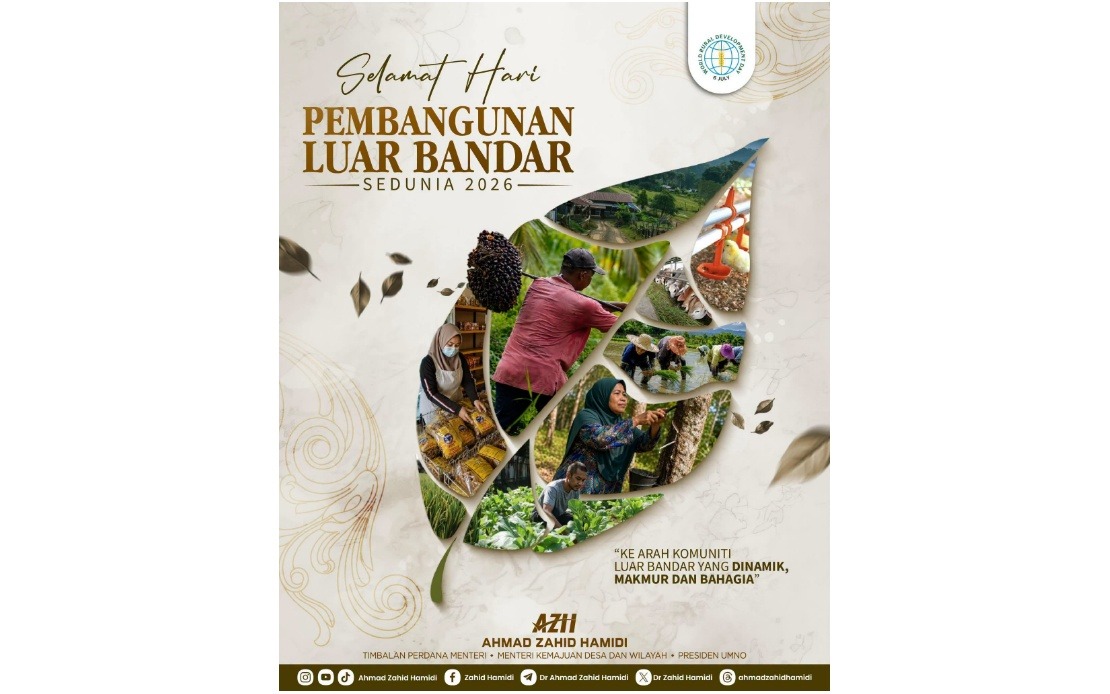
Malaysia has observed its first World Rural Development Day, marking a significant moment in the country's commitment to advancing rural communities across the nation. Deputy Prime Minister Datuk Seri Dr Ahmad Zahid Hamidi underscored the occasion as a turning point for recognising the contributions of rural populations and elevating rural development into a more prominent position within the national agenda. The inaugural celebration, held at the Tun Abdul Razak Stadium in Jengka near Maran, Pahang, reflects a coordinated effort by the Ministry of Rural and Regional Development to address longstanding disparities between urban and rural areas.
The establishment of July 6 as Malaysia's annual observance date carries deeper significance beyond its immediate symbolism. The date coincides with the founding anniversary of the Centre on Integrated Rural Development for Asia and the Pacific, an institution that has maintained a substantial presence in shaping rural development frameworks throughout the Asia-Pacific region for decades. By anchoring Malaysia's celebration to this date, the government positions the country within a broader regional context of rural advancement, acknowledging the interconnectedness of development challenges and solutions across Southeast Asia and beyond.
The overarching theme for this year's celebration, "Toward Vibrant, Prosperous and Happy Rural Communities," encapsulates a holistic vision extending far beyond simple infrastructure provision. The framing suggests recognition that rural prosperity encompasses economic vitality, social wellbeing, and community satisfaction. For Malaysian policymakers, this thematic emphasis reflects a growing understanding that sustainable rural development cannot rely solely on physical development projects but must engage the aspirations and agency of rural populations themselves.
The ministry's strategic focus on three core pillars—community innovation, rural digitalisation, and rural entrepreneurship development—addresses contemporary challenges facing agricultural and rural-dependent economies. Community innovation represents efforts to leverage local knowledge and foster grassroots problem-solving capacity within villages and towns. This approach acknowledges that rural communities possess inherent strengths and creative potential that, when properly supported, can generate sustainable economic activities without necessarily requiring external intervention or capital.
Rural digitalisation has emerged as a critical priority for closing the digital divide that continues to disadvantage rural Malaysia. Limited connectivity, inadequate digital literacy, and lack of appropriate technological infrastructure have historically constrained rural populations' access to markets, financial services, and information. By prioritising this pillar, the Ministry of Rural and Regional Development signals recognition that the digital economy cannot remain an urban phenomenon if Malaysia aspires to genuine national development. The initiative carries particular relevance for younger rural populations who increasingly seek career opportunities beyond traditional agricultural sectors.
Rural entrepreneurship development represents perhaps the most economically transformative of the three pillars. Rather than positioning rural residents as passive recipients of development programmes, the entrepreneurship focus encourages the establishment of small and medium enterprises rooted in local resources, skills, and market opportunities. This approach can generate sustainable employment, reduce urban migration pressures, and retain wealth within rural communities rather than concentrating economic gains in metropolitan areas. For Southeast Asia more broadly, where rapid urbanisation creates social and environmental strains, models supporting distributed entrepreneurship across rural regions offer compelling alternatives to traditional urban-centric growth paradigms.
Ahmad Zahid's comments emphasise the ministry's intention to ensure rural communities experience tangible improvements in economic opportunity, infrastructure quality, and overall living standards. This commitment reflects broader recognition within government that persistent rural-urban disparities undermine social cohesion and create vulnerability to political instability. States with substantial rural populations, including Pahang where the celebration occurred, have particularly acute needs for integrated rural development strategies that prevent further economic stagnation and demographic decline.
The selection of Jengka as the venue carries regional significance, as the location has historical connections to integrated agricultural development schemes in Malaysia. Hosting the inaugural World Rural Development Day celebration in this setting demonstrates intentional symbolism, linking contemporary development aspirations to established models of coordinated rural advancement. The Tun Abdul Razak Stadium provides appropriate facilities for hosting a national-level event while serving communities in a traditionally agricultural region.
For Malaysian readers and policymakers, this inaugural celebration represents both acknowledgment of past development gaps and renewed commitment to addressing them through modern approaches. The three-pillar strategy acknowledges that twenty-first-century rural development demands integration of technological capability, entrepreneurial initiative, and community engagement alongside traditional infrastructure investment. Unlike earlier rural development programmes that sometimes imposed top-down solutions, the current emphasis on community innovation and local entrepreneurship suggests greater recognition of rural agency and potential.
Regionally, Malaysia's formal establishment of World Rural Development Day positions the country as actively engaged in addressing rural development challenges that affect all Southeast Asian economies. Countries throughout the region face similar pressures of rapid urbanisation, agricultural transformation, and the need to retain population and economic vitality in rural areas. Malaysia's strategic approach may influence development thinking among neighbouring nations confronting comparable rural advancement challenges.
The timing of this inaugural celebration also reflects broader global recognition of rural development's importance. International development discourse increasingly emphasises the interconnectedness between rural prosperity and national stability, environmental sustainability, and equitable economic growth. By formally observing World Rural Development Day, Malaysia aligns itself with this global perspective while domestically signalling that rural communities merit dedicated policy attention and resource allocation.

