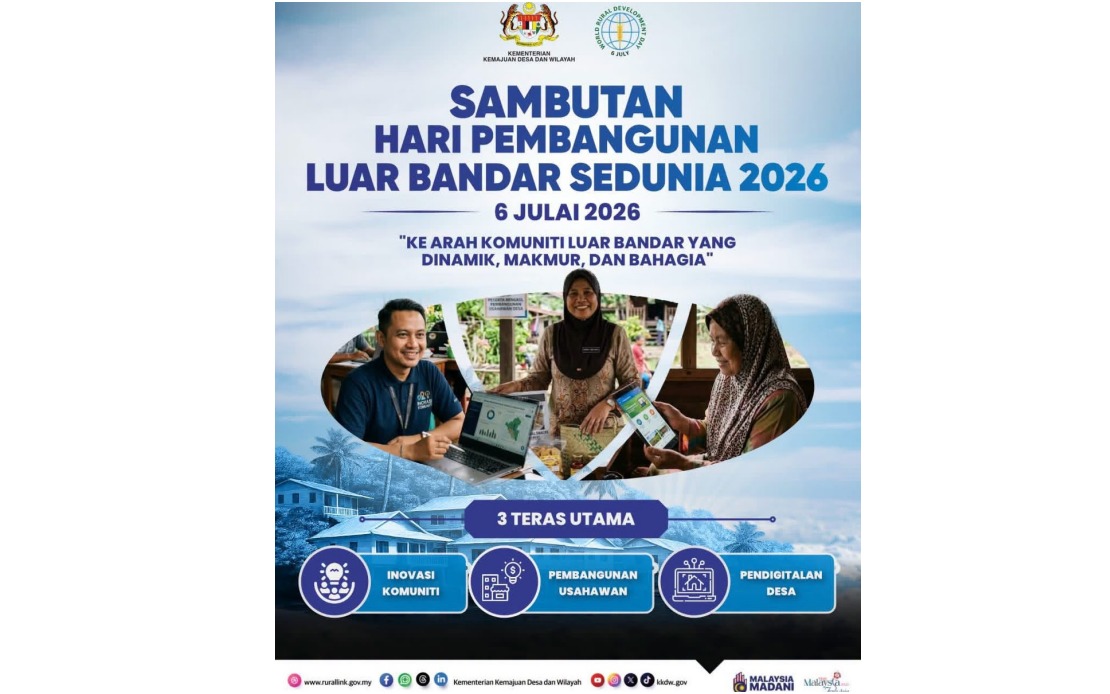
Malaysia will step into the global spotlight tomorrow as it becomes the latest nation to formally observe World Rural Development Day, a newly established United Nations commemoration dedicated to recognizing the pivotal role of rural communities in driving sustainable progress. The inaugural Malaysian celebration takes place at Tun Abdul Razak Stadium in Jengka, near Maran in Pahang, marking a symbolic moment for a country where rural development has long remained a cornerstone of national policy and social equity.
The United Nations General Assembly officially designated World Rural Development Day on September 6, 2024, establishing July 6 as the annual observance date. This timing aligns with the founding anniversary of the Centre on Integrated Development for Asia and the Pacific (CIRDAP), an organization instrumental in advancing rural development across the Asian region. The global community first marked this occasion on July 6, 2025, and Malaysia now joins member nations in formally implementing the celebration beginning in 2026, demonstrating the government's alignment with international development frameworks.
Deputy Prime Minister and Minister of Rural and Regional Development Datuk Seri Dr Ahmad Zahid Hamidi will officiate the ceremony, underscoring the significance the administration places on rural affairs. The ministry's involvement at the highest level signals that rural development remains central to Malaysia's broader governance agenda, particularly as the nation pursues inclusive growth that extends beyond urban centres. This positioning reflects broader regional trends, where Southeast Asian governments increasingly recognize that sustainable development cannot be achieved without addressing rural disparities in income, infrastructure, and opportunity.
The celebration carries the thematic banner "Toward Vibrant, Prosperous and Happy Rural Communities," encapsulating the government's vision of transforming rural Malaysia into economically dynamic, digitally connected, and self-reliant regions. Rather than framing rural areas as mere recipients of development benefits, this messaging emphasizes agency and empowerment, positioning rural communities as active participants in Malaysia's progress toward achieving the Sustainable Development Goals. This reframing matters significantly for Malaysian policy discourse, shifting focus from dependency to capability-building.
Three strategic pillars structure the celebration's programming: community innovation, rural digitization, and rural entrepreneur development. These pillars reflect contemporary understanding that rural prosperity depends not solely on infrastructure investment but on enabling grassroots entrepreneurship and technological access. Community innovation acknowledges that rural populations possess localized knowledge and creative solutions tailored to their contexts, while rural digitization addresses the digital divide that has historically constrained rural businesses from competing in national and regional markets. Rural entrepreneurship development directly targets job creation and income generation within rural economies themselves.
The practical translation of these priorities manifests through multiple initiatives designed to expand economic opportunities for rural dwellers. By strengthening access to digital technology, the government seeks to connect rural enterprises to broader supply chains and customer bases. Empowering communities to become more progressive and competitive represents a departure from passive development models toward active participation in knowledge-based and innovation-driven sectors. For Malaysian readers, this approach has implications for agricultural modernization, rural manufacturing, and service sector development in smaller towns.
The celebration agenda includes several significant announcements and awards ceremonies that highlight tangible commitments to rural advancement. The Rural Aspiration Award MADANI recognizes outstanding contributions to rural development, while the Felda Plan Excellence Award honours achievements within the Federal Land Development Authority framework. The launch of My Rural Insight Journal promises to document and disseminate knowledge about rural development experiences, creating institutional memory and facilitating peer learning among rural communities. These events collectively demonstrate that the government views recognition and documentation as integral components of sustained rural development momentum.
Felcra Bhd, the Federal Land Consolidation and Rehabilitation Authority, will announce its interim distributable profit distribution for 2026, a matter of direct financial interest to thousands of smallholders and rural cooperative members across Malaysia. This announcement carries material consequences for rural household incomes and represents the convergence of rural development policy with agricultural enterprise outcomes. For many rural Malaysians, such distributions represent critical income supplements that enable reinvestment in farming operations or household improvements.
The Ministry of Rural and Regional Development's role in orchestrating this celebration reflects institutional commitment to elevating rural voices within national discourse. By organizing exhibitions featuring ministry initiatives and partner agencies, the event provides rare opportunities for rural communities to directly interface with government officials and technical experts. This accessibility dimension matters particularly in Malaysia's federal structure, where rural constituents sometimes feel distant from policy-making centres in Kuala Lumpur. The public invitation to participate broadens the celebration beyond ceremonial formality toward genuine community engagement.
Contextually, Malaysia's adoption of World Rural Development Day comes amid broader regional conversations about equitable development. Throughout Southeast Asia, rural-urban disparities persist despite decades of development efforts, and each nation interprets rural development through its distinctive demographic, geographic, and economic circumstances. Malaysia's emphasis on digitization and innovation reflects its positioning as a middle-income country with technological aspirations, distinguishing its approach from less-developed rural economies elsewhere in the region.
The broader significance of this inaugural celebration extends beyond symbolic recognition toward establishing a regular platform for reviewing and advancing rural policy. By anchoring the observance in an international framework, Malaysia gains access to comparative experiences from other nations navigating similar challenges. For policymakers and development practitioners, the annual World Rural Development Day offers opportunity to assess progress, identify persistent gaps, and adjust strategies based on what works within Malaysian contexts.
Looking forward, Malaysia's engagement with this UN-designated observance positions rural development as an ongoing priority requiring systematic attention and resource allocation. The inaugural celebration establishes expectations for subsequent years, creating institutional rhythms that can sustain momentum across electoral cycles and administrative transitions. For rural Malaysians, the event represents official recognition that their communities constitute integral components of national success rather than peripheries requiring occasional interventions.

