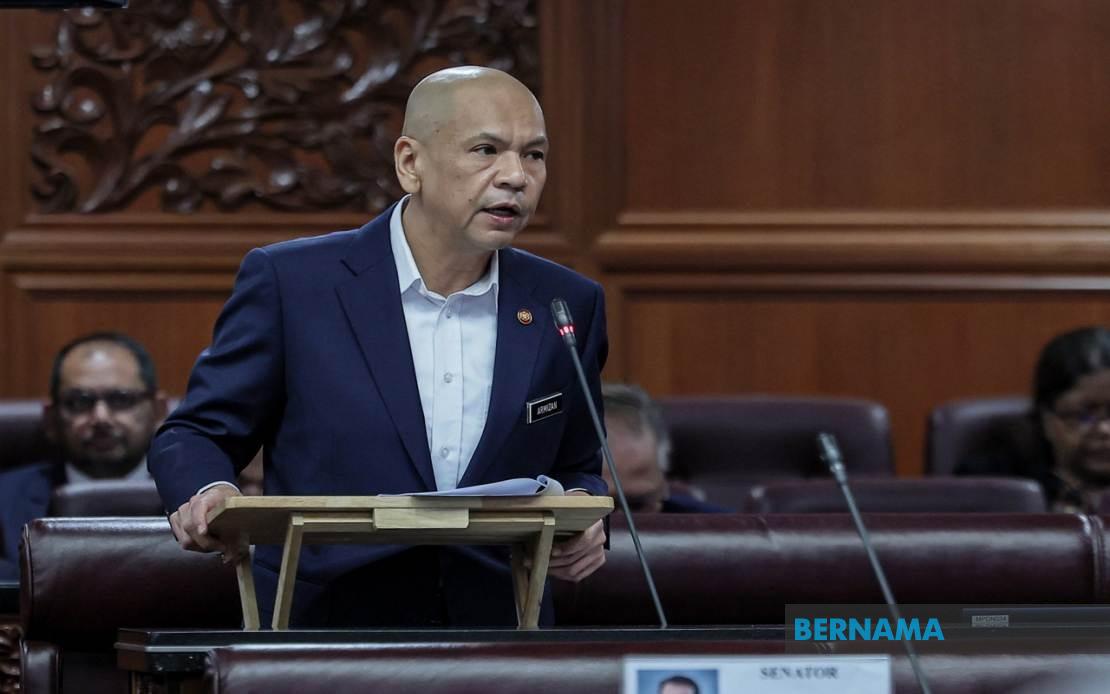
Parliament has advanced two landmark pieces of legislation designed to substantially reshape Malaysia's approach to competition regulation. Datuk Armizan Mohd Ali, the Minister for Domestic Trade and Cost of Living, presented the Competition (Amendment) Bill 2026 and the Competition Commission (Amendment) Bill 2026 for first reading in the Dewan Rakyat on June 23, with both measures scheduled to progress to second reading during the current parliamentary session. These bills represent a comprehensive modernisation of the country's competitive landscape, targeting structural weaknesses in existing enforcement mechanisms and expanding the regulatory remit to encompass economic activity more broadly.
The Competition (Amendment) Bill 2026 constitutes the primary legislative vehicle for enhancement. Working within the framework of the Competition Act 2010, the proposed amendments seek to fortify the investigative and enforcement capabilities of the Malaysia Competition Commission, the statutory body responsible for policing anticompetitive conduct. Beyond procedural refinements, the Bill introduces substantive changes to how the commission operates, including modifications to its decision-making infrastructure and alterations to the appellate framework through which businesses contest MyCC determinations. These operational improvements reflect growing recognition that effective competition enforcement requires not merely authority but also institutional capacity and procedural clarity.
A particularly significant innovation emerges in Clause 3, which fundamentally recalibrates the Act's territorial and sectoral reach. Presently, the Competition Act 2010 applies primarily to commercial activities, a distinction that has created regulatory gaps across the broader economy. The amendment proposes eliminating this demarcation, extending competition law's application to all economic activities. For Malaysia, this expansion carries meaningful implications. Sectors traditionally exempt from rigorous competition scrutiny—certain government-linked enterprises, regulated utilities, and professional services—would come within MyCC's oversight. The practical effect would be a significantly widened net, potentially capturing conduct in telecommunications, transportation, financial services, and other strategically important industries previously inhabiting grey zones.
Clause 7 addresses investigative capacity by according MyCC explicit authority to demand information and documentation from both private entities and government bodies during market reviews. This power represents a critical tool for understanding structural features of markets and identifying systemic sources of inefficiency or anti-competitive outcomes. The ability to compel government participation in inquiries proves particularly valuable in jurisdictions where state-owned enterprises or government-linked companies occupy substantial market shares. Such bodies might otherwise claim exemption from disclosure obligations, thereby preventing comprehensive market analysis. The provision thus strengthens MyCC's analytical capabilities at a point when understanding complex, multi-stakeholder markets has become essential.
Criminal liability receives heightened attention through Clause 13, which introduces a new offence targeting the destruction, concealment, defacement or alteration of evidence with intent to mislead MyCC or obstruct its work. Competition enforcement globally confronts persistent challenges when witnesses destroy communications or documentary evidence before investigations commence. By explicitly criminalising such conduct and creating clear legislative authority for prosecution, Malaysia would join most developed jurisdictions in protecting the investigative process itself. The clause establishes that obstruction constitutes an independent wrong regardless of whether underlying anti-competitive conduct ultimately proves substantiated, thereby safeguarding institutional integrity.
The companion Competition Commission (Amendment) Bill 2026 addresses governance architecture and internal administration. Clause 8 seeks to crystallise MyCC's advisory role vis-à-vis the minister, public authorities and regulatory bodies, explicitly extending the commission's remit to counsel on competition dimensions of policies, procedures and programmes. This clarification matters because competition considerations often remain peripheral to policy formulation in other domains. By formally embedding advisory functions into the legislation, the bills signal that competition analysis should inform governmental decision-making across portfolios including trade, industry development, and sectoral regulation. Such integration can prevent governments from inadvertently adopting policies that entrench market power or erect barriers to entry.
Internal delegation mechanisms receive attention in Clause 10, which permits MyCC to distribute its functions and powers among the chairman, board committees, officers and employees. Typically such internal delegations appear in standing orders rather than primary legislation. Encoding delegation authority in statute provides certainty about the legality of distributed decision-making and prevents later challenges to the validity of determinations made by delegated officials. For an enforcement body operating under intense time pressure and managing caseloads that exceed central leadership capacity, such delegation proves operationally essential.
The appointment provisions in Subclause 12(a) further this governance agenda by transferring officer appointment authority from external governmental processes to MyCC itself, conditioned upon recommendation by the chief executive officer. This structural change aims to insulate the commission's workforce from political influence and enhance the meritocratic character of recruitment. Competition agencies globally struggle with the tension between political accountability and operational independence. Vesting recruitment authority within the commission creates professional insulation whilst preserving ministerial oversight through budgetary and policy direction. For Malaysian businesses, this structural independence carries consequences: MyCC decisions would rest on professional judgment rather than political considerations, potentially enabling more consistent application of competition principles across different political cycles.
These amendments collectively signal governmental commitment to deepening competition enforcement and broadening regulatory scope. Malaysia's competition regime has matured substantially since 2010, yet enforcement remains modest by comparative standards. MyCC's caseload and investigative resources have not expanded proportionately with economic growth, and the commission has sometimes encountered jurisdictional limitations when investigating conduct in traditionally regulated sectors. The proposed bills address these constraints systematically. For multinational enterprises operating in Malaysia, the changes imply elevated risk profiles for anti-competitive conduct, particularly collusion, abuse of dominance and exclusionary practices. Domestically, expanding competition enforcement to underperforming sectors could reduce barriers to entry and encourage competitive intensity, with potential benefits for consumers and smaller competitors.
The Malaysian amendments also reflect broader Southeast Asian trends toward strengthened competition enforcement. Regional economies increasingly recognise that competitive markets drive innovation, efficiency and consumer welfare. As Malaysia positions itself as a regional investment destination and a participant in various free-trade frameworks, competition law credibility gains strategic importance. Foreign investors evaluate regulatory environments partly through the lens of competition policy coherence and enforcement rigour. By modernising its framework, Malaysia signals commitment to contestable markets and rules-based competition, potentially enhancing its attractiveness to businesses concerned about market access and competitive neutrality.
Implementation challenges will inevitably emerge once these bills become law. MyCC will require additional resources to manage expanded jurisdiction and enhanced investigative authority. Training programmes must ensure enforcement consistency and quality across a larger remit. Businesses will need time to understand how existing practices fare under the new regime. Cross-sector coordination between MyCC and sector-specific regulators will prove critical in areas such as telecommunications and utilities, where competition and regulatory oversight intersect. Yet the bills represent a deliberate choice to strengthen Malaysia's competitive institutions and widen the scope of market scrutiny. How effectively these mechanisms translate into outcomes benefiting Malaysian consumers and businesses remains a question for the implementation phase ahead.