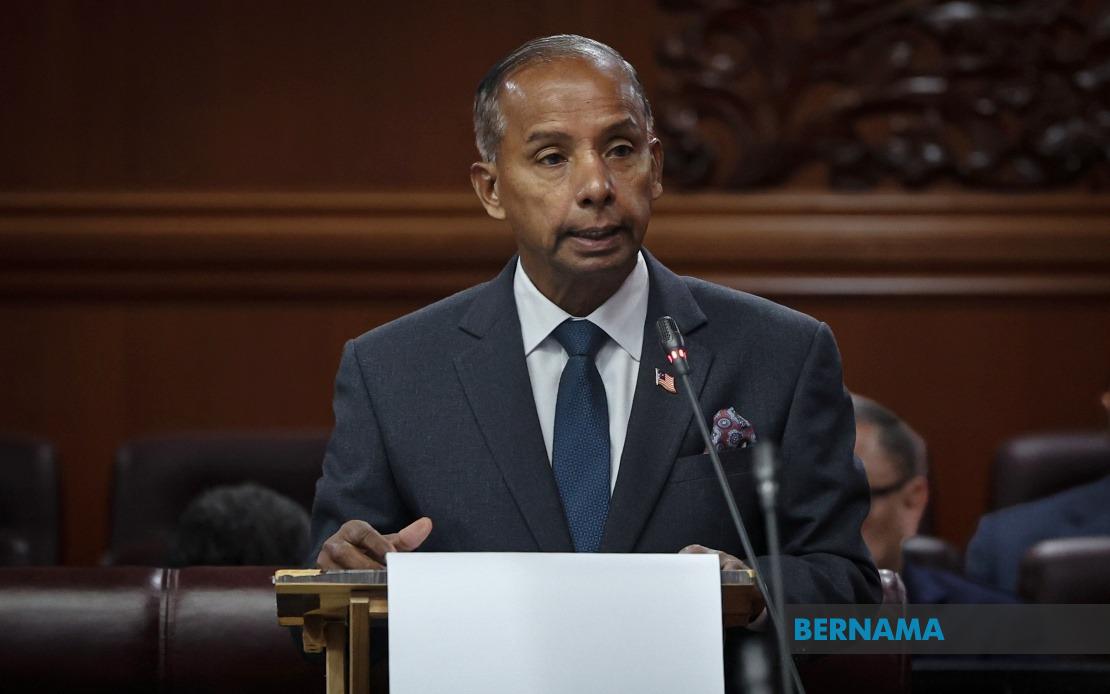
The pursuit of stronger national security measures need not undermine fundamental human rights protections, Malaysia's Deputy Minister in the Prime Minister's Department for Law and Institutional Reform M. Kulasegaran insisted at a parliamentary symposium on Tuesday. Speaking at Parliament House, Kulasegaran outlined a vision where both security imperatives and human rights safeguards advance in tandem through carefully calibrated legislation, rejecting the notion that policymakers must choose between these competing priorities.
The challenge facing Malaysia and other democracies, Kulasegaran explained, is not whether security laws should become stricter or more permissive, but rather how to construct a comprehensive legal architecture that addresses emerging threats while maintaining adherence to constitutional principles, rule of law, and justice. This nuanced position reflects growing international concern about the potential for security legislation to be weaponised against political opposition or marginalised communities, a risk that has materialised in various countries across the region.
Culasegaran acknowledged that the nature of security threats has fundamentally transformed in recent years. Traditional concerns centred on military aggression and border incursions have given way to a far more complex constellation of challenges. Cyber attacks targeting critical infrastructure, artificial intelligence misuse, disinformation campaigns designed to destabilise society, extremist recruitment through digital platforms, espionage operations, and foreign interference now occupy the frontlines of national security strategy. This technological dimension of modern threats demands that Malaysia's legal framework remain dynamic and responsive, continuously updated to address dangers that may not have existed when existing legislation was drafted.
The deputy minister stressed that legal reform represents a natural and ongoing process of refinement rather than an admission of failure in current statutes. As technology evolves, as social structures change, and as adversaries devise new methods of attack, the law must similarly evolve. Malaysia cannot afford a static legal regime when the threats it faces are increasingly sophisticated and multifaceted. However, this imperative for modernisation must always be grounded in the Federal Constitution and established principles of democratic governance.
Kulasegaran's remarks reflected broader concerns articulated by Senator Rita Sarimah Patrick Insol, chair of the Dewan Negara Special Select Committee on Law Review, who observed that contemporary security risks now encompass dimensions previously considered peripheral. Cybercrime, disinformation, extremism, espionage, foreign interference, attacks on critical infrastructure, and misuse of emerging technologies represent a significant departure from historical security paradigms. These threats often operate in hybrid fashion, simultaneously exploiting physical, digital, economic, psychological, and geopolitical vulnerabilities, making them far more difficult for traditional security frameworks to address effectively.
Rita Sarimah emphasised that the critical question is not whether security laws require updating—they clearly do—but rather the scope and nature of those reforms. How can Malaysia modernise its security legislation while preserving democratic institutions, protecting the judiciary's independence, maintaining adherence to rule of law, and safeguarding individual rights? Many countries have grappled with this precise dilemma, attempting to strengthen security measures without sliding into authoritarianism. Some have succeeded more effectively than others, providing valuable lessons for Malaysian policymakers.
The upper house of Parliament, Rita Sarimah argued, plays a vital oversight function in scrutinising both government policies and proposed legislation. The Special Select Committee on Law Review conducts evidence-based examinations of existing statutes to identify areas requiring improvement. This institutional architecture is designed to ensure that reforms proceed through rigorous, professional analysis rather than reactive panic or ideological impulse. Such deliberative processes take longer than unilateral executive action, but they produce more durable, constitutionally sound outcomes.
Culasegaran emphasised that no single institution can effectively address national security threats in isolation. Rather, Malaysia requires comprehensive approaches that engage the entire apparatus of government and society. Parliament, the private sector, academic institutions, civil society organisations, and the general public all have roles to play in creating a secure environment while maintaining democratic values. This whole-of-society perspective reflects international best practice and acknowledges that security ultimately depends on public trust and cooperation rather than coercion alone.
The symposium itself brought together significant institutional players, including Datuk Raja Nushirwan Zainal Abidin, director-general of the National Security Council, alongside parliamentary representatives and reform-minded officials. This gathering signalled government commitment to structured dialogue about security law modernisation rather than ad hoc policymaking. For Malaysian readers and observers across Southeast Asia, the discussion underscores the region's shared challenge: how to adapt legal frameworks to modern threats without creating mechanisms for political oppression.
The Malaysian government's emphasis on balancing security with rights protection distinguishes its rhetorical approach from some neighbouring jurisdictions that have prioritised security almost exclusively. Whether legislative outcomes will match official rhetoric remains to be seen, particularly as regional terror threats and cyber attacks continue evolving. The coming months will test whether Malaysia can indeed develop security reforms that strengthen national defence while preserving the democratic and constitutional safeguards that distinguish it from more authoritarian neighbours.

