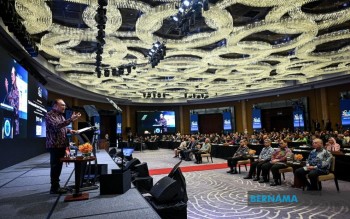
Prime Minister Datuk Seri Anwar Ibrahim has made a compelling case for Malaysia to establish its own sovereign cloud infrastructure, arguing that such a system is essential for protecting the nation's critical security and personal data as Southeast Asia increasingly relies on digital technologies and interconnected systems. Speaking at the 39th Asia-Pacific Roundtable in Kuala Lumpur on July 2, Anwar framed the sovereign cloud not as isolationism but as a necessary safeguard that would allow the country to balance legitimate security concerns with Malaysia's commitment to remaining open to global digital investments and cross-border technological collaboration.
The Prime Minister's remarks come in response to growing concerns about data sovereignty and foreign access rights, particularly surrounding the implications of the United States Cloud Act. Anwar highlighted a troubling precedent in which American legislation has effectively granted US-based technology companies broad authority to access data stored on their platforms, regardless of where those companies operate or which countries their clients are based in. He pointed out that while President Trump had explicitly stated that American firms have the legal right to penetrate and retrieve data from nations where they conduct business, Malaysia cannot simply accept this situation without taking protective measures of its own.
Rather than viewing data protection and global openness as mutually exclusive objectives, Anwar presented the sovereign cloud as an innovative middle-ground solution that would preserve Malaysia's capacity to welcome foreign investment while establishing clear boundaries around the most sensitive information. The proposed infrastructure would function with built-in firewalls specifically designed to shield critical security data and personal information, thereby preventing unauthorised foreign access while still permitting Malaysia to participate fully in the digitalised global economy. This approach acknowledges the realities of a deeply interconnected world whilst recognising that smaller nations have legitimate reasons to maintain certain technological and informational autonomy.
The Prime Minister recognised that no system of data protection can be entirely absolute in an era of global connectivity and free information flows. He acknowledged that Malaysia's status as a democratic nation committed to openness and transparency means accepting some inherent limitations on how completely data can be isolated or protected. However, he argued strongly that these constraints should not prevent Malaysia from implementing robust safeguards for its most critical and sensitive information. The sovereign cloud represents, in Anwar's estimation, a pragmatic and sophisticated approach that protects Malaysian interests without requiring the country to abandon its fundamental values or retreat from the international digital community.
Beyond the technical aspects of data infrastructure, Anwar raised broader concerns about the digital ecosystem's impact on Malaysian society. He emphasised that while openness and the unrestricted exchange of information carry significant benefits, they simultaneously create new vulnerabilities and opportunities for abuse. Digital platforms and social media networks have become conduits for various forms of malicious activity, ranging from political disinformation campaigns to economic fraud and personal attacks. Anwar stressed that protecting Malaysians, especially younger citizens who are often more vulnerable to digital harms, requires thoughtful government intervention to establish reasonable safeguards without compromising democratic values.
The Prime Minister underscored Malaysia's ongoing attractiveness as an investment destination for major global technology powers, specifically naming the United States, China and Germany as significant sources of capital and expertise. However, he tied Malaysia's continued appeal to foreign investors to the country's commitment to ASEAN centrality in regional affairs. Anwar argued that Malaysia's position as a reliable, neutral partner to all nations—rather than as a great power pursuing its own singular interests—actually enhances its value in the eyes of international investors who seek stability and balanced governance in Southeast Asia.
Anwar was careful to distinguish Malaysia's role from that of major global powers. Rather than positioning Malaysia as an aspirational middle power seeking autonomous great-power status, he characterised the nation more accurately as a small country whose genuine strength derives not from individual capacity but from its integration within the ASEAN framework. This perspective represents an important strategic clarification, suggesting that Malaysia's optimal path forward involves deepening regional cooperation and collective decision-making rather than pursuing independent great-power strategies that could destabilise Southeast Asia or alienate neighbouring nations.
The Prime Minister articulated a vision of ASEAN as a collective entity whose combined potential significantly exceeds the sum of its individual member states. He emphasised that small nations within the region gain substantially more leverage and security through unified regional action than through individual attempts to enhance their own status or capabilities. This philosophy extends logically to the sovereign cloud initiative, which operates as both a national security measure and a potential template for ASEAN-wide digital sovereignty that could protect the entire region's interests against external pressure or unwanted data extraction.
Anwar's emphasis on engagement with all friendly nations reflects Malaysia's traditional balancing act in navigating relationships among competing global powers. Rather than forcing other nations to choose between opposing blocs, Malaysia positions itself as open to cooperation with any state willing to engage respectfully and fairly. This approach carries particular relevance in the technology sector, where countries increasingly face pressure to align themselves with either American or Chinese digital ecosystems. A sovereign Malaysian cloud would allow the country to maintain genuine strategic autonomy whilst benefiting from partnerships with multiple technology providers.
The call for sovereign cloud infrastructure also resonates within the broader Southeast Asian context, where several countries grapple with similar tensions between digital development and data security concerns. Nations across the region have watched China's technological advancement and America's regulatory overreach with mixture of interest and apprehension. Malaysia's initiative could potentially inspire regional conversation about collective approaches to data sovereignty that benefit all ASEAN members without requiring any nation to surrender its commitment to democratic governance or international collaboration.
For Malaysian businesses and citizens, the implications of establishing a sovereign cloud extend beyond abstract notions of national security. Enhanced protection for personal data could significantly increase consumer confidence in digital services and encourage greater participation in the digital economy. Companies operating in Malaysia might face reduced barriers to overseas clients worried about data privacy, whilst local businesses could develop competitive advantages through demonstrable data protection commitments. The initiative therefore represents not merely a defensive posture but a potentially proactive strategy for economic development and digital sector growth.

