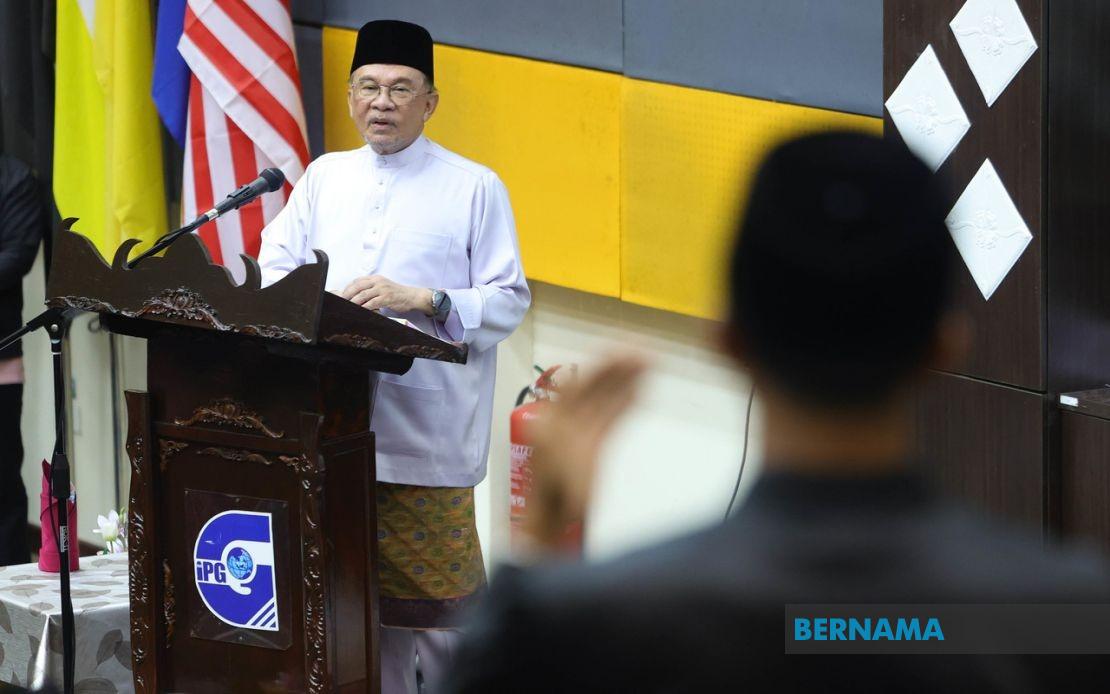
Prime Minister Datuk Seri Anwar Ibrahim has called for a fundamental shift in Malaysia's approach to teacher development, insisting that educators must be equipped to navigate advanced technological fields while remaining anchored to core ethical and human principles. Speaking at an event in Nilai on July 17, he outlined a vision for the nation's education sector that balances technological advancement with moral and cultural grounding, arguing that neither dimension can be sacrificed in pursuit of the other.
The rapid transformation of the global economy and technological landscape has created an urgent imperative for educational reform across Southeast Asia, and Malaysia faces particular pressure to ensure its workforce remains competitive. Anwar acknowledged that static curricula and conventional teaching methodologies are no longer adequate in a world where artificial intelligence, automation, and digital systems are reshaping every sector of the economy. He stressed that the country cannot afford to fall behind in adopting and mastering these transformative technologies, which will determine competitiveness and prosperity in the decades ahead.
Yet the Prime Minister made clear that technical proficiency alone represents an incomplete solution to the challenges facing modern education. He articulated a vision of technological mastery paired with what he termed "keeping our roots on the ground"—maintaining connection to religious teachings, cultural traditions, and the ethical frameworks that have historically guided Malaysian society. This dual emphasis reflects growing international recognition that rapid technological adoption without corresponding moral development can lead to unforeseen social harms and community fragmentation.
The integration of character development and ethics into teacher training programmes represents a deliberate counter-movement to approaches that prioritize technical skills in isolation. Anwar argued that educators themselves must model the values they are expected to cultivate in students, creating classroom environments where technological learning occurs within a context of demonstrated integrity, cultural respect, and commitment to human dignity. This pedagogical philosophy aligns with emerging scholarship suggesting that STEM education yields superior outcomes when embedded within humanistic frameworks that help students understand the social implications of technological innovation.
Central to Anwar's intervention is the proposition that education quality cannot be measured solely through technological competency metrics or STEM qualification rates. The Prime Minister warned that educational initiatives risk fundamental failure if they inadvertently cultivate prejudice, intolerance, or animosity among students along lines of ethnicity or religion. This concern reflects Malaysia's particular historical experience and contemporary demographic realities, where social cohesion depends substantially on intercommunal understanding and respect.
The multiracial and multireligious character of Malaysian society is presented not as a problem to manage but as an asset to cultivate and strengthen. Anwar contended that diversity properly understood and appreciated becomes a source of national resilience and social strength rather than division. He cautioned that nations, regardless of their power or development, face existential vulnerability if they permit ethnic or religious hatred to take root in their institutions and consciousness. This framing positions educational philosophy as foundational to national security and stability in ways that extend beyond conventional economic or military metrics.
The emphasis on tolerance, mutual respect, and the upholding of human values appears designed to counter currents of polarization and communal tension that have surfaced in Malaysian public discourse in recent years. By positioning these principles as central to educational objectives rather than supplementary to them, Anwar seeks to embed social cohesion into the very structure of teacher preparation and classroom practice. The implicit argument is that a progressive, prosperous Malaysia requires not merely technologically skilled citizens but citizens who exercise their capabilities with ethical discernment and commitment to collective wellbeing.
Education Minister Fadhlina Sidek and IPGKPT director Dr Kartini Abdul Mutalib were present at the event, signalling ministerial alignment with the Prime Minister's vision. Their presence suggests that implementation of this dual-focus approach will require coordination across educational institutions and teacher training bodies. The challenge of operationalizing this vision lies in teacher curricula design, assessment frameworks, and institutional incentives that reward both technical excellence and demonstrated commitment to ethical and cultural values.
For Malaysian educators and policymakers, the implications are substantial. Teacher training institutions will need to recalibrate their programmes to ensure that technological preparation does not crowd out or diminish exposure to philosophical, ethical, and cultural education. Universities and pedagogical centres must develop faculty expertise in bridging these traditionally separate domains, creating instructors capable of showing students how technology intersects with values, culture, and human flourishing. Assessment mechanisms will need to evaluate teachers not only on their command of emerging technologies but on their capacity to foster intercommunal understanding and ethical reasoning among diverse student populations.
The Prime Minister's vision also carries implications for Malaysia's regional positioning and soft power. As Southeast Asian nations compete for talent and investment in an increasingly technology-driven global economy, Malaysia's ability to articulate a distinctive educational model—one that combines technological sophistication with humanistic values and intercommunal harmony—may constitute a significant competitive advantage. Such an approach could attract international interest and partnerships, positioning Malaysia as a thought leader in educational innovation rather than a mere adopter of external models.
Implementing this integrated approach will require sustained commitment and resources. Professional development programmes, curriculum revision, and institutional support structures must be aligned to support teachers in developing both competencies simultaneously. Success will depend on recognizing that the cultivation of values and ethical capacity is not peripheral to education but central to its purpose, and that teachers themselves require environments and support systems that enable them to embody and teach these principles authentically alongside technological expertise.

