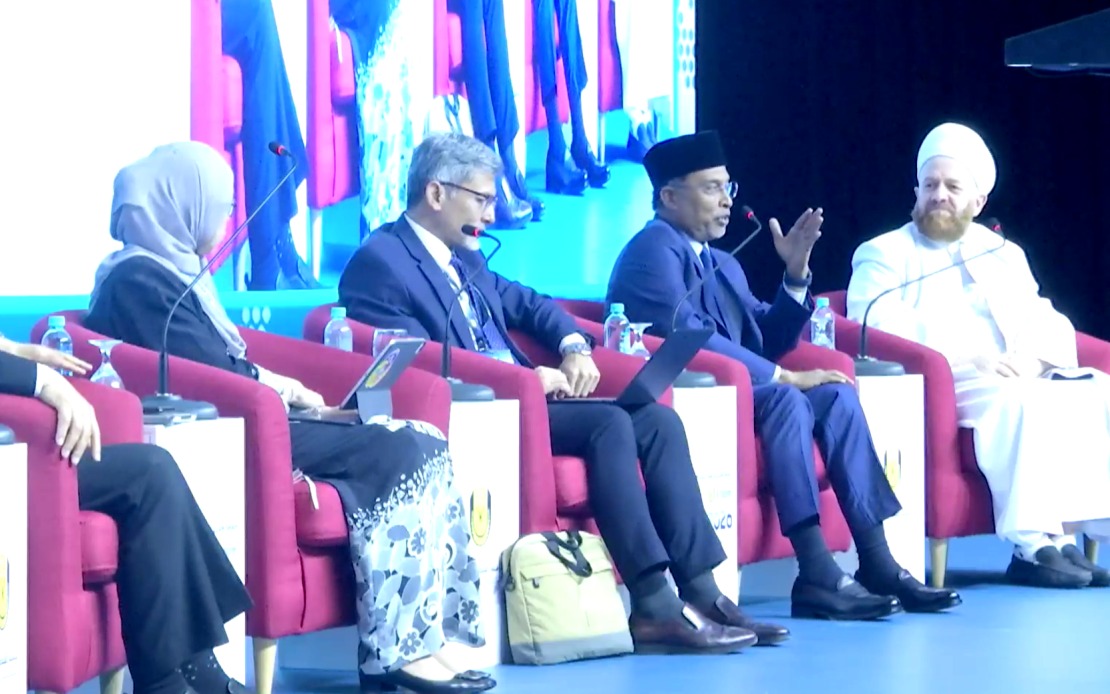
Malaysia's approach to embedding artificial intelligence and emerging technologies within its higher education system must prioritise moral and ethical grounding alongside technical innovation, according to Higher Education Minister Datuk Seri Dr Zambry Abd Kadir. Speaking at the 8th World Conference on Islamic Thought and Civilisation in Ipoh, Zambry argued that as global uncertainties intensify, the nation's capacity to develop both human and intellectual capital through education reform has become strategically vital. The challenge facing institutions is not merely adopting new tools, but ensuring they serve broader purposes aligned with national values and societal needs.
The Ministry of Higher Education has responded to this imperative by crafting an extended strategic vision spanning the decade from 2026 to 2035. This long-term blueprint represents an attempt to choreograph simultaneous progress across three interconnected domains: technological capability, the cultivation of skilled people, and the preservation of moral foundations. Rather than viewing these pillars as competing priorities, the ministry's framework positions them as complementary elements that must advance together. For Malaysian policymakers, this reflects growing recognition that technological dominance divorced from ethical moorings risks producing graduates equipped with sophisticated tools but lacking the wisdom to deploy them responsibly.
The rapidly evolving landscape of academic disciplines underscores why this balanced approach matters urgently. Fields including artificial intelligence, quantum computing, and planetary health sciences are expanding at unprecedented pace, reshaping what universities must teach and how they must prepare learners. Zambry emphasised that institutions cannot sidestep the ethical dimensions embedded within these frontier areas. Instead, values training and moral reasoning must be woven directly into technical coursework rather than treated as optional supplements. This integration becomes particularly consequential as students encounter AI systems that generate convincing answers and optimised solutions—capabilities that can mask underlying algorithmic biases or obscure the human choices encoded within them.
Central to the ministry's vision is recognition that artificial intelligence, despite its computational prowess, cannot cultivate the personal qualities that define responsible professionals and engaged citizens. While AI excels at processing information and delivering rapid answers to technical problems, it remains fundamentally incapable of shaping character, instilling integrity, or developing conscience. Zambry illustrated this gap by noting that even the most advanced systems cannot substitute for the deliberative human judgment required in ethically complex situations. This limitation underscores why education must remain comprehensively human-centred, attending not only to what students know but who they become.
The ministry's strategic direction reflects a broader reimagining of how academic disciplines should be structured and transmitted. The evolution from STEM—Science, Technology, Engineering and Mathematics—toward STEAM, which incorporates the Arts, represents more than nomenclatural tinkering. This shift acknowledges that technical proficiency alone produces incomplete professionals. By integrating humanities and liberal studies alongside engineering and scientific training, universities can develop graduates who possess both technical mastery and the broader contextual awareness needed to apply it wisely. Zambry cited Universiti Teknologi Petronas as an exemplar, noting that its integrated engineering programmes deliberately require students to pursue coursework outside their core discipline to strengthen reasoning, creativity, and self-awareness.
The emphasis on cross-disciplinary learning serves multiple purposes within Malaysia's higher education ecosystem. Exposure to arts and liberal studies cultivates critical thinking—the capacity to question assumptions, evaluate competing claims, and recognise complexity. These cognitive skills prove increasingly valuable in fields saturated with data and algorithmic decision-making, where the ability to interrogate conclusions and consider unintended consequences becomes essential. Furthermore, humanities education fosters communication abilities and cultural sensitivity that enhance collaboration across teams and societies. For Malaysia, a plural nation where higher education serves diverse constituencies, this inclusive pedagogical approach has particular resonance.
The 10-year blueprint articulates a vision of education fundamentally recentred on human dignity and flourishing. Rather than treating universities primarily as credential factories or talent pipelines for employers, this framework positions them as institutions with responsibility for nurturing thoughtful, conscientious individuals capable of navigating complexity with integrity. This philosophical reorientation carries implications extending beyond Malaysia's borders. As Southeast Asian economies increasingly compete on innovation and digital capabilities, the question of whether technological advancement can be paired with ethical grounding becomes a defining challenge for the region's development trajectory.
Zambry's remarks at the conference also reflected awareness that technological transformation generates anxieties and uncertainties requiring thoughtful institutional responses. As artificial intelligence and automation reshape labour markets and social structures, universities must prepare students not simply to adapt reactively but to shape technological futures deliberately. This demands educational approaches that treat students as potential agents of ethical innovation rather than passive recipients of predetermined career pathways. The cultivation of moral and intellectual resources becomes essential for enabling graduates to navigate disruption and contribute meaningfully to solving collective challenges.
Implementing this vision presents substantial practical challenges. Malaysian universities must recruit and retain faculty capable of bridging technical and humanistic domains, develop curricula that genuinely integrate rather than merely juxtapose different fields, and create learning environments where ethical questioning becomes routine rather than exceptional. International collaboration and knowledge exchange will likely accelerate this transition, as institutions worldwide grapple with similar questions about education's purposes in an age of rapid technological change. For Malaysia, positioning itself as a centre of innovation that combines technological sophistication with ethical grounding could enhance its appeal to international students and researchers.
The minister's framing also implicitly challenges narrower approaches to higher education that prioritise immediate economic returns over broader human development. While Malaysia certainly requires graduates with strong technical capabilities to compete in global markets, the 2026-2035 blueprint suggests policymakers recognise that sustainable competitive advantage flows partly from the distinctive qualities that ethical, well-rounded education produces. Graduates who can think critically about technology's implications, communicate across disciplines, and maintain moral clarity amid complexity represent scarcer and more valuable assets than those whose skills are easily replicated through different channels.
Moving forward, the success of Malaysia's higher education strategy will depend significantly on translating ministerial vision into institutional practice. Universities will need sustained support for curriculum innovation, faculty development, and research initiatives exploring the intersection of technology and ethics. Equally important will be ongoing dialogue with employers, civil society, and international partners about what capabilities the nation's graduates require. The stakes are considerable, as today's university students will shape Malaysia's response to technological transformation over the coming decades. By anchoring AI integration within a comprehensive framework emphasising ethics, critical thinking, and human values, the Higher Education Ministry has signalled an intention to ensure that Malaysia's technological advancement remains grounded in moral purpose.

