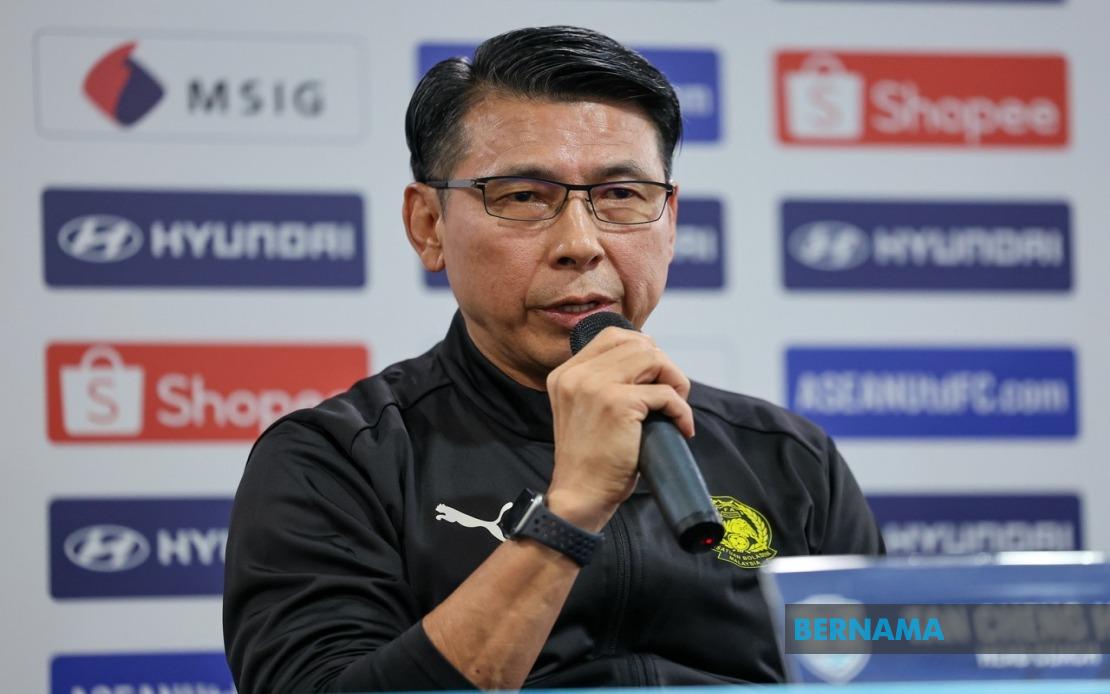
Malaysia's interim football coach Tan Cheng Hoe has sounded a note of caution ahead of tomorrow's encounter with Laos in the ASEAN Cup 2026 at the Kuala Lumpur Football Stadium in Cheras, cautioning his players against allowing confidence from their opening victory to translate into carelessness on the pitch. The warning comes as Malaysia prepares for their second Group B fixture following a commanding 2-1 win over Myanmar on Saturday, a result that has raised expectations among supporters but also brought fresh scrutiny on the team's consistency.
While Harimau Malaya's opening performance demonstrated promising attacking intent and resilience after weathering a difficult first-half display, Cheng Hoe recognises that tournament football demands sustained excellence across multiple matches. He has identified Laos as a side capable of disrupting Malaysia's campaign despite their heavy 0-5 defeat to seven-time champions Thailand, emphasising that any team entering an international competition harnesses motivation to recover from such setbacks. The coach's analytical approach to the matchup reflects his attention to tactical preparation and understanding of the psychological dynamics within tournament settings.
Laos present a distinctive challenge through their predominantly youthful squad composition, with the team largely structured around players under 23 years of age. This demographic profile, while potentially suggesting less experience at the senior international level, does not necessarily equate to vulnerability. Younger teams often compensate through superior athleticism, tactical discipline instilled through coaching, and the absence of negative habits that sometimes accumulate in veteran squads. Cheng Hoe's insistence that Malaysia respect their opponent therefore carries practical merit beyond mere diplomatic courtesy.
Central to Malaysia's defensive strategy must be neutralising Laos' propensity for swift counter-attacking play, a tactic that has become increasingly prevalent across Southeast Asian football. The transition from defence to attack represents one of the most effective ways for teams with less ball possession to create high-quality scoring opportunities against more dominant opponents. Malaysia's midfield must therefore maintain tactical discipline and avoid carelessly surrendering possession in areas of the pitch where turnovers can immediately threaten their defensive lines.
Cheng Hoe has also stressed the importance of clinical finishing, recognising that international tournaments often hinge on marginal differences in conversion efficiency. Against Myanmar, Malaysia demonstrated their capacity to punish defensive vulnerabilities, but such ruthlessness cannot be taken for granted when facing organised opposition determined to prove their competitive credentials. The ability to capitalise on chances created separates tournament contenders from tournament participants.
The Malaysia coach drew particular satisfaction from his team's second-half performance against Myanmar, highlighting how players regrouped after an unsettled opening period to impose their football on the match. This capacity for tactical adjustment and mental resilience provides genuine encouragement heading into the knockout phase of the tournament, where such qualities become increasingly decisive. The fighting spirit demonstrated by the squad suggested a collective understanding that early tournament matches establish momentum that can sustain teams through potentially tougher later encounters.
Experienced players within Malaysia's squad have proven instrumental in bridging the gap between rising talents and tournament requirements. Paulo Josue and Mohamadou Sumareh have anchored the team through their composure and understanding of elite-level competition, their mere presence providing younger teammates with templates for professionalism and consistency. Forward Syafiq Ahmad highlighted how these veterans have eased the transition for emerging players, essentially providing on-field mentorship that complements coaching staff direction and allows younger talents to develop within a supportive, structured environment.
Ahmad's comments also reveal an important coaching philosophy under Tan Cheng Hoe: maintaining focus on the immediate challenge rather than allowing minds to wander toward potential semi-final matchups or hypothetical knockout scenarios. This compartmentalisation of objectives, while appearing elementary, represents a significant discipline that separates successful tournament campaigns from disappointing exits. Teams that overlook immediate opponents in pursuit of grander aspirations frequently stumble against supposedly inferior competition.
Current standings place Malaysia in second position within Group B with three points, though their goal difference places them behind Thailand, who similarly recorded opening victories. The Philippines occupy third, while Myanmar and Laos languish without points following their respective defeats. The group stage structure demands that only the top two teams progress to semi-finals, meaning Malaysia's path to the latter stages remains achievable but far from guaranteed. A defeat to Laos would create genuine complications for qualification prospects.
The tournament format also means that Laos, despite their opening humiliation, retain mathematical possibility of advancing should they succeed in winning their remaining fixtures with sufficient goal margins. Such scenarios, while unlikely on current evidence, nonetheless illustrate why Cheng Hoe's caution holds merit. His emphasis on respecting opponents regardless of their pedigree reflects pragmatic tournament football wisdom developed across his coaching career with Kedah and Selangor FC.
Under new coach Vladica Grujic, Laos will approach tomorrow's fixture with determined focus, likely implementing tactical adjustments designed to prevent a repeat of their Thailand capitulation. Grujic's appointment signals the Lao Football Association's commitment to structural improvement, and his influence on team organisation could manifest meaningfully in match execution. Malaysia must therefore prepare for a Laos side coached with clear technical direction rather than assuming disorganisation following their previous result.
The broader regional context adds further dimension to this fixture. Southeast Asian football has increasingly demonstrated that traditional hierarchies cannot be assumed, with smaller nations occasionally producing performances that upend expectations when preparation meets opportunity. Malaysia's position as one of the region's more established football nations carries corresponding pressure to validate their status through consistent competitive performance. Tomorrow's encounter represents a significant opportunity to establish genuine tournament credentials while simultaneously validating Cheng Hoe's coaching authority during his interim tenure.
For Malaysian supporters and stakeholders, the Laos match offers an early indicator of whether Malaysia can sustain excellence across multiple matches or whether opening success represents a false dawn. Cheng Hoe's persistent warnings against complacency suggest a coach determined to maintain standards and extract maximum value from his squad's evident potential. The response his players deliver against Laos will ultimately define whether his cautions carry genuine conviction or represent mere pre-match platitudes.

