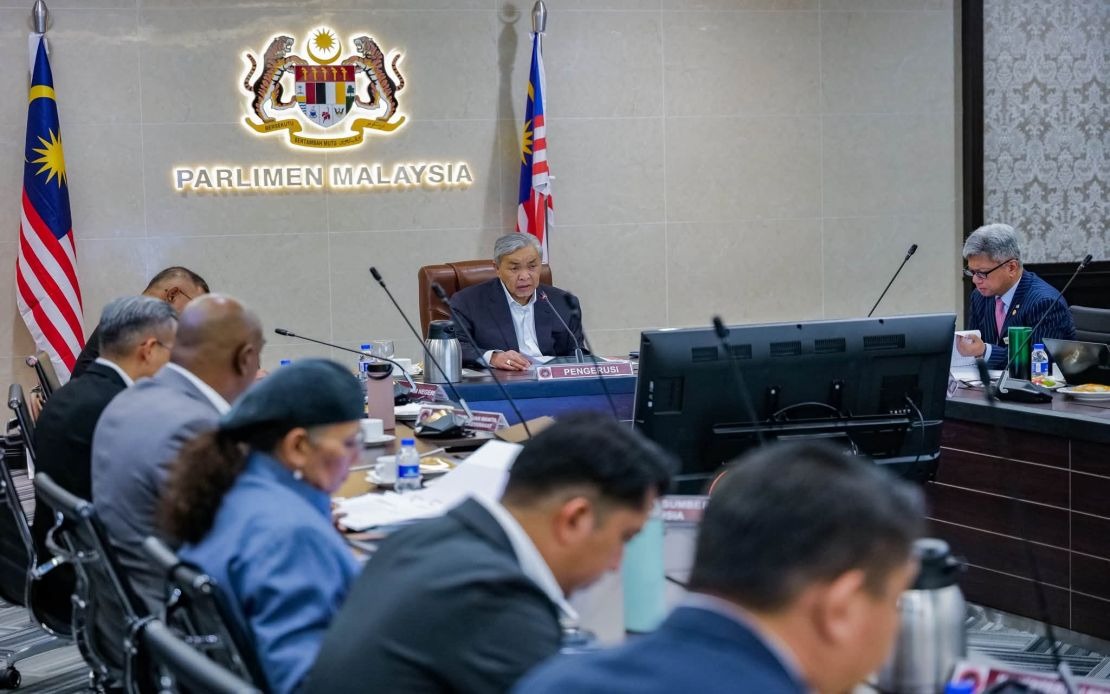
Deputy Prime Minister Datuk Seri Dr Ahmad Zahid Hamidi has called for Malaysia to reinforce its refugee management architecture, arguing that the nation must navigate the delicate intersection between upholding humanitarian principles and protecting national security interests. Speaking after chairing a high-level committee meeting focused on refugee and asylum seeker governance, Ahmad Zahid underscored that policymakers cannot treat refugee administration as merely a technical or bureaucratic exercise. Instead, he positioned it as a matter fundamentally tied to Malaysia's sovereignty and the safety of its citizens.
The context for Ahmad Zahid's remarks is sobering. The global refugee crisis has reached unprecedented proportions, with more than 122 million individuals forcibly displaced worldwide due to armed conflict, political instability, and humanitarian disasters. This figure reflects a sustained deterioration in international security and livelihoods, placing considerable pressure on countries with geographic proximity to conflict zones or existing displacement routes. As a Southeast Asian hub with established transit and settlement patterns, Malaysia has long grappled with managing significant refugee and asylum-seeker populations, particularly from Myanmar, Syria, Palestine, and Afghanistan.
Ahmad Zahid's framing of refugee policy as inseparable from national security reflects a philosophical shift in how Malaysia's government increasingly approaches the issue. While the nation has historically positioned itself as a humanitarian actor—Malaysia does not recognise the 1951 Refugee Convention but has provided de facto protection to hundreds of thousands of displaced persons—there is mounting domestic concern about the strain on public services, labour markets, and social cohesion. The Deputy Prime Minister's emphasis on balancing competing obligations suggests the government is seeking middle ground between humanitarian advocates and security hawks within its own policy apparatus.
Central to this rebalancing effort is the strengthening of the existing refugee management framework, though Ahmad Zahid did not specify what additional measures or resources would be deployed. He emphasized the necessity for clear, comprehensive policies that operationalise humanitarian commitments without compromising governmental capacity to vet, monitor, and manage displaced populations. This reflects international best practice, where countries employ tiered registration systems, biometric screening, and inter-agency coordination to distinguish between genuine refugees and potential security threats. For Malaysia, such mechanisms are particularly relevant given concerns about infiltration by armed extremist networks and transnational criminal syndicates.
The 6th Meeting of the High-Level Committee on the Management of Refugees and Asylum Seekers, which Ahmad Zahid chaired, served as the forum for these policy discussions. The committee's agenda included reviewing implementation of existing policies and mechanisms, with the explicit goal of ensuring Malaysia's refugee framework remains coherent and aligned with national interests. This language—"aligned with national interests"—indicates that humanitarian considerations, while important, will be subordinated to broader strategic objectives when tensions arise. The meeting also examined progress on the Refugee Registration Document (DPP), Malaysia's parallel system for identifying and cataloguing displaced persons outside the UN framework.
A significant portion of the committee's work focused on rationalizing access to essential services, particularly education and healthcare for refugee and asylum-seeker populations. By streamlining guidelines and improving inter-agency coordination, the government aims to make service provision more administratively efficient while ensuring legal compliance. This dual objective reveals underlying tensions: humanitarian obligations to provide basic services clash with fiscal constraints and political sensitivities around state resources being allocated to non-citizens. Clearer, better-coordinated guidelines could theoretically expand access while also establishing clearer eligibility criteria and preventing duplication or fraud.
For Malaysian citizens and regional observers, Ahmad Zahid's remarks signal that refugee policy will continue to evolve within a framework that privileges national sovereignty. The government is not retreating from its de facto humanitarian role, but it is asserting greater control over the terms and scale of that role. This has implications for the estimated 200,000 registered refugees and hundreds of thousands of undocumented displaced persons living in Malaysia. Tighter management frameworks could improve their access to services through better coordination, but could also increase surveillance and restrict mobility.
Regionally, Malaysia's approach carries significance for other Southeast Asian nations facing similar pressures. Countries like Thailand, Indonesia, and Bangladesh are grappling with comparable challenges—hosting large displaced populations while managing domestic security concerns and development priorities. Malaysia's attempt to craft a middle path between humanitarian principle and security pragmatism may offer lessons or cautionary tales. However, critics argue that placing security and sovereignty at the centre of refugee policy risks instrumentalizing vulnerable populations and undermining the international norms that protect displaced persons.
Ahmad Zahid's tenure as Rural and Regional Development Minister adds another dimension to his stewardship of refugee policy. Rural and regional development concerns in Malaysia—infrastructure, employment, service access—intersect directly with refugee settlement patterns. Many displaced persons cluster in urban areas like Kuala Lumpur and George Town, but some settle in smaller towns and agricultural regions. Integrating refugee management with rural development strategies could theoretically benefit both communities, though realizing such synergies requires sustained political will and resource allocation.
The government's stated commitment to reviewing and improving its refugee framework appears genuine, given the establishment and repeated convening of the High-Level Committee. However, the gap between policy articulation and implementation remains a challenge. Agencies involved—immigration, police, social welfare, health, education—often operate with competing mandates and limited budgets. Without sufficient funding, training, and inter-agency protocols, even well-designed frameworks risk becoming paper exercises. The coming months will reveal whether Ahmad Zahid's call for stronger management mechanisms translates into tangible improvements in how Malaysia handles its refugee populations and protects both humanitarian standards and national security.

