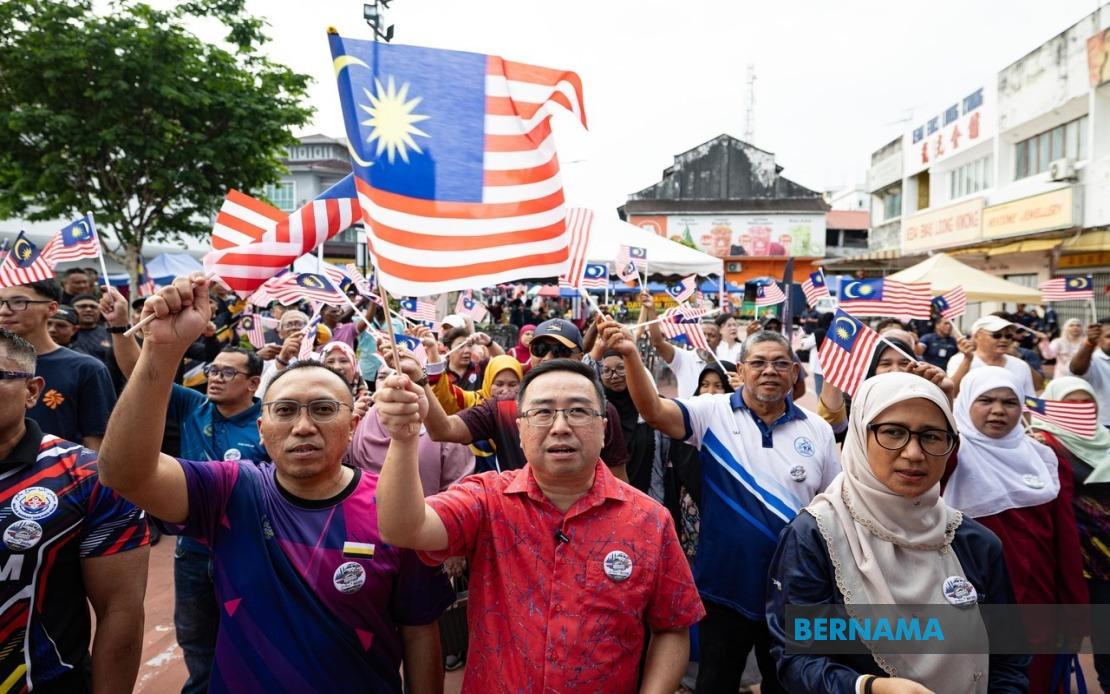
Datuk Chang Lih Kang, Malaysia's Science, Technology and Innovation Minister, has issued a pointed call for the country to shed its reliance on identity-based politics and fear-mongering as tools for building national cohesion. Speaking ahead of the nation's Merdeka celebration, Chang argued that a fragmented public discourse increasingly framed through the prisms of race and religion has become an obstacle to genuine national development, and that moving forward requires fundamentally rethinking how Malaysians relate to their shared citizenship and collective future.
In an article titled "This Is My Country, Too!", the Tanjong Malim MP articulated a vision of nationhood where every resident—regardless of ethnic origin, religious faith, educational background, or political leaning—possesses an authentic and valued stake in Malaysia's trajectory. This conception of citizenship stands in sharp contrast to approaches that rely on coercion, intimidation, or manufactured anxiety to maintain social order or political loyalty. Chang's framing suggests that forced compliance and silencing of dissent, however temporarily effective, ultimately undermine the resilience and legitimacy of the state itself.
Central to Chang's argument is the proposition that institutional strength and impartiality form the bedrock of sustainable unity. He emphasized that the judiciary, civil service, regulatory agencies, and security apparatus must operate according to principles of fairness and merit, free from discrimination rooted in communal identity, religious belief, political faction, or socioeconomic status. This emphasis reflects a sophisticated understanding of governance: that citizens are most likely to view state authority as legitimate when they perceive the system as applying the same rules uniformly to all, regardless of their background or political affiliation. Without such institutional credibility, even well-intentioned policies risk being interpreted through the lens of parochial advantage, deepening rather than bridging societal fissures.
The minister's critique of how identity markers are weaponized in contemporary Malaysian politics strikes at a structural problem long evident in Southeast Asian democracies. When political actors mobilize support by accentuating intercommunal grievances or promoting the perception that one group enjoys structural advantage over others, the cumulative effect is the fragmentation of the electorate into competing blocs. Over time, this dynamic can corrode the possibility of coalition-building across traditional boundaries and makes compromise—essential to democratic governance—increasingly difficult to achieve or sustain. Chang's warning about the dangers of such mobilization implicitly acknowledges that this trajectory, if unchecked, poses genuine risks to Malaysia's social stability and economic competitiveness.
A striking dimension of Chang's intervention concerns the treatment of the Jalur Gemilang and national symbols more broadly. Rather than dismissing patriotic sentiment, he advocates for a recalibration of how patriotism is enforced and interpreted. His argument that excessive punishment for unintentional infractions paradoxically erodes patriotic feeling contains an important psychological insight: when citizens fear that minor mistakes will trigger severe state sanction, they may withdraw from public expressions of national belonging rather than embrace them. This suggests that a confident, mature state need not resort to hair-trigger enforcement mechanisms to maintain respect for national symbols; proportionality and pedagogical approaches—education and guidance preceding punishment—may actually strengthen rather than weaken patriotic commitment.
The distinction Chang draws between genuine mistakes and deliberate provocation hinges on the concepts of intent, context, and proportionality. This framework represents a departure from zero-tolerance approaches that treat all violations identically. Under his proposed standard, a flag displayed at an angle due to carelessness or structural failure would be addressed differently than a flag deliberately desecrated as an act of political protest or incitement. While critics might argue this introduces subjectivity into enforcement, it also reflects mature jurisprudential thinking recognizing that unjust or disproportionate penalties often generate backlash and alienate populations rather than solidifying state authority. For Malaysian policymakers, this approach could offer a pathway to firmer respect for national symbols without the brittleness that comes from rigid, one-size-fits-all sanctions.
Chang's invocation of Sultan Perak Sultan Nazrin Shah's remarks on unity built through shared belonging rather than coercion adds institutional weight to his argument. When senior custodians of Malaysia's constitutional order echo this sentiment, it signals that moves toward more inclusive, participatory governance enjoy support among the formal leadership. This is significant for Malaysia's trajectory, as it suggests potential alignment between forward-thinking politicians and constitutional actors around a renewed vision of nationhood. Such alignment, when translated into concrete policy shifts, could help reorient government agencies and security forces toward more constructive, community-centered approaches.
The minister's reflection on diversity as a source of national strength rather than tension represents another layer of his argument. Rather than treating Malaysia's religious, linguistic, and cultural pluralism as a problem to be managed or contained, he positions it as an asset that can strengthen the national fabric if properly cultivated. This reframing challenges zero-sum logics that pit one community's interests against another's and instead encourages Malaysians to envision collective flourishing where cultural difference is accommodated within inclusive institutional frameworks. For a nation where demographics and geopolitics make pluralism a permanent feature, this philosophical reorientation has practical implications for education policy, media regulation, and interfaith dialogue initiatives.
Chang's caution against using state machinery in heavy-handed fashion acknowledges a governance pathology particularly acute in Southeast Asia: the temptation of those holding power to deploy bureaucratic and security apparatus for narrow partisan advantage rather than public interest. When taxation authorities target perceived opponents, when licensing boards withhold permits from unfriendly businesses, or when law enforcement investigates one political faction more vigorously than another, the state loses its claim to impartiality and becomes a faction itself. This erosion of state capacity to adjudicate fairly between competing interests ultimately weakens governance quality and deters both domestic investment and foreign confidence in Malaysia's institutional stability.
The question Chang poses—what kind of Malaysia is being created for the next generation?—reframes the national conversation away from short-term political calculations toward longer-term generational interests. This rhetorical move matters because it invites Malaysians to consider whether current policy choices and political behaviors align with aspirations for a country that is economically dynamic, socially cohesive, and constitutionally robust. A Malaysia perpetually divided along identity lines and governed through fear may achieve temporary political outcomes, but it is unlikely to cultivate the social trust, institutional capacity, and human capital necessary for sustained prosperity and regional standing.
Chang's call for rejecting the temptation to divide Malaysians for political ends speaks to a choice that the country's leadership—across parties and institutions—must consciously make. The machinery for divisive mobilization is already in place and has proven electorally effective for various political actors. Resisting this temptation requires deliberate commitment to alternative visions and willingness to accept that inclusive governance may sometimes yield slower political rewards than identity-based mobilization. Yet the long-term stability and cohesion of any multicommunal democracy depends on leaders who can articulate and model such restraint.
For Malaysia's developmental trajectory and regional role, the stakes of this debate are substantial. As the region faces competition from powers emphasizing institutional strength and merit-based governance, Malaysia's capacity to move beyond identity politics and toward inclusive, professional institutions will significantly influence its ability to attract talent, investment, and diplomatic influence. Countries perceived as riven by perpetual intercommunal tension and governed through patronage and fear tend to suffer capital flight, talent drain, and diplomatic isolation. Conversely, nations that successfully build institutions perceived as fair and professional tend to enjoy economic dynamism and elevated regional standing. Chang's intervention, while framed in the language of civic philosophy and national sentiment, carries profound implications for Malaysia's economic competitiveness and geopolitical trajectory in an increasingly complex Southeast Asian environment.

