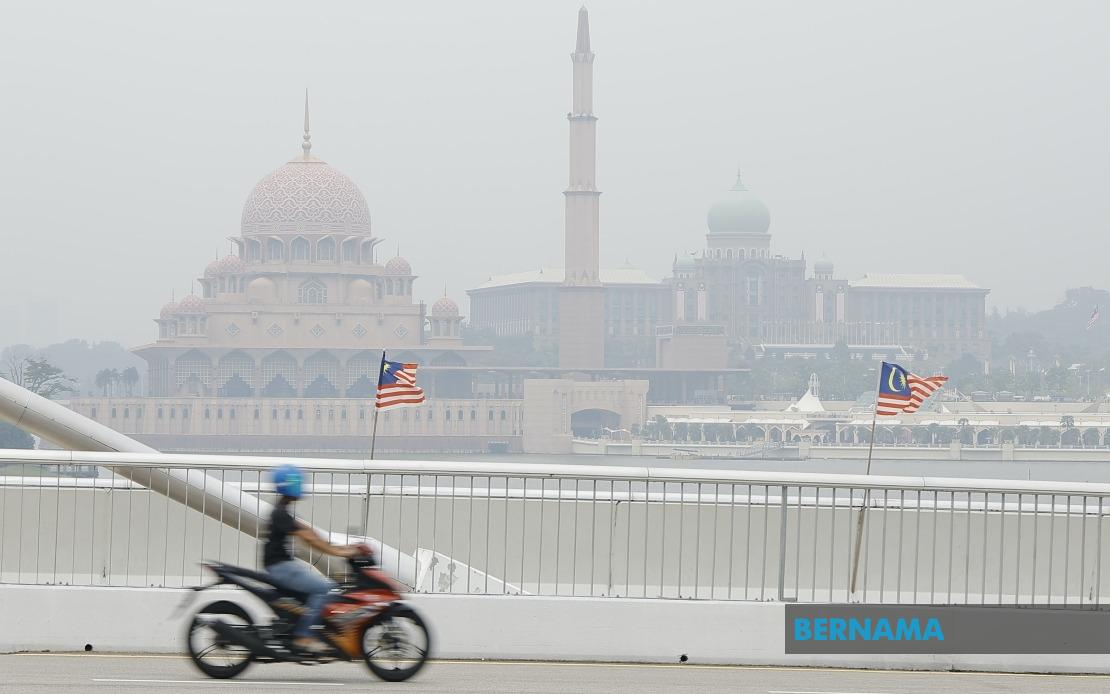
Malaysia's approach to managing transboundary haze has remained largely reactive, addressing crises only after air quality deteriorates and public health suffers. An air quality researcher from Universiti Sultan Zainal Abidin is now advocating for a fundamental shift in strategy, proposing that the country develop an integrated early warning system capable of forecasting haze days or weeks in advance. Associate Professor Dr Azman Azid, director of UniSZA's Besut Campus and an expert in environmental issues, believes this transition from crisis management to preventive action represents the most effective path forward for protecting Malaysian citizens.
The case for urgency is compelling when examining recent health data. During epidemiological weeks 32 and 33, Malaysia's Ministry of Health documented a 259 per cent increase in asthma cases, with numbers climbing from 61 to 219 recorded cases. This dramatic surge underscores that haze episodes inflict far more damage than merely obscuring visibility or reducing the Air Pollutant Index readings that typically dominate public discourse. The respiratory health burden, particularly among vulnerable populations including children, the elderly and those with pre-existing lung conditions, becomes exponentially more severe during haze seasons. Current systems that monitor and warn based on already-elevated pollution levels essentially respond after the harm has been done, allowing preventable illnesses to materialise across the population.
Azman contends that Malaysia possesses virtually all the necessary data components to construct a sophisticated forecasting framework, yet lacks the integrated systems needed to synthesise this information into actionable intelligence. The required datasets already exist within various government agencies and institutions: satellite imagery that reveals smoke plume development, hotspot information pinpointing active fire locations, meteorological records documenting wind patterns and atmospheric conditions, and continuous PM2.5 measurements capturing fine particulate concentrations. The missing ingredient is not data availability but rather the technological and administrative infrastructure to combine these disparate sources into a cohesive predictive model accessible to decision-makers and the public.
The proposed early warning system would function by integrating hotspot data to identify fire sources, satellite observations to track smoke movement, meteorological information to establish prevailing wind directions and speeds, and atmospheric trajectory modelling to project how air masses would travel across borders. Combined with historical respiratory disease patterns and PM2.5 measurements, such integration could provide forecasts extending 48 to 72 hours into the future. This advance notice window would enable hospitals and clinics to mobilise additional respiratory care capacity, schools to reschedule outdoor activities protecting student health, and individuals to prepare with protective measures. The system would complement rather than replace existing API monitoring, offering a forward-looking dimension that current mechanisms cannot provide.
Malaysia already operates sophisticated weather forecasting infrastructure, Azman notes, yet lacks equivalent systems for haze prediction despite air quality crises recurring with predictable seasonality. The conceptual framework and technical capacity demonstrably exist elsewhere; several developed nations maintain haze and air quality forecasting capabilities integrated with public health planning. The gap reflects not technological barriers but rather institutional prioritisation and resource allocation. Establishing a dedicated haze forecasting system would represent a significant but achievable undertaking for a nation with Malaysia's technical and financial capabilities, particularly when the alternative is the documented public health costs already materialising in asthma admissions, respiratory infections and compromised air quality affecting tens of millions of people.
Strengthening enforcement of existing environmental laws forms an equally essential component of any comprehensive strategy. Regulations governing open burning, bush fires and peatland management exist across Malaysia's legal framework, yet enforcement remains inconsistent and inadequate. The effectiveness of any forecasting system ultimately depends on reducing fire ignition events themselves, particularly across peatland areas where fires burn deeper, produce heavier smoke and spread more rapidly than surface fires. Tightened monitoring of high-risk zones, swift penalties for violations and sustained resources dedicated to fire prevention would address the source of the problem rather than merely managing its symptoms.
The regional dimension of the haze challenge cannot be ignored. Malaysia's participation in the ASEAN Agreement on Transboundary Haze Pollution demonstrates recognition that air and smoke transcend national borders. However, cooperative efforts among Southeast Asian nations have traditionally focused on data sharing and reactive responses rather than integrated preventive action. Azman advocates for deepening regional cooperation to encompass fire source mapping, coordinated smoke trajectory forecasting, technology transfer between nations, mutual firefighting assistance and harmonised response mechanisms. Such collaboration would acknowledge the reality that a fire burning in Sumatra or Kalimantan inevitably affects Malaysian air quality, regardless of enforcement efforts within Malaysia's own borders.
Sustainable land-use planning and peatland management represent longer-term interventions requiring institutional commitment and regional coordination. Converting forests and peatlands to agricultural production drives fire incidence; addressing these underlying economic incentives demands attention to land policy, agricultural practices and commodity production standards across the region. Technology, enforcement and diplomacy remain necessary but insufficient without simultaneous transformation of the economic activities driving deforestation and peatland conversion. Building such sustainable systems requires commitment from multiple stakeholders across several nations, presenting challenges that exceed any single country's unilateral capacity to resolve.
The shift from crisis management to systematic prevention aligns with evolving international best practices in environmental health management. Rather than accepting that transboundary haze represents an inevitable seasonal phenomenon demanding damage control, a preventive approach recognises that forecasting, preparation and source reduction offer superior alternatives. Early warning systems enable targeted resource allocation to healthcare facilities, schools and vulnerable communities; businesses can adjust operations to minimise worker exposure; and public authorities can take preventive action during the critical 48 to 72-hour window before pollution peaks. Such proactive measures demonstrably reduce health impacts compared to reactive scrambling after pollution levels spike.
Implementing an integrated haze forecasting system need not require waiting for perfect data or technology solutions. Malaysian institutions already collect the necessary information; the immediate priority involves establishing governance frameworks to integrate existing datasets and disseminate forecasts to relevant agencies and the public. Successful international models demonstrate that forecasting accuracy improves iteratively as systems accumulate real-world performance data and researchers refine predictive algorithms. Malaysia could begin with a pilot programme utilising readily available datasets, expand gradually to incorporate additional parameters as capabilities develop, and establish feedback mechanisms enabling continuous improvement. Such an approach balances the need for immediate action against the reality that comprehensive systems require sustained development effort.
The ultimate question facing Malaysian policymakers is whether the nation will continue absorbing the escalating public health costs of reactive haze management or invest in prevention and early intervention systems. The 259 per cent surge in asthma cases represents only the most readily quantifiable consequence; lost productivity, hospital system strain, educational disruption and psychological stress from repeated air quality crises compound the burden. An early warning system, integrated with enforcement improvements and regional cooperation, would not eliminate transboundary haze entirely but would substantially reduce its impact on public health. For a nation committed to improving its citizens' wellbeing and economic productivity, this preventive investment appears both necessary and proportionate to the scale of the challenge.

