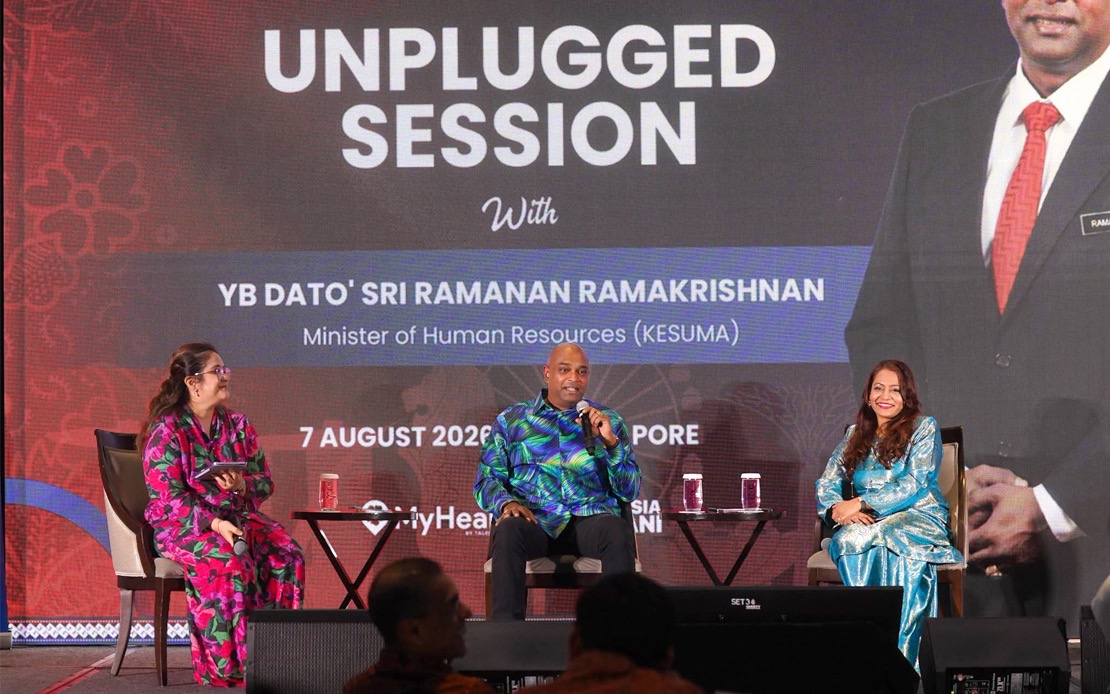
Malaysia's Ministry of Human Resources has initiated moves to establish a structured student exchange programme linking ADTEC JTM, the country's premier advanced technical institution, with Singapore's Institute of Technical Education. The proposal was formally raised during a working visit to ITE Singapore by Human Resources Minister Datuk Seri Ramanan Ramakrishnan, signalling a strategic push by KESUMA to deepen bilateral cooperation in the technical and vocational training sector. The proposed partnership represents a significant step towards internationalising Malaysia's TVET ecosystem and positioning both nations as regional training hubs.
The ITE Singapore delegation, led by deputy chief executive officer Dr Goh Mong Song alongside senior officials from the College School of Business and Services and the International Office, Corporate and Development Division, responded positively to the initiative. This receptiveness from Singapore's largest vocational training institution creates a foundation for substantive collaboration. Both institutions are now tasked with finalising the framework, identifying specific exchange mechanisms, and determining the scope of activities that would fall under this bilateral arrangement. The ministerial endorsement signals strong governmental backing for the project and indicates that budgetary and administrative support will likely follow.
Ramanan articulated a vision extending beyond mere student mobility, framing the exchange as a comprehensive capacity-building exercise for Malaysia's technical education sector. Through exposure to Singapore's methodologies and institutional practices, ADTEC JTM students would gain exposure to alternative pedagogical approaches, advanced equipment, and real-world industrial applications that may differ from domestic training models. This cross-border learning experience positions young Malaysian technicians to understand global standards and industry best practices, enhancing their competitiveness in an increasingly interconnected regional labour market. The proposed knowledge exchange is particularly relevant given Singapore's reputation for excellence in applied technical education and its strong industry partnerships.
The minister emphasised that effective TVET development cannot operate within national silos, a perspective aligned with contemporary discussions on regional economic integration and labour mobility within ASEAN. Close coordination with industry partners and peer institutions across borders has become essential, particularly as technological disruption accelerates across the manufacturing, services, and digital sectors. Malaysia's position as an industrial hub with significant FDI inflows means its technical workforce must constantly evolve to meet employer expectations shaped by global supply chains and emerging technologies. The ADTEC JTM-ITE partnership directly addresses this imperative by institutionalising knowledge flows and best practice sharing mechanisms.
Ramanan highlighted how automation, artificial intelligence, and job creation in emerging fields present both challenges and opportunities for TVET institutions throughout Southeast Asia. These technological shifts render static curriculum models obsolete, necessitating responsive institutional frameworks that can adapt training content at pace with labour market demands. An exchange arrangement with ITE Singapore, which operates within a highly technology-driven economy with strong private sector linkages, would expose ADTEC JTM educators and programme developers to cutting-edge approaches in integrating emerging technologies into vocational curricula. This real-time knowledge transfer mechanism enhances Malaysia's capacity to future-proof its technical workforce, ensuring graduates possess skills aligned with next-generation industries rather than legacy sectors.
The minister's vision explicitly addresses the gap between immediate labour market needs and long-term workforce requirements. Contemporary TVET design must balance producing workers equipped for current industrial demands with cultivating adaptable talent pools capable of transitioning through multiple career iterations. Singapore's proven track record in this balancing act—demonstrated through its continuous curriculum reviews and strong graduate employment outcomes—makes it an instructive partner. Malaysian students engaging with ITE's approach would internalise principles of lifelong learning and skill flexibility that increasingly define successful technical careers.
Networking and relationship-building dimensions of the exchange hold particular significance for Malaysian participants. Beyond formal skill acquisition, exposure to peer students and faculty from Singapore creates professional networks that may facilitate future collaboration, knowledge exchange, and even career opportunities across borders. Such networks prove invaluable when addressing technical challenges that transcend national boundaries, particularly within ASEAN's integrated manufacturing ecosystem. Personal connections forged during exchange periods often catalyse longer-term institutional partnerships and research collaborations that generate compounding benefits for both parties.
KESUMA's commitment to coordinating the programme's finalisation across relevant stakeholders demonstrates institutional seriousness about implementation. The ministry must align timelines with both institutions' academic calendars, secure budgetary allocations, establish selection criteria for exchange participants, and potentially negotiate bilateral agreements addressing liability, credit recognition, and student welfare issues. This administrative infrastructure-building phase, though less visible than eventual student exchanges, determines whether the initiative translates into tangible outcomes or remains aspirational. The ministry's explicit undertaking to finalise framework details suggests this process has already commenced at technical levels.
Regionally, the proposed exchange contributes to ASEAN's broader agenda on TVET cooperation. Earlier initiatives like the ASEAN Secretariat's engagement with TVET institutions and the Association's emphasis on enhancing human capital development underpin Malaysia's bilateral outreach. By establishing demonstrated pathways for student and knowledge exchange with a high-performing neighbour, Malaysia creates a replicable model for partnerships with other regional TVET institutions. This multiplier effect could gradually weave interconnected regional TVET networks that benefit the broader Southeast Asian economy through enhanced talent mobility and standardised capability development.
For Malaysian employers, particularly in high-tech manufacturing, electronics, and digital services, the exchange programme indirectly benefits workforce quality. As ADTEC JTM graduates gain international exposure and cross-border skills validation through ITE partnerships, they return to the domestic labour market with enhanced credibility and adaptability. Companies seeking technically skilled workers benefit from access to graduates who understand both local and regional industrial contexts and possess certifications or competencies recognised across borders. This creates competitive advantages for Malaysia in attracting and retaining knowledge-intensive investments.
The initiative also positions ADTEC JTM as an institution of regional standing rather than merely domestic significance. Enhanced international partnerships elevate institutional prestige, facilitating recruitment of quality teaching staff, attracting industry collaboration, and strengthening research capabilities. This upward trajectory benefits the broader Malaysian higher technical education sector by establishing quality benchmarks and creating aspirational standards for peer institutions. International recognition often translates into improved funding prioritisation and policy support at governmental levels, creating virtuous cycles of institutional development.
Moving forward, the success of this initiative hinges on concrete programme mechanics—whether exchanges occur annually, what disciplines receive priority, how credit transfer and qualification recognition function, and what funding mechanisms support the scheme. Early focus on sectors where both nations have complementary strengths, such as precision engineering, digital technologies, or services, could generate quick wins demonstrating the partnership's value. Such visible successes build momentum for expansion and encourage participation from both institutions' leadership and stakeholder communities.

