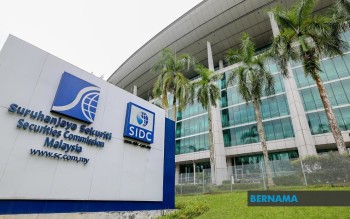
Malaysia is positioning itself as a gateway for Russian capital into the global Islamic finance system, with government officials and financial regulators working in tandem to create dedicated pathways for investors from Russia and the broader Central Asian region. The Ministry of Finance and Securities Commission Malaysia have outlined an ambitious strategy that goes beyond attracting foreign investment alone, instead seeking to establish Malaysia as an essential hub where Russian and Central Asian financial interests intersect with shariah-compliant opportunities.
The approach marks a significant expansion of Malaysia's historical role as a leader in Islamic finance. Rather than viewing the relationship as a one-way flow of capital into Malaysia, policymakers are framing it as a mutual partnership in which both jurisdictions benefit from shared expertise and market access. This philosophy underpins recent discussions between Malaysian authorities and the Head of the Republic of Tatarstan, where interest was expressed in adopting Malaysia's established model for developing Islamic finance infrastructure. Such recognition validates decades of Malaysian investment in building the technical and regulatory systems that now position the country as an exemplary practitioner of shariah-compliant finance.
Planned exploratory missions to Central Asia scheduled for 2026 or 2027 represent a deliberate shift toward deeper regional engagement. These visits are not ceremonial but rather substantive assessments of market conditions, existing stakeholder networks, and the foundational work required to establish robust Islamic financial corridors. By positioning Malaysia as an active participant in shaping Central Asian finance rather than merely waiting for inbound investment, the government is attempting to influence the development trajectory of the region's financial infrastructure from the ground up.
The export of shariah advisory and consulting services constitutes a particularly valuable dimension of this strategy. Malaysia possesses a mature ecosystem of Islamic finance professionals, institutional knowledge, and regulatory frameworks that have been refined through years of practice and refinement. Countries and regions seeking to establish or expand their own Islamic finance capabilities represent enormous market opportunities for Malaysian expertise. Training programmes, capacity-building initiatives, and consultancy contracts could generate substantial revenue streams that complement traditional investment flows and create durable professional relationships between Malaysian and Russian entities.
Bilateral engagement at the highest regulatory levels provides the institutional foundation for this expansion. Meetings held between the Securities Commission Malaysia and both the Central Bank of Russia and the Saint Petersburg International Mercantile Exchange across 2023 and 2025 have established direct communication channels that bypass traditional diplomatic obstacles and enable financial practitioners to address concrete technical issues. These discussions create familiarity with mutual regulatory expectations and begin the process of harmonizing standards where possible, reducing friction costs for investors navigating dual jurisdictions.
The Capital Market Masterplan 2026-2030 serves as the overarching strategic document guiding Malaysia's competitive positioning in global finance. Within this framework, the government explicitly prioritises product innovation, regulatory enhancement, and international collaboration. Russian investors represent a distinct demographic within the broader universe of foreign capital, potentially with different risk tolerances, investment horizons, and sectoral preferences compared to investors from established Western financial centres. Tailoring offerings to appeal to this market segment requires understanding their specific needs and designing financial products that balance shariah compliance with returns and risk profiles attractive to Central Asian institutions.
The emphasis on sustainable, transparent, and inclusive financial ecosystems rooted in Maqasid al-Shariah principles reflects a sophisticated understanding of how to market Islamic finance to sceptical international audiences. Rather than presenting Islamic finance as purely a religious requirement or cultural preference, Malaysian authorities highlight its alignment with contemporary concerns regarding ethical investment, environmental responsibility, and equitable wealth distribution. This framing appeals to investors and policymakers worldwide who are increasingly scrutinising the social and environmental consequences of their capital allocation decisions.
Geopolitical considerations inevitably shape this initiative, though official statements remain carefully measured. Malaysia's traditional position as a non-aligned nation and its historical emphasis on South-South cooperation position it well to engage with Russia in ways that many Western financial centres find politically complicated. By offering Russian investors access to sophisticated Islamic finance markets and expertise, Malaysia expands its diplomatic influence and creates economic interdependencies that strengthen bilateral relationships beyond the financial sector itself.
The regulatory environment in Malaysia has been specifically engineered to accommodate international participants while maintaining shariah compliance standards. The Securities Commission's track record of managing complex cross-border transactions and resolving disputes according to agreed standards provides foreign investors with confidence in Malaysia's institutional capacity. Russian investors accustomed to Central Bank oversight and rigorous regulatory frameworks should find Malaysia's approach familiar and professionally competent.
Expanding the Russian investor base within Malaysia's Islamic finance ecosystem generates positive spillover effects throughout the broader financial sector. Russian participation in Islamic bonds, sukuk issuances, and shariah-compliant investment funds increases market liquidity, improves price discovery, and attracts additional participants who view Russian involvement as validation of market maturity and opportunity. Enhanced market depth ultimately benefits all participants, including Malaysian institutions and retail investors.
The timing of this initiative reflects broader strategic recalibration in Southeast Asia. As traditional investment sources become more concentrated and geopolitical relationships evolve, Malaysia is deliberately diversifying its investor base to reduce dependence on any single market or region. Russian and Central Asian capital represent a largely untapped source of wealth seeking productive deployment, and Malaysia's advantages in Islamic finance position it to capture a disproportionate share of these flows.
Malaysia's willingness to engage with Russian investors according to international standards while respecting domestic legal frameworks demonstrates the government's confidence in its ability to manage complex international relationships without compromising regulatory integrity. This balancing act requires sophisticated diplomatic and financial expertise, but successful execution would cement Malaysia's position as the preeminent destination for investors seeking to deploy capital according to both shariah principles and contemporary financial best practices.

