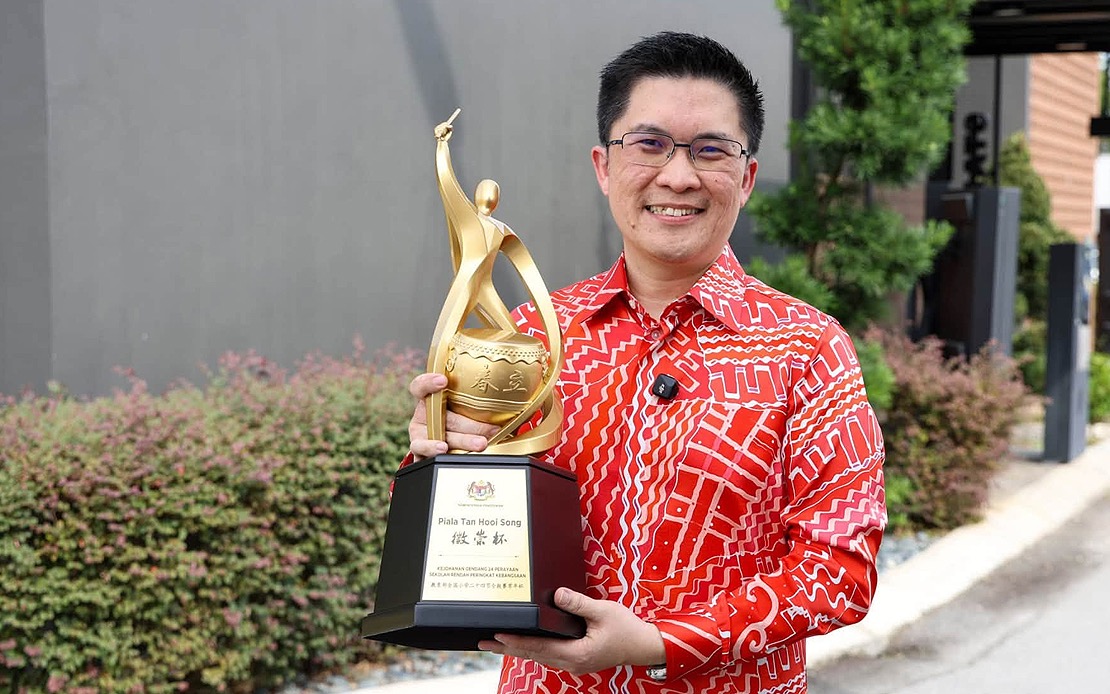
Malaysia's Education Ministry is moving forward with plans to secure international recognition for Gendang 24 Perayaan, a distinctive percussion-based cultural art form that has become increasingly embedded in the nation's cultural identity. Deputy Education Minister Wong Kah Woh announced the ministry's intention to submit a formal application to UNESCO during the closing ceremony of the National Primary Schools Gendang 24 Finals Competition in Ipoh, signalling the government's commitment to elevating this homegrown art form to the status of recognised global cultural heritage.
The move represents a significant step in Malaysia's broader strategy to safeguard its intangible cultural assets in an increasingly globalised world where traditional art forms face mounting pressures from digital entertainment and changing youth preferences. Wong emphasised that securing UNESCO recognition aligns with the Education Ministry's fundamental objectives of ensuring Gendang 24 Perayaan not only survives but thrives across multiple generations. The aspiration extends beyond preservation; it encompasses active development and strategic introduction of the art form to young people who might otherwise have limited exposure to their cultural heritage.
Discussions regarding the UNESCO pathway began in May, when Wong and his team convened to explore concrete mechanisms through which the ministry could support Gendang 24 Perayaan's application. These deliberations have occurred at multiple levels, from formal ministry channels down to grassroots community organisations, reflecting the cross-sectoral approach needed to strengthen the art form's institutional foundation. The consultative process has identified specific areas where structural changes and implementation strategies could enhance the overall development trajectory of Gendang 24 Perayaan within Malaysian schools.
Among the tangible initiatives emerging from these discussions is the Train the Trainers programme, which targets school educators as multipliers of knowledge and practice. By equipping teachers with comprehensive training in Gendang 24 Perayaan, the ministry aims to create a sustainable ecosystem where the art form becomes embedded within school curricula rather than remaining a peripheral activity. This pedagogical approach acknowledges that lasting cultural transmission requires institutional scaffolding and professional development, not merely ad hoc performances or competitions.
The foundation for this cultural preservation effort rests on a relatively recent history. Gendang 24 Perayaan was established in Malaysia in 1988 by cultural pioneers Tan Hooi Song and Tan Chai Puan, making it a distinctly contemporary creation despite its rapid integration into Malaysia's cultural landscape. The art form achieved formal recognition as Intangible National Heritage in 2009, providing domestic legitimacy that now serves as a springboard for international recognition through UNESCO frameworks.
The trajectory of Gendang 24 Perayaan's expansion illustrates remarkable organic growth. What began as a limited initiative involving only handful of school teams has evolved into a nationwide movement encompassing hundreds of educational institutions. This expansion demonstrates genuine youth engagement with the art form and suggests that, with proper institutional support and curriculum integration, traditional cultural practices can remain relevant and attractive to contemporary Malaysian students.
The inaugural National Primary Schools Gendang 24 Finals Competition itself provides compelling evidence of the art form's institutional maturity and widespread adoption. Sixteen elite primary school teams, drawing 417 students from schools across the country, participated in the championship event. This scale of participation signals not merely niche interest but substantive educational and cultural engagement, with young performers demonstrating technical proficiency and cultural commitment. The competition was jointly organised by the Education Ministry's Sports, Co-curricular and Arts Division and the Malaysia Gendang 24 Perayaan Association, with Yayasan Sime Darby providing major financial sponsorship, demonstrating how corporate Malaysian entities increasingly recognise cultural preservation as a shared social responsibility.
The UNESCO recognition pathway carries particular significance for Southeast Asia, where several nations are competing to internationalise their cultural heritage and strengthen their soft power profiles. Should Malaysia successfully secure UNESCO Intangible Cultural Heritage status for Gendang 24 Perayaan, it would enhance the nation's cultural standing internationally whilst creating additional incentive structures for schools to integrate the art form into their programming. UNESCO recognition also opens doors to international funding, research collaboration, and cultural exchange opportunities that might otherwise remain inaccessible.
For Malaysian educators and parents concerned about cultural erosion in schools, the Education Ministry's active advocacy represents a reassuring institutional commitment. Rather than treating traditional arts as quaint historical curiosities, the ministry is positioning Gendang 24 Perayaan as a living, evolving practice worthy of modern educational investment. The Train the Trainers initiative specifically addresses a critical bottleneck in cultural education: the shortage of qualified educators capable of delivering authentic, high-quality instruction in traditional art forms.
The broader context extends to how Malaysia manages its multicultural heritage in schools. While the nation's education system has long incorporated diverse cultural elements, strategic promotion of distinct art forms like Gendang 24 Perayaan demonstrates intentional curation of which cultural practices receive institutional support, resources, and prominence. This selective emphasis helps ensure that certain art forms do not disappear despite economic pressures and competing entertainment options.
From a regional perspective, Malaysia's pursuit of UNESCO recognition for a percussion art form relatively recently created in the modern era suggests shifting international norms around cultural heritage. UNESCO frameworks traditionally emphasised ancient, pre-industrial cultural practices; recognising a 1988-founded art form as intangible heritage reflects evolving understanding that cultural authenticity and historical depth exist on a spectrum, and that contemporary cultural creation deserves protection and promotion. Other Southeast Asian nations may observe Malaysia's strategy with interest as they contemplate their own cultural preservation initiatives.
The government's investment in Gendang 24 Perayaan through the Education Ministry ultimately reflects confidence that young Malaysians, when provided proper institutional support and educational scaffolding, will engage meaningfully with their cultural heritage. The competition results and expanding school participation validate this confidence, suggesting that cultural preservation succeeds not through nostalgic appeals but through integration into institutions that young people already inhabit: schools, performance venues, and peer communities.

