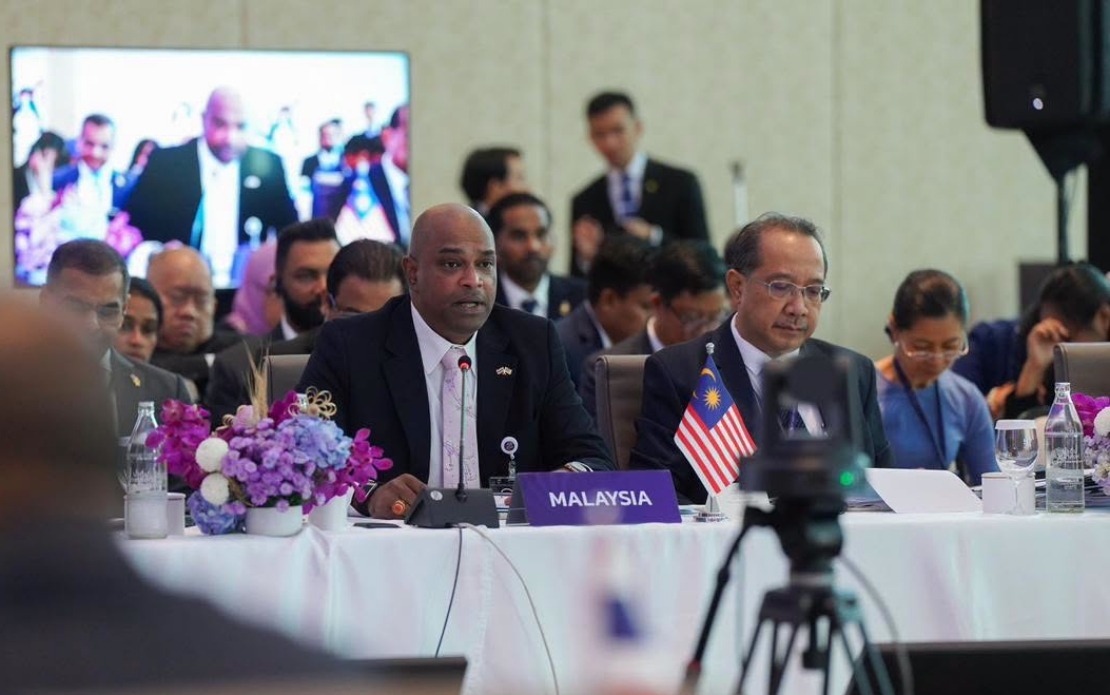
Malaysia is championing a regional push to create seamless recognition of vocational and technical qualifications across Southeast Asia, positioning this move as essential for the bloc to develop a truly competitive global workforce. Human Resources Minister Datuk Seri R. Ramanan raised the issue at the 14th ASEAN Plus Three Labour Ministers' Meeting in Bangkok, Thailand, emphasising that workers trained within member states must possess credentials that are both industry-trusted and internationally portable. The initiative reflects growing regional anxiety that without coordinated standards, ASEAN talent remains fragmented and unable to fully leverage the region's collective economic potential.
The minister outlined three concrete priorities that Malaysia believes should guide ASEAN's labour development strategy going forward. First among these is the need to strengthen joint certification mechanisms and achieve harmonisation of Technical and Vocational Education and Training qualifications—a foundational step that would allow employers across the region to confidently hire skilled workers regardless of their origin country. Second, Malaysia advocates for expanded technology transfer and enhanced teacher training to ensure that instruction quality keeps pace with industrial demands. Third, the country is pushing for the development of world-class training programmes tailored to emerging fields including artificial intelligence, next-generation vehicles and robotics, sectors where ASEAN nations aim to build competitive advantages.
At its core, Malaysia's position reflects a sophisticated understanding that credential recognition extends far beyond bureaucratic paperwork. Ramanan stressed in his statement that the initiative represents an investment in the future value and relevance of ASEAN's human capital. Workers with properly recognised qualifications gain access to opportunities beyond their home markets, can negotiate better employment terms, and contribute to raising wage standards across the region. Conversely, employers gain access to a larger pool of vetted talent without the friction of navigating multiple certification systems. This creates a virtuous cycle where investment in vocational education becomes more attractive and workforce mobility naturally increases.
The regional context for this push is particularly significant. ASEAN nations face intensifying competition from established economies in attracting foreign investment, particularly in technology-intensive manufacturing and services. Multinational corporations evaluating Southeast Asia as a destination for operations or regional headquarters repeatedly identify workforce quality and adaptability as critical factors. By establishing mutual recognition of qualifications, ASEAN can project an image of standardised excellence that reassures international investors their operations will have access to properly trained personnel. This competitive advantage becomes especially valuable as companies seek alternatives to traditional manufacturing hubs facing rising labour costs and geopolitical tensions.
Malaysia's decision to elevate this issue at the ASEAN Plus Three forum—which includes China, Japan and South Korea—signals recognition that solving the qualification recognition puzzle requires expertise and cooperation beyond Southeast Asia's borders. These three nations have decades of experience managing large-scale vocational training systems and successfully positioning their workforces in global value chains. Their participation offers practical pathways for ASEAN to benchmark against and potentially adopt successful models. The minister explicitly noted that collaboration would involve sharing expertise, technology and best practices, suggesting Malaysia envisions structured knowledge transfer rather than mere consultation.
The timing of this initiative aligns with broader ASEAN economic integration efforts, particularly the ASEAN Comprehensive Investment Agreement and ongoing digital economy initiatives. A harmonised labour qualification framework would complement these other integration measures by removing barriers that currently prevent workers from following jobs and capital. It would also support ASEAN's ambitions in emerging technological fields where the region currently lacks a deep talent pipeline. By proactively developing world-class training programmes in artificial intelligence, next-generation vehicles and robotics now, ASEAN nations position themselves to capture opportunities in these high-value sectors rather than perpetually chasing industries that others have already mastered.
For Malaysian workers specifically, stronger ASEAN recognition protocols could significantly broaden career prospects. Currently, Malaysian technical professionals seeking employment in neighbouring countries often face requirements to recertify or undergo additional assessment, creating unnecessary friction and discouraging mobility. A harmonised system would allow Malaysian-trained engineers, electricians, nurses and technicians to move more freely within the region, potentially commanding higher salaries and gaining valuable international experience. This benefits Malaysia indirectly by raising the competitiveness and global perspective of its workforce, even those who eventually return home.
The challenge ahead lies in execution, particularly in achieving genuine harmonisation rather than merely rubber-stamping each country's existing standards. ASEAN nations maintain different levels of vocational education development, pedagogical approaches and industry linkages. Creating mutual recognition frameworks requires building trust in each system's quality assurance mechanisms and potentially accepting qualifications from less developed programmes to encourage participation. Malaysia's emphasis on technology transfer and teacher training appears designed to address these gaps, suggesting the nation recognises that harmonisation must be accompanied by capacity building in less advanced systems.
The emerging fields identified by Malaysia—artificial intelligence, next-generation vehicles and robotics—represent deliberate choices to position ASEAN at the forefront of global economic trends rather than trailing behind. These are sectors where Southeast Asia currently lacks entrenched incumbent advantages, creating space for rapid capability development. By coordinating training efforts across borders, ASEAN nations can avoid wasteful duplication and share both costs and learning. A worker trained in advanced robotics through a coordinated ASEAN programme would truly represent regional competitive advantage rather than an isolated national achievement.
Looking forward, success in this initiative could reshape labour dynamics across Southeast Asia. A worker from Cambodia with internationally recognised Vietnamese vocational credentials, or a Thai technician employed in Malaysia with Singapore-standard certification, would reflect genuine regional integration. Such mobility would place upward pressure on wages in lower-wage countries as opportunities expand, while providing relief from labour shortages in faster-growing economies. This dynamic could help distribute the benefits of ASEAN's economic growth more evenly across member states, reducing inequality and building broader political support for regional cooperation.
Malaysia's leadership on this issue positions the country as a pragmatic advocate for integration that directly improves lives rather than pursuing abstract institutional goals. By framing workforce development through the lens of global competitiveness and individual opportunity, the initiative appeals to both business and labour constituencies. The outcome will likely depend on whether member states maintain commitment to the agenda despite domestic political pressures to protect local training industries and whether adequate financing materialises for technology transfer and teacher training programmes across the region.

